
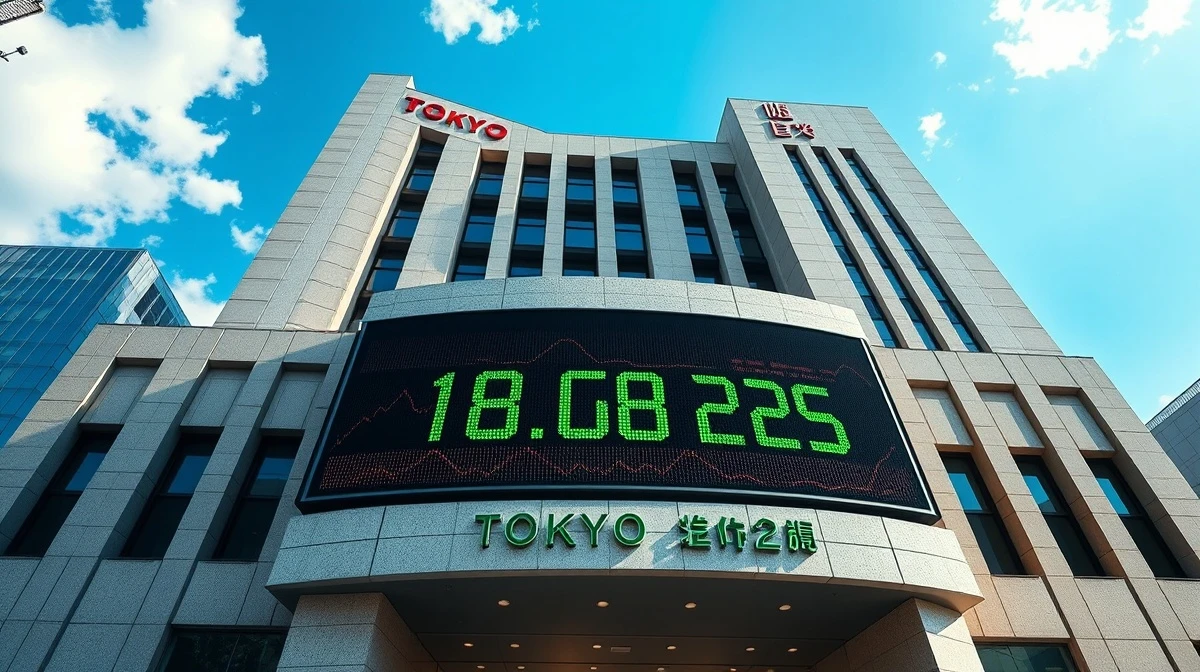
Asian stock markets rallied sharply on Tuesday, led by a historic surge in Japan’s Nikkei 225 index, following the announcement of a landmark peace agreement between the United States and Iran. The deal, which de-escalates years of heightened military and economic tensions, has injected a wave of optimism across global financial markets, with investors rotating into risk assets.
Nikkei 225 Leads Regional Rally
Japan’s benchmark Nikkei 225 closed at a new all-time high, surpassing its previous record set in the late 1980s. The index gained over 3% on the day, driven by broad-based buying in export-oriented and technology stocks. The yen weakened slightly against the dollar, providing an additional tailwind for Japanese exporters. The rally was supported by strong gains in South Korea’s Kospi, Hong Kong’s Hang Seng, and Australia’s ASX 200, all of which rose more than 2%.
Also read: Swiss Franc Dips Against Dollar, Rises Versus Euro in Mixed Forex Session
Market Implications of the US-Iran Deal
The peace agreement removes a significant geopolitical risk that has weighed on investor sentiment for several years. Key provisions of the deal include a mutual cessation of hostilities, the lifting of certain economic sanctions, and a framework for future diplomatic engagement. For markets, this translates into lower risk premiums, particularly for sectors sensitive to Middle East instability, such as energy and defense. Oil prices fell sharply, with Brent crude dropping below $70 per barrel, as the prospect of disrupted supply from the Strait of Hormuz receded. This decline in energy costs is expected to benefit net-importing Asian economies, including Japan, South Korea, and India.
Investor Sentiment and Sector Performance
The rally was broad-based, but technology and consumer discretionary stocks were among the top performers. In Japan, shares of major electronics and automotive companies rose sharply. In South Korea, semiconductor makers saw strong gains. Analysts noted that the reduction in geopolitical uncertainty allows investors to focus on fundamentals, including corporate earnings and central bank policies. The Bank of Japan’s continued accommodative stance also provided support for Tokyo-listed stocks.
Also read: Pound Sterling faces a heavy week as Westminster empties out
Conclusion
The US-Iran peace deal marks a central moment for global markets, removing a key source of uncertainty and unlocking a wave of risk-on sentiment. The Nikkei 225’s record high underscores the strength of the rally in Asia, but investors remain watchful of implementation details and the broader economic outlook. For now, the mood is decisively optimistic, with regional markets pricing in a more stable geopolitical environment.
FAQs
Q1: Why did the Nikkei 225 hit a record high?
The Nikkei 225 surged on the back of the US-Iran peace deal, which reduced geopolitical risk and boosted investor confidence in risk assets. A weaker yen also helped export-oriented Japanese companies.
Q2: How did the peace deal affect oil prices?
Oil prices fell sharply as the deal reduced the risk of supply disruptions from the Middle East, particularly through the Strait of Hormuz. This benefits Asian economies that are major oil importers.
Q3: Which sectors benefited most from the rally?
Technology, consumer discretionary, and export-oriented sectors led the gains. Financial stocks also rose as lower risk premiums improved the outlook for economic growth.

