The Congressional Budget Office (CBO) has released a new analysis estimating that former President Donald Trump’s proposed Golden Dome missile defense system could cost approximately $1.2 trillion over the next 20 years. The figure, which includes development, procurement, and operational expenses, has reignited debate over the feasibility and fiscal impact of the ambitious defense initiative.
What Is the Golden Dome System?
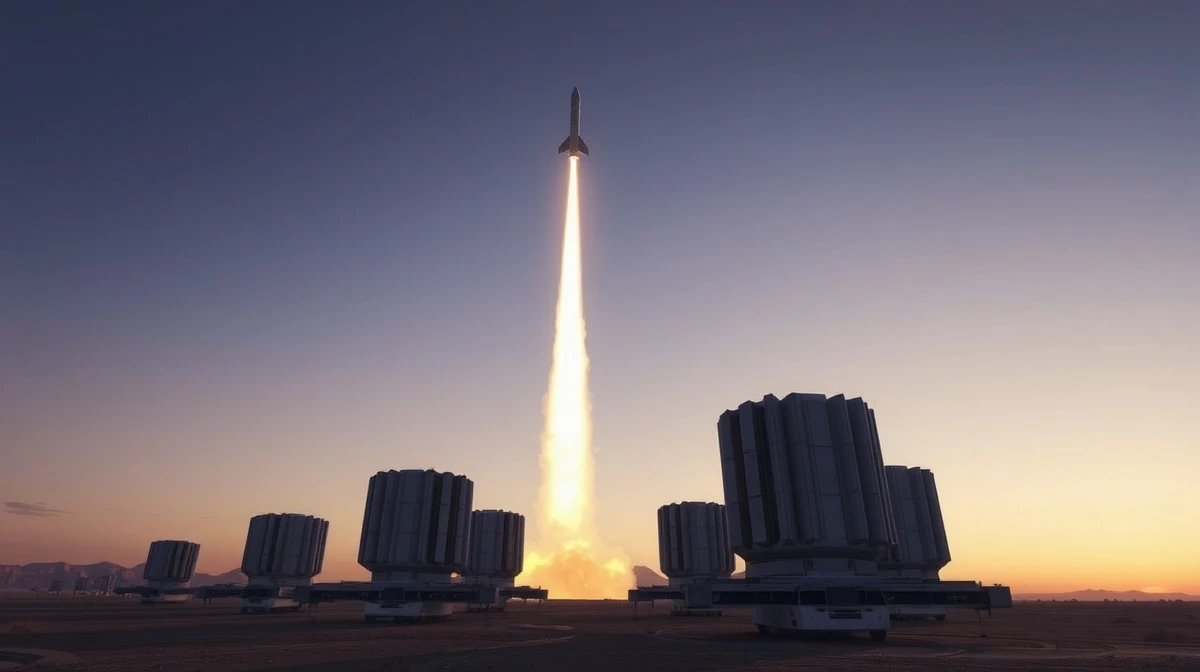
The Golden Dome is a conceptual multi-layered missile defense architecture designed to protect the United States from a wide range of threats, including intercontinental ballistic missiles (ICBMs), hypersonic weapons, and cruise missiles. The system draws inspiration from Israel’s Iron Dome but on a vastly larger scale, incorporating space-based sensors, ground-based interceptors, and advanced command-and-control networks. The proposal was a centerpiece of Trump’s national security platform during his campaign.
Also read: Thailand’s AI Momentum Faces a 2027 Slowdown, HSBC Warns
Breaking Down the $1.2 Trillion Estimate
The CBO’s cost projection covers a 20-year lifecycle, from initial research and development through full deployment and sustainment. According to the report, the largest cost drivers include:
- Space-based sensor layer: Hundreds of satellites equipped with infrared and radar sensors to detect and track threats globally.
- Ground-based interceptors: Thousands of new missiles deployed across multiple U.S. sites, including upgraded versions of existing systems like the Ground-Based Midcourse Defense (GMD).
- Command and control infrastructure: A new integrated network to process data and coordinate intercepts in real time.
- Operational and maintenance costs: Annual sustainment, personnel, and upgrade expenses expected to exceed $50 billion per year after full deployment.
The CBO notes that the estimate is highly uncertain due to the system’s remarkable scale and technological challenges. Actual costs could vary significantly depending on design choices, threat evolution, and production efficiency.
Also read: Crude Oil Bounces on Hormuz Scare, Rally Fails to Convince
Strategic and Budgetary Implications
The $1.2 trillion price tag represents a substantial increase over current missile defense spending, which totals roughly $20 billion annually across the Department of Defense and Missile Defense Agency. Funding a system of this magnitude would require either significant cuts to other defense programs, increased defense budgets, or new borrowing. The CBO analysis did not identify specific funding sources, leaving that question to policymakers.
Expert Reactions
Defense analysts have offered mixed assessments. Supporters argue that the system is necessary to counter emerging threats from nations like North Korea and China, which are expanding their missile arsenals. Critics, however, question whether the technology can be made reliable enough to justify the cost, pointing to past missile defense programs that faced technical setbacks and cost overruns.
Conclusion
The CBO’s cost estimate provides a sobering baseline for what would be one of the most expensive defense projects in U.S. history. While the Golden Dome remains a conceptual proposal, the analysis forces a critical conversation about national security priorities, technological feasibility, and fiscal responsibility. Lawmakers will likely weigh these factors as the proposal moves through the legislative process.
FAQs
Q1: What is the Golden Dome missile defense system?
A1: The Golden Dome is a proposed multi-layered missile defense system intended to protect the U.S. from ballistic, hypersonic, and cruise missiles. It would include space-based sensors, ground-based interceptors, and advanced command-and-control systems.
Q2: How did the CBO arrive at the $1.2 trillion estimate?
A2: The CBO modeled costs over a 20-year period based on similar but scaled-up existing programs, factoring in research, development, procurement, deployment, and annual sustainment. The estimate accounts for technological uncertainty and historical cost growth patterns.
Q3: Could the actual cost be lower or higher?
A3: Yes. The CBO emphasizes that the estimate is uncertain. Actual costs could be lower if technologies mature faster or if the system is scaled back, but they could also be higher due to unforeseen technical challenges, inflation, or expanded requirements.