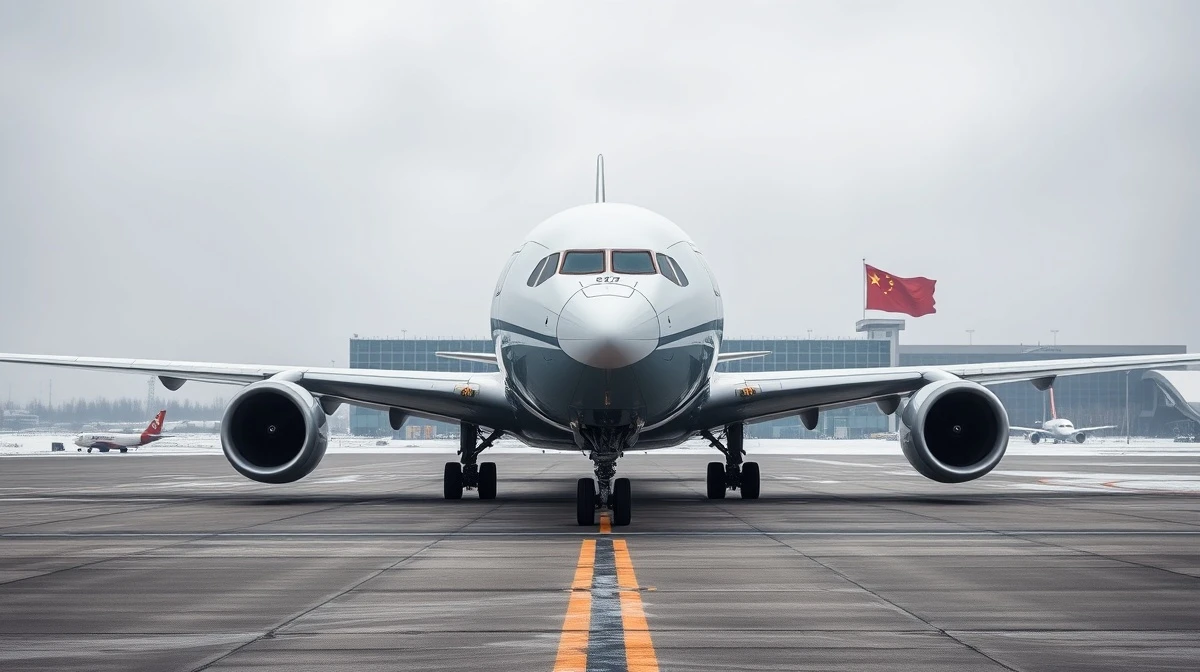
Boeing is pursuing a significant commercial jet deal with China as its chief executive joins President Donald Trump’s trade delegation to Beijing, signaling a potential thaw in one of the world’s most consequential aerospace markets. The move comes amid renewed efforts to balance trade tensions and secure access for American manufacturers.
Background of the Boeing-China Trade Dynamics
China has long been a critical market for Boeing, accounting for roughly 25% of its global commercial aircraft deliveries before trade disputes and the COVID-19 pandemic disrupted orders. The country’s aviation sector is expanding rapidly, with demand for hundreds of new planes over the next decade. However, recent years have seen Boeing lose ground to European rival Airbus, partly due to geopolitical friction and the prolonged grounding of the 737 MAX after two fatal crashes. The current deal under discussion is reported to involve a substantial number of narrow-body and wide-body jets, potentially worth billions of dollars at list prices. While exact figures remain unconfirmed, industry analysts suggest the package could include a mix of 737 MAX and 787 Dreamliner models, aligning with Chinese carriers’ fleet modernization plans.
Also read: Thailand’s AI Momentum Faces a 2027 Slowdown, HSBC Warns
The CEO’s Role in the Trade Delegation
Boeing’s CEO is part of a high-level business delegation accompanying President Trump to Beijing, a move that underscores the company’s strategic importance to U.S. trade policy. The delegation aims to negotiate commercial agreements that could help rebalance the trade deficit and open new opportunities for American exports. For Boeing, the timing is critical. The company has been working to restore its reputation and delivery capacity after production setbacks and quality control issues. A large Chinese order would provide a significant revenue boost and strengthen its competitive position against Airbus, which has secured multiple deals with Chinese airlines in recent years.
Implications for the Aerospace Industry
If finalized, the deal would represent a major breakthrough in US-China commercial relations, potentially influencing other sectors. For airlines, it could mean access to more fuel-efficient aircraft and faster delivery timelines. For Boeing, it would help stabilize its production backlog and support jobs in its supply chain. However, the agreement faces potential hurdles, including regulatory approvals and ongoing concerns about intellectual property protection and technology transfer. The outcome will be closely watched by investors, policymakers, and competitors alike.
Also read: Crude Oil Bounces on Hormuz Scare, Rally Fails to Convince
Conclusion
Boeing’s pursuit of a massive China jet deal, with its CEO embedded in the Trump administration’s trade delegation, highlights the intersection of corporate strategy and international diplomacy. While the negotiations are still in flux, the potential agreement could reshape the aerospace arena and signal a new phase in US-China economic engagement. Readers should monitor official announcements from Boeing, the White House, and Chinese authorities for confirmed details.
FAQs
Q1: Why is Boeing pursuing a deal with China now?
Boeing is seeking to regain market share in China after losing ground to Airbus amid trade tensions and the 737 MAX grounding. A large order would support its production recovery and strengthen its competitive position.
Q2: What types of aircraft are reportedly part of the deal?
Industry sources suggest the deal could include a mix of Boeing 737 MAX narrow-body jets and 787 Dreamliner wide-body aircraft, which are popular with Chinese carriers for domestic and international routes.
Q3: How does the CEO joining Trump’s delegation affect the negotiations?
The CEO’s participation signals high-level corporate support for the trade mission and underscores Boeing’s importance to US export policy. It may make possible government-to-government discussions that could accelerate regulatory approvals.