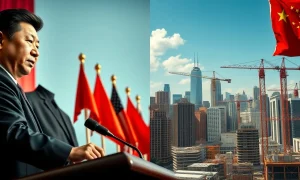
Former President Donald Trump is preparing for a high-stakes summit with Chinese President Xi Jinping in Beijing, with negotiations expected to center on artificial intelligence chip exports and agricultural trade imbalances. The meeting, which could mark a key moment in US-China relations, comes amid ongoing tensions over technology transfers and market access.
AI Chip Export Controls leading
At the top of the agenda are proposed restrictions on the sale of advanced AI semiconductors to Chinese technology firms. US officials have expressed concerns that unrestricted access to modern chips could accelerate China’s military modernization and erode America’s technological edge. Trump’s team is reportedly weighing a framework that would tighten licensing requirements while maintaining some commercial flexibility for American chipmakers like Nvidia and AMD.
Also read: Crude Oil Bounces on Hormuz Scare, Rally Fails to Convince
Chinese negotiators have signaled that any new restrictions would be met with retaliatory measures, potentially targeting US agricultural exports and rare earth supply chains. The semiconductor issue has become a flashpoint in bilateral trade, with both sides seeking utilize ahead of the summit.
Farm Goods and Market Access
Agricultural trade is expected to be another major negotiating pillar. China has been a significant buyer of US soybeans, corn, and pork, but purchases have fluctuated amid tariff disputes and shifting domestic policies. Trump’s team is pushing for binding commitments from Beijing to increase purchases of American farm products as part of a broader trade balance agreement.
Also read: Peter Thiel-backed fund invests in German drone startup Stark despite past criticism
US farm groups have been closely watching the negotiations, with many urging the administration to secure predictable market access. The outcome of the summit could have direct implications for rural economies in key swing states ahead of the upcoming election cycle.
Implications for Global Markets
Financial markets are closely monitoring the summit’s outcome. A breakthrough could ease supply chain disruptions and boost investor confidence, while a breakdown might reignite trade tensions and volatility in technology and agricultural sectors. Analysts caution that both sides are likely to seek face-saving compromises rather than sweeping agreements.
The summit also carries broader geopolitical significance, as it will test the viability of direct dialogue between the world’s two largest economies on issues ranging from climate cooperation to regional security in the Indo-Pacific.
Conclusion
The Trump-Xi summit represents a critical juncture in US-China economic relations. While both sides have incentives to reach a deal, deep-seated disagreements over technology policy and trade imbalances pose significant obstacles. The outcome will shape not only bilateral commerce but also the global market for AI development and agricultural trade.
FAQs
Q1: Why are AI chip sales a key issue in the Trump-Xi summit?
Advanced AI chips are critical for military applications and economic competitiveness. The US wants to prevent China from acquiring technology that could be used to modernize its military or dominate global AI markets.
Q2: How might agricultural trade be affected by the summit?
China is a major buyer of US farm goods. Trump is seeking binding commitments from Beijing to increase purchases, which would benefit American farmers and help reduce the US trade deficit with China.
Q3: What are the potential outcomes of the summit?
Possible outcomes include a limited agreement on chip export licensing and agricultural purchases, a stalemate leading to renewed tariffs, or a broader framework for future negotiations. Market reactions will depend on the perceived durability of any deal.