Chinese automakers are pouring billions into humanoid robots, following the playbook set by Tesla and its Optimus project. The latest signal came this week when Xpeng’s robotics unit raised more than $900 million at a post-money valuation of over $6.3 billion — the largest single-round private financing ever recorded in China’s “embodied AI” sector, according to the company. The round was led by IDG Capital, with participation from Gaorong Ventures, Tencent, and Alibaba.
That funding burst is part of a broader wave. This month, AiMOGA, the robotics arm of China’s Chery Automobile, reportedly began preparing for an IPO. BYD unveiled a humanoid robot called Xiao Di. Other Chinese automakers — including Changan, GAC, Li Auto, SAIC, and Seres — are also developing humanoid robots, according to industry reports.
Also read: Bluesky adds an ‘algorithmic opt-out’ for users who don’t want their posts to go viral
Why automakers are betting on robots
The pivot isn’t hard to explain. Automakers are squeezed by intense competition and thinning margins, especially in China’s crowded EV market. Robots, by contrast, promise a future of recurring revenue and higher profitability — if they can be deployed at scale.
“He sees razor-thin profit in cars on the near horizon. Robots look much more promising,” said Michael Dunne, CEO of advisory firm Dunne Insights, referring to Xpeng founder He Xiaopeng. Dunne told TechCrunch that Xpeng is the Chinese automaker that most closely watches Tesla’s initiatives. “It’s the most focused on autonomy, it’s the first to commit in a big way to humanoid robots.”
Also read: Robotaxi test drivers are getting hurt: Waymo and Zoox report sprains, whiplash, and more
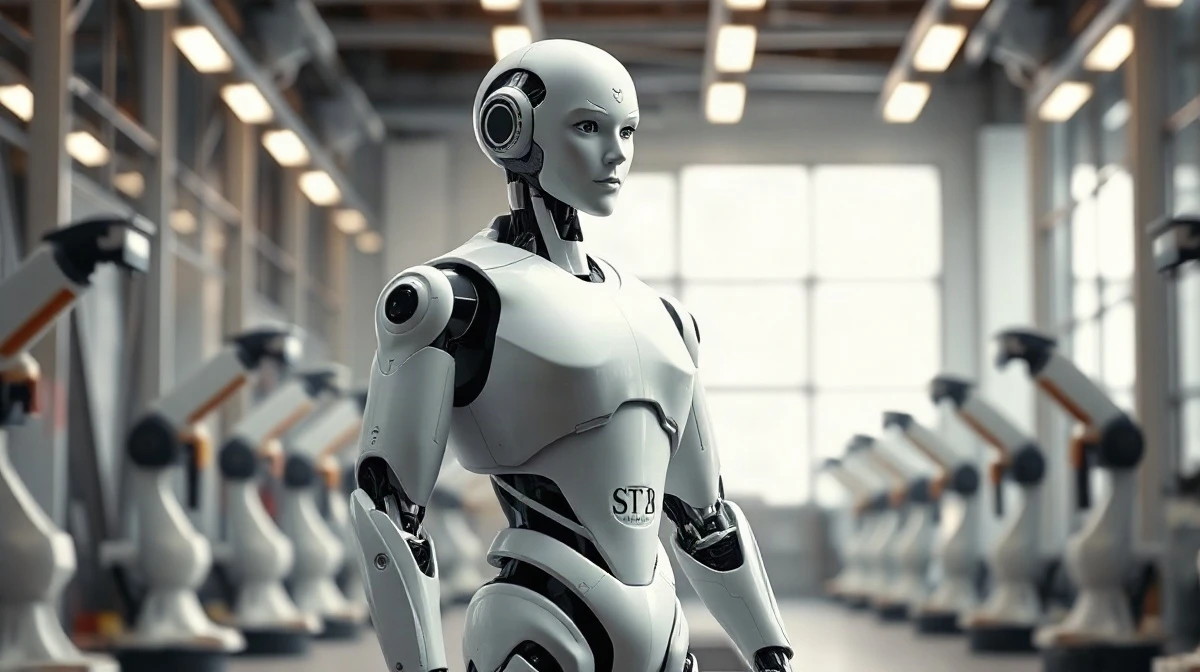
Xpeng’s confidence is backed by personal capital. Founder He Xiaopeng and co-president Brian Gu invested about $100 million into the recent fundraising round, according to the Wall Street Journal. The company’s flagship robot, Iron, is designed with a realistic human shape and is built for commercial deployment.
The hardware edge and the AI gap
Chinese automakers bring a clear manufacturing advantage. They have the factories, supply chains, and engineering know-how to produce robots at scale. “They have all the hardware to get the job done,” Dunne said. “Question is if they can catch Tesla on the AI side of the equation.”
Tesla’s Optimus has been in development for years, and Musk has repeatedly framed it as a future core business, potentially worth more than its car lineup. But Tesla isn’t alone. Boston Dynamics, owned by Hyundai, is getting closer to commercial deployment. Hyundai plans to bring the Atlas humanoid to its Georgia factory this year, with tasks like parts sequencing targeted by 2028. The Korean automaker is also opening a U.S. facility called the Robot Metaplant Application Center, and has partnered with Google’s DeepMind to speed up Atlas development.
Other players are entering the field from different angles. Mobileye, the Intel-owned supplier, acquired humanoid robot startup Mentee Robotics earlier this year for $900 million. Rivian is dabbling with its Mind Robotics spinout, though its robots aren’t expected to be humanoid in form.
What this means for the industry
The influx of automakers into humanoid robotics signals a shift in how the industry views its future. Cars are becoming increasingly commoditized, while robots — if they can learn to perform general-purpose tasks — could open entirely new markets. The combination of AI advances and physical robotics is attracting serious capital, and the race is no longer just between tech startups and Tesla. It now includes some of the world’s largest manufacturers.
For investors and industry watchers, the key question is execution. Building a robot that works in a lab is one thing; deploying thousands of units in factories, warehouses, and homes is another. The automakers’ manufacturing experience could give them an edge, but they’ll need to match the AI capabilities of companies like Tesla and Boston Dynamics.
As the competition heats up, expect more funding rounds, more partnerships, and more prototypes. The next few years will reveal whether these bets pay off — or whether the hype outpaces the hardware.
Disclaimer: This article is for informational purposes only and does not constitute financial advice. The robotics and AI markets are volatile and uncertain; readers should conduct their own research before making any investment decisions.