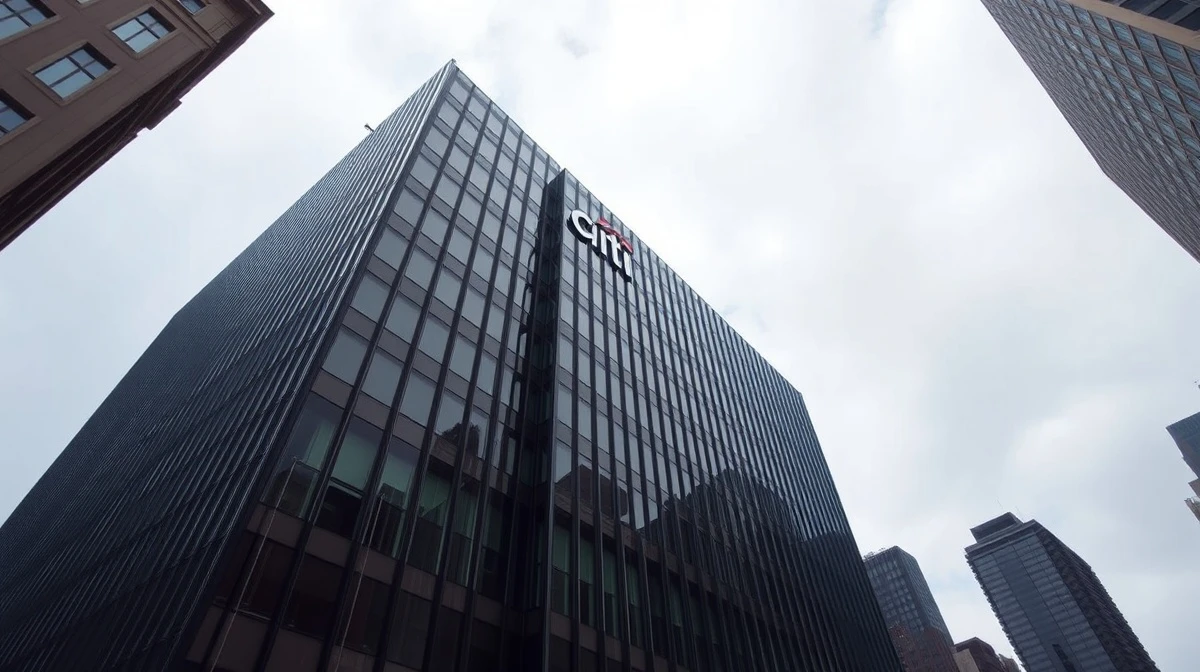
Citigroup shares fell 3% in pre-market trading on Tuesday after the bank unveiled profit targets for 2026 that fell short of investor expectations. The modest outlook, announced during the bank’s investor day, signals a more cautious growth trajectory than analysts had anticipated.
Market Reaction and Investor Sentiment
The pre-market decline reflects a swift reassessment of Citi’s near-term earnings potential. While the bank has made progress under CEO Jane Fraser’s simplification strategy, the newly disclosed targets suggest that revenue growth and cost savings may take longer to materialize than previously hoped. Investors had been looking for more aggressive profitability benchmarks, particularly given the bank’s ongoing restructuring efforts.
Also read: Gold edges lower to near $4,150 as US–Iran peace uncertainty and hawkish Fed signals weigh
Context and Strategic Implications
Citi’s 2026 targets come at a important time for the banking sector, with interest rate uncertainty, regulatory shifts, and competition from both traditional rivals and fintech firms. The bank’s focus on core operations and expense discipline is seen as prudent, but the lack of a more ambitious growth narrative has left some shareholders questioning the pace of the turnaround. Rival banks such as JPMorgan Chase and Bank of America have set higher return-on-equity targets, adding to the pressure on Citi’s management to deliver stronger results.
What This Means for Investors
For retail and institutional investors, the key takeaway is that Citi’s recovery remains a work in progress. The bank’s stock has already underperformed the broader financial sector this year, and the modest profit targets may extend that trend in the near term. However, some analysts view the conservative guidance as a realistic baseline, potentially setting the stage for upside surprises if execution improves.
Also read: Gold Answers to the Fed, Not the Fear: Rate Cut Bets Drive Rally
Conclusion
Citi’s 3% pre-market decline underscores the market’s disappointment with the bank’s 2026 profit targets. While the strategic direction is sound, the pace of improvement is slower than expected. Investors will now watch closely for quarterly earnings updates to gauge whether Citi can accelerate its turnaround.
FAQs
Q1: Why did Citi shares fall 3%?
The decline followed the bank’s investor day presentation, where it set 2026 profit targets that were lower than analysts had anticipated.
Q2: What are Citi’s new profit targets?
While specific figures were not disclosed in the initial reports, the targets were described as modest relative to market expectations, particularly regarding return on equity and revenue growth.
Q3: How does this compare to other major banks?
Rivals like JPMorgan Chase and Bank of America have set more aggressive profitability targets, which has increased pressure on Citi’s management to demonstrate faster progress in its restructuring efforts.