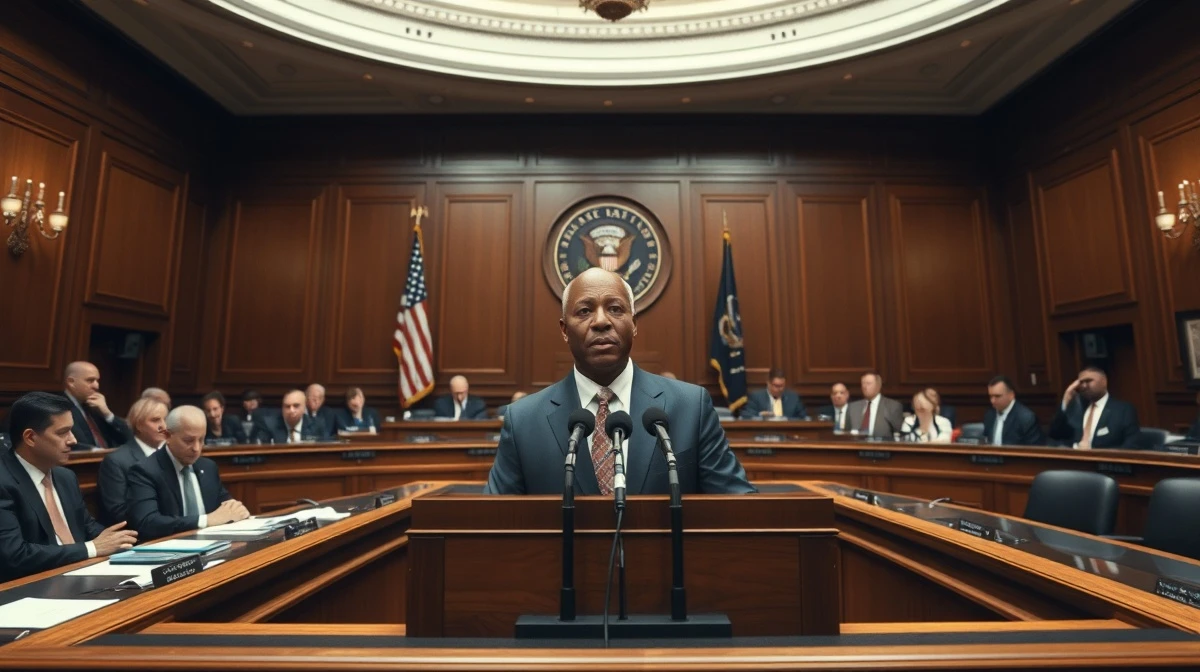
Washington D.C. — The Senate Banking Committee convened today for a markup session on the CLARITY Act, a legislative proposal aimed at establishing a federal framework for digital assets. During the proceedings, Ranking Member Senator Tim Scott (R-SC) unveiled a three-point strategy designed to prevent the migration of cryptocurrency innovation and talent overseas.
Scott’s Three-Point Plan for Crypto Retention
Speaking at the committee markup, Senator Scott argued that without clear federal guidelines, the United States risks losing its competitive edge in the digital asset sector. His proposal focuses on three core objectives: providing regulatory clarity for token classifications, establishing a tailored framework for stablecoins, and creating a national sandbox for blockchain innovation that preempts a patchwork of state laws.
Also read: Ripple Partners With Water.org to Expand Clean Water Access Using RLUSD Stablecoin
“We cannot afford to push this industry offshore due to regulatory uncertainty,” Scott stated during the hearing. The plan is intended to complement the broader CLARITY Act, which seeks to define jurisdictional boundaries between the Securities and Exchange Commission (SEC) and the Commodity Futures Trading Commission (CFTC) regarding digital assets.
Context and Implications for the Crypto Industry
The markup comes at a major time for digital asset policy in the United States. Several major crypto firms have publicly considered relocating to jurisdictions with more predictable regulatory environments, including the European Union, Singapore, and the United Arab Emirates. Scott’s plan directly addresses concerns raised by industry leaders that fragmented state-level regulation and aggressive SEC enforcement are driving businesses away.
Also read: Galaxy Research Lowers CLARITY Act Approval Odds to 60% on Political Hurdles
Industry observers note that the CLARITY Act, combined with Scott’s three-point framework, could provide the legal certainty needed for institutional adoption and retail participation. However, the bill faces an uncertain path through a divided Congress. The markup session is expected to include amendments from both sides of the aisle, with debates likely centering on consumer protections and the role of decentralized finance (DeFi).
What This Means for Investors and Developers
For cryptocurrency developers and investors, the outcome of this markup could signal the direction of U.S. digital asset policy for years to come. A clear federal framework would reduce compliance costs and legal risks, potentially unlocking significant capital inflows. Conversely, prolonged legislative gridlock may accelerate the exodus of blockchain talent to more welcoming markets abroad.
Senator Scott emphasized that his plan is designed to balance innovation with consumer safety, though critics argue that the proposal lacks specific enforcement mechanisms. The committee is expected to continue debate through the afternoon, with a vote on the CLARITY Act potentially scheduled for later this week.
Conclusion
Today’s markup of the CLARITY Act represents a critical juncture for U.S. cryptocurrency regulation. Senator Tim Scott’s three-point plan offers a concrete legislative vision aimed at retaining digital asset innovation within American borders. As the Senate Banking Committee deliberates, the crypto industry and global markets are watching closely for signals on the future of digital asset policy in the United States.
FAQs
Q1: What is the CLARITY Act?
The CLARITY Act is a proposed federal law that aims to clarify the regulatory jurisdiction of the SEC and CFTC over digital assets, providing a clearer legal framework for cryptocurrencies and blockchain technology in the United States.
Q2: What are the three points in Senator Scott’s plan?
Senator Scott’s plan includes: (1) clear token classification rules, (2) a federal framework for stablecoin regulation, and (3) a national innovation sandbox to preempt conflicting state laws and encourage blockchain development.
Q3: Why does this matter for the crypto industry?
The plan directly addresses concerns that unclear U.S. regulation is driving crypto firms and talent to other countries. A clear federal framework could reduce legal uncertainty, lower compliance costs, and help retain innovation and investment in the United States.