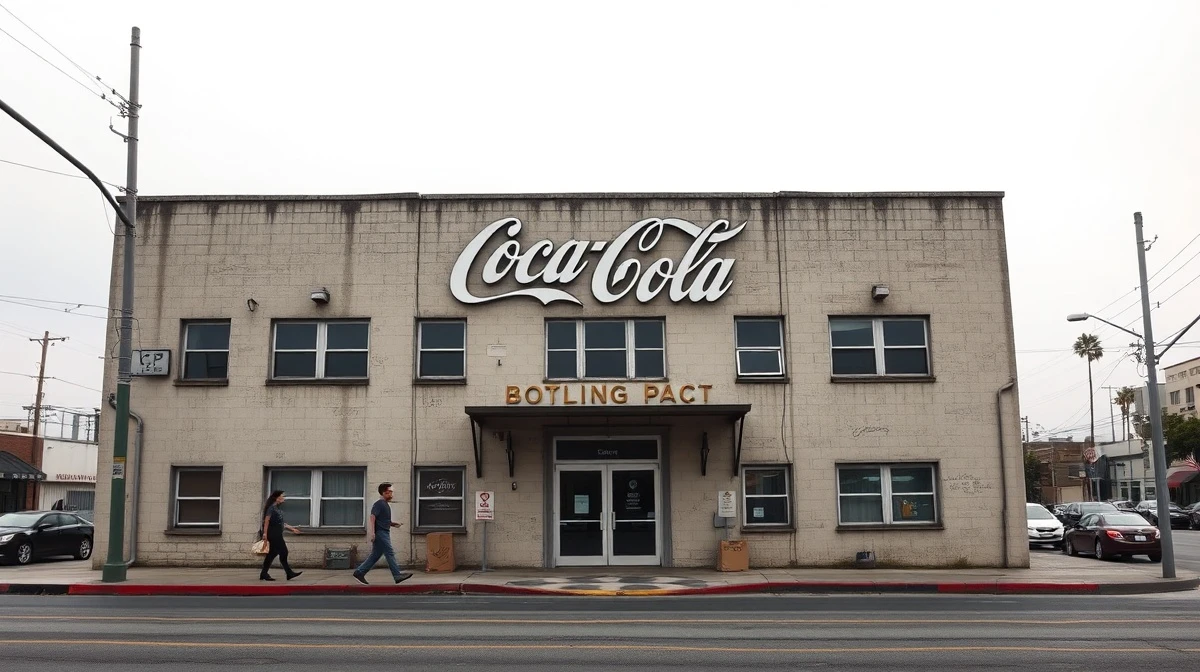
Coca-Cola has permanently closed its Los Angeles bottling and distribution facility, a site that has operated for over 100 years. The decision, confirmed by company officials, marks the end of an era for the iconic beverage maker in Southern California and raises questions about the future of local production and employment in the region.
Why Coca-Cola Is Closing the Los Angeles Facility
The closure, announced internally to employees and later confirmed to local media, is part of a broader restructuring of Coca-Cola’s North American supply chain. The company cited the need to modernize its production network and optimize operational efficiency. The Los Angeles plant, which primarily served the Southern California market, had been operating below capacity in recent years as consumer demand shifted and new, larger regional facilities came online.
Also read: Mega takeovers push global M&A to record $2.8 trillion in 2025
While Coca-Cola has not disclosed the exact number of jobs affected, the facility employed several hundred workers. The company has stated it is offering severance packages and transition support to affected employees. Some workers may have the opportunity to relocate to other Coca-Cola facilities in the state.
Historical Significance of the Plant
First opened in the early 1920s, the Los Angeles plant was one of Coca-Cola’s oldest continuously operating bottling sites in the United States. Over the decades, it became a landmark in the local community, supplying bottled beverages to homes, restaurants, and retailers across the region. The closure ends more than a century of direct Coca-Cola production in Los Angeles, a shift that many local historians and longtime employees describe as bittersweet.
Also read: EEOC Sues FedEx Over Alleged Discrimination Against Blind Workers
The building itself, located in a mixed-use industrial area, has not yet been sold or repurposed. Coca-Cola has not announced plans for the property.
What This Means for Consumers and the Local Economy
For consumers in Southern California, the immediate impact is expected to be minimal. Coca-Cola products will continue to be distributed in the region from other facilities, including a larger plant in Downey and a distribution center in Riverside. However, the closure represents a significant loss of local manufacturing jobs and tax revenue for the city of Los Angeles.
Industry analysts note that the closure reflects a broader trend among major beverage companies: consolidating production into fewer, larger, and more automated facilities to reduce costs and improve supply chain resilience. This shift has accelerated in recent years as companies invest in new technology and respond to changing consumer preferences, including a growing demand for bottled water, sparkling water, and other non-carbonated drinks.
Conclusion
The closure of Coca-Cola’s historic Los Angeles plant marks the end of a century-long manufacturing presence in the city. While the company’s products remain widely available, the decision underscores the ongoing transformation of the American beverage industry. For the affected workers and the local community, the shutdown represents a significant economic and cultural change.
FAQs
Q1: When did the Coca-Cola Los Angeles plant officially close?
The closure was finalized in recent weeks, with the company confirming the decision to employees and local media in early 2026.
Q2: How many employees were affected by the closure?
Coca-Cola has not released an exact number, but the facility employed several hundred workers. The company is providing severance and transition assistance.
Q3: Will Coca-Cola products still be available in Los Angeles?
Yes. Products will continue to be distributed from other Coca-Cola facilities in Southern California, including plants in Downey and Riverside.