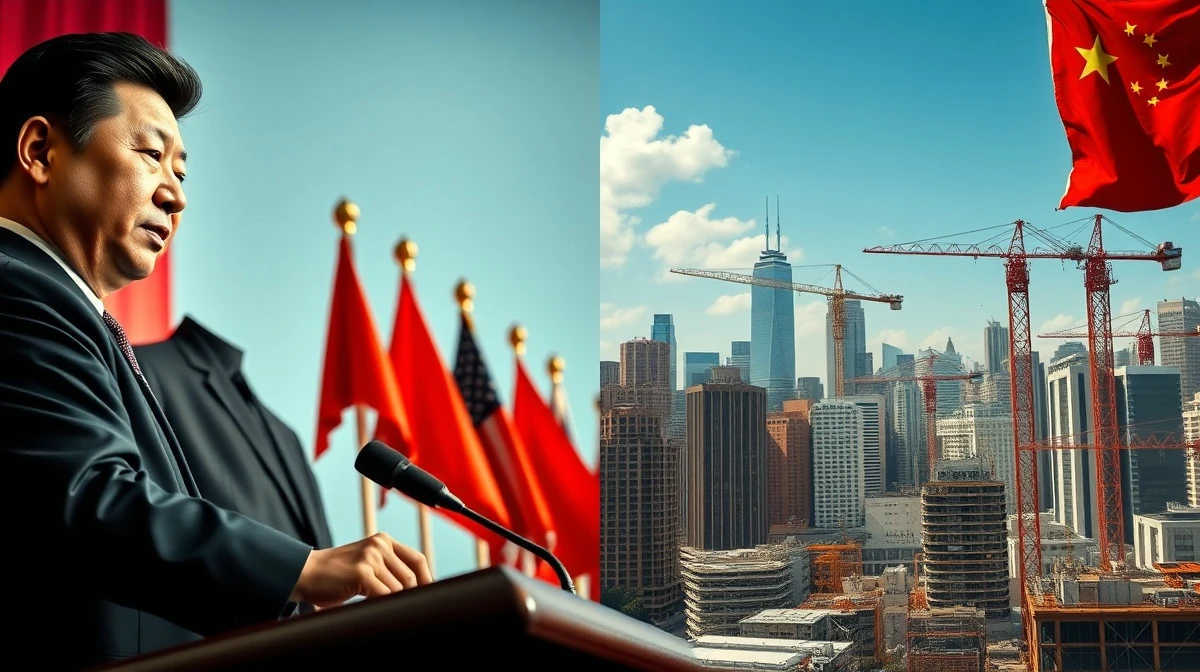
In a recent commentary, former White House economic advisor Larry Kudlow argued that Chinese President Xi Jinping’s aggressive rhetoric and military posturing are unlikely to derail the economic expansion that took hold during the Trump administration. Kudlow’s analysis comes amid renewed tensions between the world’s two largest economies, with Beijing increasing military exercises near Taiwan and stepping up trade restrictions.
Context Behind Kudlow’s Remarks
Larry Kudlow, who served as Director of the National Economic Council under President Donald Trump from 2018 to 2021, has been a vocal advocate of the tax cuts and deregulation policies implemented during that period. His latest commentary frames the current U.S. economic resilience—characterized by low unemployment, strong GDP growth, and rising wages—as a direct result of those policies, which he claims have created a buffer against external pressures.
Also read: EEOC Sues FedEx Over Alleged Discrimination Against Blind Workers
Kudlow specifically pointed to China’s slowing domestic growth, real estate crisis, and demographic challenges as factors that limit Beijing’s ability to sustain a prolonged confrontation. He described Xi’s saber-rattling as more about domestic consolidation than genuine military capability.
Geopolitical and Market Implications
The timing of Kudlow’s analysis is significant. In recent weeks, China has conducted live-fire drills near the Taiwan Strait and increased state media attacks on U.S. trade policies. Meanwhile, the U.S. economy continues to show resilience, with consumer spending remaining sturdy and business investment holding steady.
Also read: Foreign investors warn Japan is backsliding on reform agenda
Market analysts have noted that while geopolitical uncertainty can create short-term volatility, the underlying fundamentals of the U.S. economy remain strong. Kudlow’s argument aligns with a broader view among some economists that China’s apply is limited by its own economic vulnerabilities.
Why This Matters for Investors and Policymakers
For investors, the key takeaway is that U.S. economic policy frameworks from the Trump era—including tax reform and energy independence—may provide a structural advantage in global competition. Policymakers are watching whether the Biden administration will continue or modify these policies as tensions with China evolve.
Consider that that Kudlow’s perspective represents one side of a complex debate. Other economists caution that geopolitical risks, including supply chain disruptions and potential escalation in the South China Sea, could still impact growth. The situation remains fluid, and long-term outcomes are uncertain.
Conclusion
Larry Kudlow’s commentary underscores a belief that the U.S. economy is fundamentally stronger than China’s, and that Xi’s aggressive posture is more rhetorical than effective. While the debate over trade and security continues, the article highlights the ongoing intersection of economic policy and geopolitics—a critical factor for anyone tracking global markets or international relations.
FAQs
Q1: Who is Larry Kudlow?
Larry Kudlow is an American economist and former Director of the National Economic Council under President Donald Trump. He is also a longtime financial commentator and advocate of supply-side economics.
Q2: What does ‘saber-rattling’ mean in this context?
Saber-rattling refers to aggressive displays of military force or threatening rhetoric, often used to intimidate or signal strength. In this case, it describes China’s increased military exercises and verbal warnings toward Taiwan and the U.S.
Q3: Is the U.S. economy really ‘booming’ as Kudlow claims?
Economic indicators such as GDP growth, employment rates, and consumer spending show a strong recovery post-pandemic, though inflation and interest rates remain concerns. The term ‘boom’ is subjective; many economists prefer to describe the current period as solid but facing headwinds.