
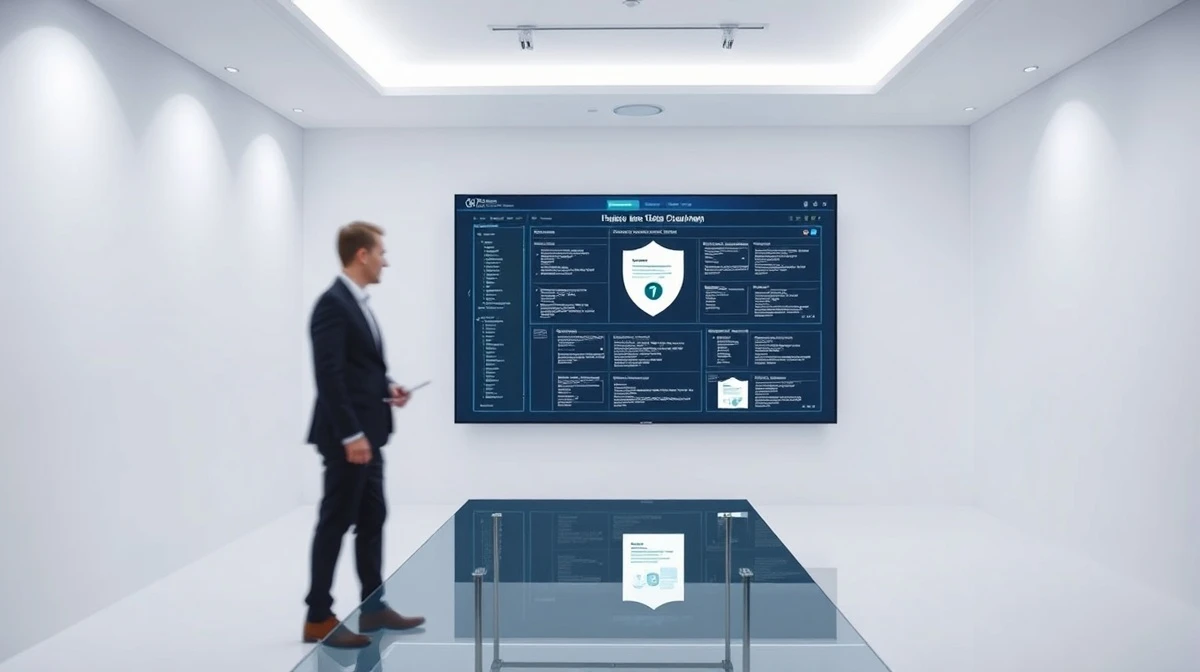
Y Combinator-backed insurance tech startup Corgi is pushing back against allegations that it stole open-source software from Papermark, a maker of data room software, for its newly launched Dataroom product. The dispute erupted earlier this week when Papermark co-founder Marc Seitz posted screenshots on X showing identical feature language and wording between the two products, calling it copyright infringement and fraud.
What Papermark’s screenshots showed
Seitz posted side-by-side comparisons of Corgi’s Dataroom and Papermark’s open-source product, pointing out identical language for the same features. The screenshots quickly went viral, drawing attention from the startup community. Papermark’s software is used for secure document sharing, particularly by startups during fundraising due diligence.
Also read: Kyoto Fusioneering starts building fusion fuel breeding prototype at Oak Ridge
Corgi’s response: denial with a caveat
Corgi co-founder and CEO Nico Laqua responded on X, denying any license violation. “No code was used from Papermark,” a company spokesperson told TechCrunch, confirming the offending features were “vibe-coded” — meaning they were generated using AI tools rather than copied line by line. The spokesperson said the visual elements in question were “isolated to two peripheral settings pages” and were “immediately updated.”
Laqua acknowledged the design similarity was a mistake. “Looking back, we should’ve leaned more into our own language and visual choices instead of taking cues from existing products in the space,” he posted. He also suggested Papermark’s accusations were motivated by competition, noting that Corgi is offering a mostly free product that competes with Papermark’s paid SaaS offering.
Also read: Rivian CEO RJ Scaringe to Detail R2 Launch, Autonomy Push, and Humanoid Robotics at Disrupt 2026
The bigger question: vibe coding and intellectual property
The dispute highlights a growing legal and ethical gray area. If AI tools make it trivial to replicate the look, feel, and functionality of another product without copying the underlying code, what protections exist for original creators? As Y Combinator alum and OpenProse founder Dan Barrett noted on X: “In a world where a bot can trivially copy 1:1 the structure of something even if the character-level code diverges … what makes one unacceptable and the other not?”
Legally, the distinction between copying code and copying design remains critical. Corgi’s case differs from that of fellow YC alum PearAI, which admitted to cloning another open-source project entirely. But the moral and practical questions are becoming harder to ignore as AI-assisted development becomes standard practice.
Reputational fallout and legal countermeasures
Corgi has taken steps to limit reputational damage. The company confirmed it sent a cease and desist letter to Seitz demanding he delete his tweet. Separately, the founder of Hello World Cafe, a business that competes with Corgi’s coffee shop operations, said he also received a cease and desist letter for a joking post about the Dataroom controversy.
The dispute adds to a growing list of controversies surrounding the two-year-old startup. Corgi has previously sued former employees and attracted criticism for CEO Laqua’s comments on a podcast where he said he expects employees to work six or seven days a week. The startup has also raised money at an unusually rapid pace: a $106 million Series B1 at a $2.6 billion valuation in March, just weeks after a $160 million Series B at $1.3 billion.
Papermark has not yet responded to requests for comment.
Frequently Asked Questions
What is the core allegation against Corgi?
Papermark, maker of open-source data room software, accused Corgi of stealing its code and passing it off as its own for Corgi’s new Dataroom product.
What is vibe coding and why does it matter here?
Vibe coding refers to using AI tools to generate software by describing desired features in natural language. Corgi admitted it used vibe coding to replicate the look and feel of Papermark’s interface, raising new questions about intellectual property when code itself differs.
Did Corgi actually copy Papermark’s code?
Corgi denies copying any code. CEO Nico Laqua showed evidence that the underlying code was different, but acknowledged the visual design and wording of features were similar.
Has Corgi taken any legal action?
Yes, Corgi sent a cease and desist letter to Papermark co-founder Marc Seitz demanding he take down his tweet making the allegations.

