
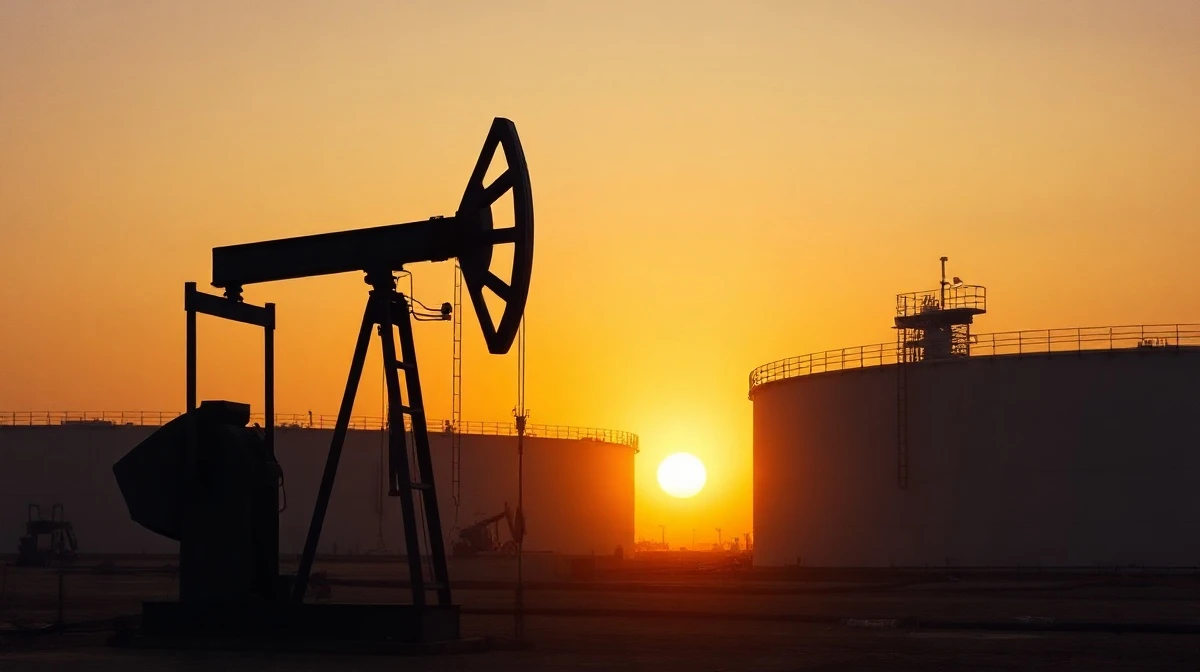
Crude oil futures climbed more than 3% on Tuesday, with Brent crude settling above $82 per barrel, as the geopolitical risk premium that had been suppressed since the Versailles peace talks earlier this year began to re-emerge. The rally marks a reversal of the so-called ‘Versailles patch’—a period of relative calm in oil markets that followed the February 2025 peace negotiations aimed at de-escalating the Russia-Ukraine conflict.
The End of the Versailles Patch
The Versailles patch was never a formal agreement but rather a market phenomenon: after the February 2025 peace talks, traders began pricing in a lower probability of supply disruptions from the Black Sea region. The premium that had added an estimated $5–$8 per barrel to crude prices during the height of the conflict gradually faded as diplomatic channels remained open.
Also read: Robinson Helicopter lands Army training deal, boosting US manufacturing and defense jobs
That discount is now unwinding. Over the past two weeks, a series of military escalations near key energy infrastructure in Ukraine and renewed hostilities in the Middle East have forced traders to reassess supply risk. The International Energy Agency (IEA) noted in its latest monthly report that global oil supply remains precariously balanced, with spare capacity concentrated in a few key producers.
What This Means for Consumers
The return of the war premium has immediate implications for retail fuel prices. U.S. gasoline futures rose 2.5% on Tuesday, and analysts at Goldman Sachs warned that a sustained move above $85 per barrel in Brent could push average pump prices above $3.50 per gallon nationally. European diesel markets, which are more directly exposed to Russian supply routes, saw even sharper increases.
Also read: Walmart finally embraces Apple Pay and Google Pay, ending years of resistance
Central banks are also watching closely. The European Central Bank has cited energy price volatility as a key risk to its inflation outlook, and the Federal Reserve has noted that persistent oil price increases could complicate its path toward rate cuts.
Geopolitical Risks Remain Elevated
The current environment differs from the initial post-invasion spike in 2022, when Brent briefly topped $130 per barrel. Today, markets are more accustomed to supply disruptions, and strategic petroleum reserves in the U.S. and Europe have been partially replenished. However, the combination of simultaneous risks—from the Black Sea to the Strait of Hormuz—creates a compounding effect that traders are only now beginning to price in.
According to Reuters, the premium for immediate delivery over future contracts has widened, a sign of physical market tightness. If diplomatic efforts fail to restore the Versailles patch, the war premium could persist well into the second half of the year.
Frequently Asked Questions
What is the ‘Versailles patch’ in oil markets?
The ‘Versailles patch’ refers to a period of reduced geopolitical risk premium in oil prices following the Versailles peace talks, which temporarily de-escalated some conflicts affecting supply.
Why is the war premium returning to crude oil?
The war premium is returning due to renewed geopolitical tensions, including escalations in Eastern Europe and the Middle East, which threaten oil supply routes and production.
How high could crude oil prices go?
Analysts suggest prices could test recent highs, but the exact level depends on the severity of supply disruptions and any coordinated releases from strategic reserves.

