
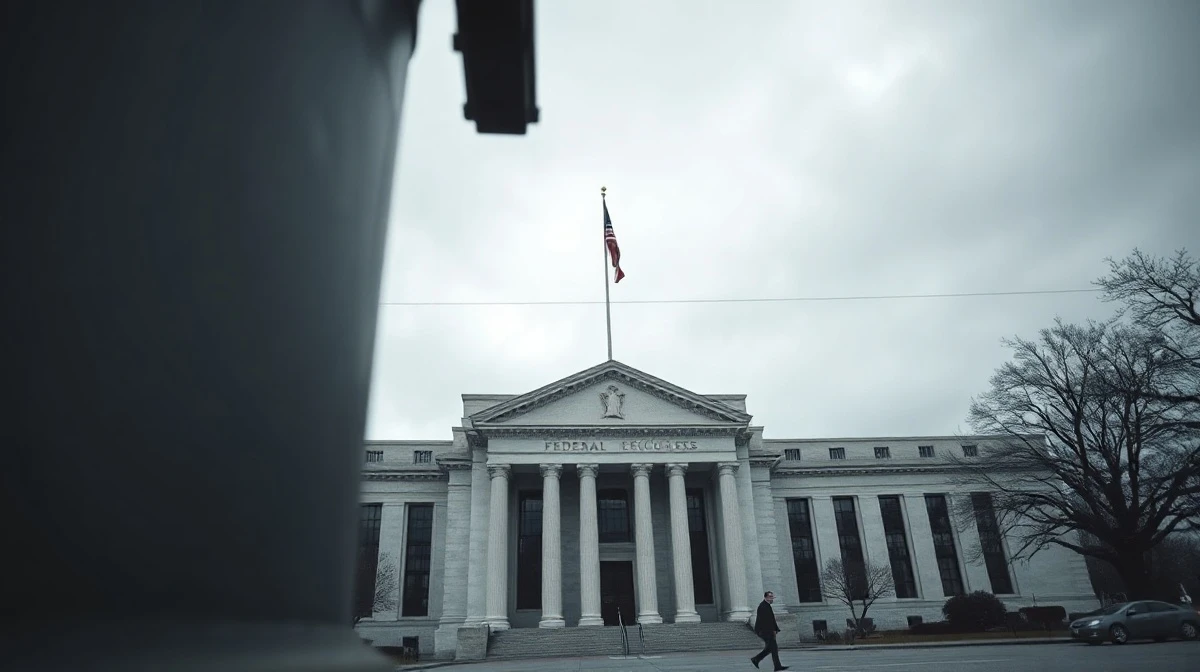
The new Federal Reserve chair has not held a single press conference or delivered a major public speech in the six weeks since taking office. Meanwhile, the S&P 500 has swung by more than 1% on eight separate trading days, and the 10-year Treasury yield has moved 30 basis points in a single week. Investors are asking a simple question: why is the central bank’s leader staying silent?
A Break from Tradition
Since Alan Greenspan’s era, new Fed chairs have typically used early public appearances to signal their policy approach and establish credibility with markets. Jerome Powell spoke at his swearing-in ceremony and held a press conference within his first month. Janet Yellen gave a major address at the Economic Club of New York shortly after her confirmation. The current chair’s extended silence is a clear departure from that precedent.
Also read: Canada's Q2 GDP Rebound Expected to Show Strength, but RBC Warns of 'Headwinds' Ahead
Some analysts suggest the chair may be taking time to study internal Fed models and build relationships with regional bank presidents before making any definitive statements. Others worry the quiet reflects deeper divisions within the Federal Open Market Committee about the path of interest rates.
Market Reactions and Volatility
The absence of guidance has created a vacuum that markets are filling with speculation. The CBOE Volatility Index (VIX) has climbed 15% over the past month, and currency markets have seen unusual intraday swings in the U.S. dollar index. Without clear forward guidance, traders are overreacting to individual data points, such as monthly payrolls and inflation reports, which would normally be contextualized by Fed communication.
Also read: BNY: Fed has legal power to backstop corporate credit, but Warsh-era intervention bar is high
According to Reuters, the lack of a clear policy signal has also widened the dispersion of interest rate forecasts among Wall Street economists, with some calling for rate cuts by mid-year and others predicting a prolonged hold.
What the Silence Might Mean
There are several plausible explanations for the communication gap. The chair may be pursuing a deliberate strategy of restraint, allowing economic data to speak for itself. Alternatively, the administration may have requested a period of quiet to avoid political complications. A third possibility is that the chair is simply a less public figure than predecessors, preferring written statements and published minutes to live press conferences.
Whatever the reason, the cost of the silence is measurable. A recent analysis by Bloomberg found that trading volume spikes on days without any Fed communication, suggesting that uncertainty, not clarity, is driving activity.
Looking Ahead
The next scheduled Federal Open Market Committee meeting is five weeks away. If the chair does not speak before then, markets will be forced to interpret the decision statement and press conference that follows as the first real signal of the new administration’s policy direction. That event will carry outsized weight, and the risk of a sharp market move in either direction is elevated.
For now, investors are left watching the calendar and the data, waiting for a voice from the Eccles Building that has yet to arrive.
Frequently Asked Questions
Why is the Fed chair’s silence unusual?
Previous Fed chairs, including Jerome Powell and Janet Yellen, typically spoke publicly within weeks of taking office to set expectations. A prolonged silence is rare and can be interpreted as either a deliberate strategy or a sign of internal disagreement.
How does the lack of communication affect markets?
Markets rely on forward guidance to price interest rate expectations. Without clear signals from the Fed chair, traders rely on data and speculation, which increases day-to-day volatility in stocks, bonds, and currencies.
Could the Fed chair be planning a major policy shift?
It is possible the chair is waiting to build consensus before making any announcements. However, there is no public evidence of a pending policy change, and the silence itself may simply reflect a different communication style.
What should investors do during this period?
Investors should focus on economic data releases and the Fed’s published minutes rather than expecting real-time commentary. Diversification and a longer-term perspective can help manage uncertainty.

