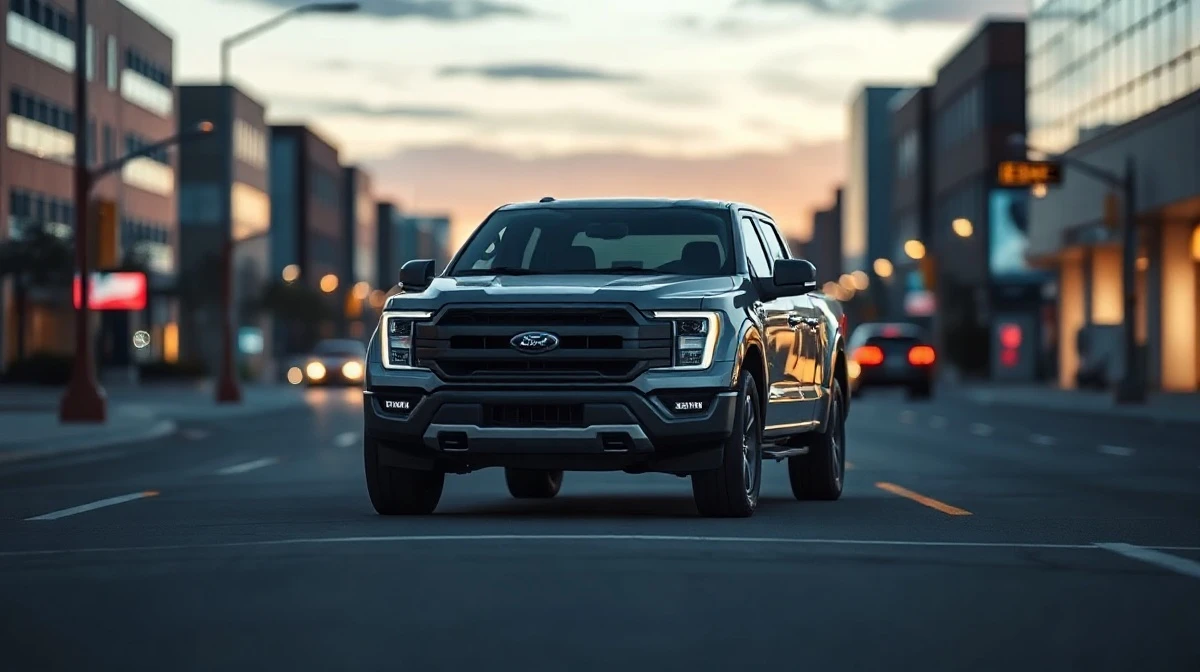
Ford Motor Co. sold 2.08 million vehicles in the U.S. in 2025, a 6% year-over-year gain — but that number is less than half the 4.48 million it moved in 2000. The company that once churned out the Model T, Taurus, and Explorer is still hunting for its next breakout hit, and CEO Jim Farley has placed a big bet on the upcoming Fathom electric pickup, calling its launch and the underlying Universal EV platform a “Model T moment.”
On Thursday, Ford announced the Fathom will start at $29,945 including destination — about $20,000 below the average new vehicle price and roughly $26,000 under the average EV transaction price. That aggressive pricing puts it in direct competition with Chinese EVs that have been expanding globally, and it undercuts the $50,000-plus starting points of most American electric trucks.
Also read: New Mexico court orders Meta to pay $567M, impose teen safety limits on Facebook and Instagram
But price alone rarely creates a phenomenon, and the Fathom faces structural headwinds that the Taurus never encountered.
The compact truck niche is real but limited
The Fathom enters a segment that was largely dormant until Ford introduced the Maverick in 2021. The Maverick has sold briskly — 155,000 units last year — but that volume is modest by Ford standards. The Taurus, by comparison, sold more than twice that at its 1992 peak.
Also read: Defense tech startup Hadrian raises $1.37B to automate military parts production
Ford is betting that the Fathom’s EV advantages will broaden the appeal of compact trucks. The frunk offers closed, lockable storage that traditional pickups lack, which could attract sedan and hatchback owners who previously dismissed trucks for their exposed beds. Ford also says the Fathom’s cabin will feel more spacious than the Maverick’s.
Still, the broader market remains dominated by SUVs. Cox Automotive data shows just over 70% of prospective buyers are shopping for an SUV, compared with 33% for pickups. Even among truck shoppers, the Fathom’s modest, unibody styling may struggle to compete with the rugged, body-on-frame image that many buyers expect — a point GM executives emphasized in a recent briefing, noting they are delivering the “lifted trucks” customers demand.
EV adoption remains the wild card
The Fathom’s electric powertrain is both its biggest selling point and its biggest liability. While EV owners like myself tend to stick with electric, the majority of American buyers remain content with gasoline. Many dealers, too, are happy to steer customers toward familiar internal-combustion options that require less explanation and no charging infrastructure.
Ford can mitigate this with marketing and dealer training, and it will almost certainly release a ruggedized off-road variant of the Fathom to address styling concerns. But those efforts have a ceiling — they can expand the addressable market, not transform it.
A strategic test bed, not a home run
The Fathom’s real importance may be less about its own sales volume and more about what it proves. The Universal EV platform underpinning it is designed to be flexible and scalable, and Ford needs a successful production launch to validate the process before expanding to other segments — including the SUVs that dominate the market.
In that light, the Fathom looks less like a swing for the fences and more like a strategic single: get on base, refine the platform, and set up the next model — the one Ford actually needs to be a home run.
This article is for informational purposes only and does not constitute financial advice. The automotive market is volatile and subject to rapid changes in consumer demand, supply chain conditions, and regulatory policy.