
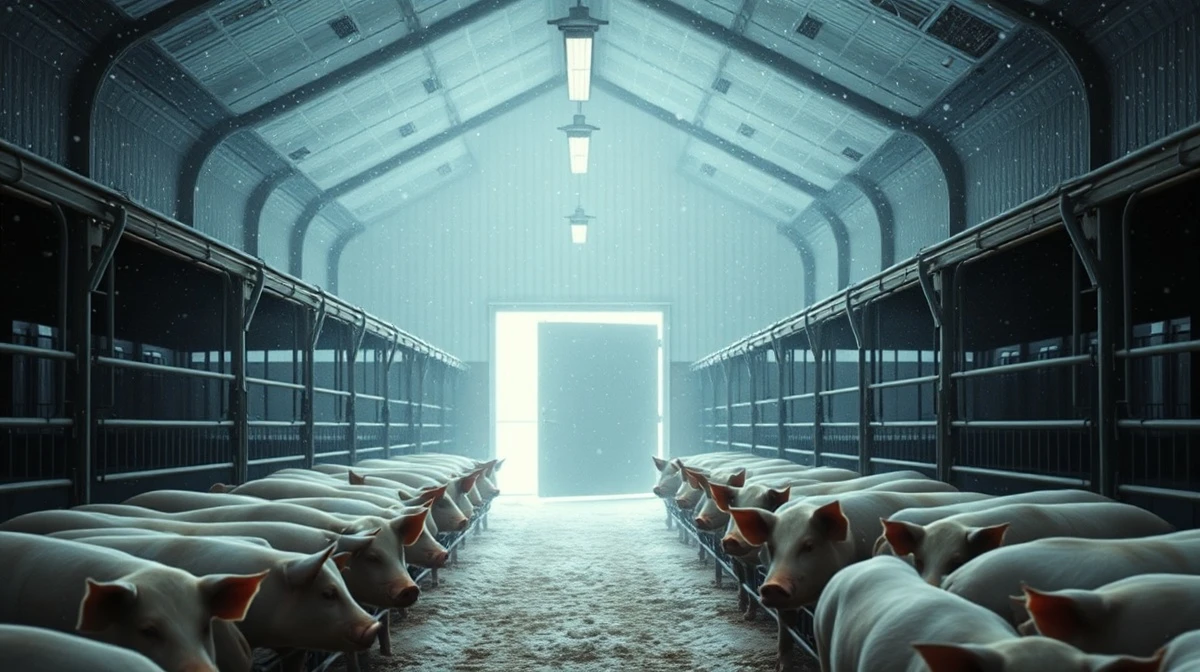
Chicago, IL — March 20, 2025. Lean hog futures closed lower across the board on Wednesday, pressured by a combination of winter weather disruptions and softening pork cutout values. Contracts for April, May, and June delivery all posted losses, with the front-month April contract falling $2.025 to settle at $85.575 per hundredweight.
Price Action and Market Drivers
May 2025 hog futures closed at $88.700, down $1.500, while the June contract settled at $96.500, a decline of $0.850. The USDA national average base hog negotiated price was reported at $91.02 on Wednesday afternoon, up $2.74 from the prior day, indicating some cash market support. However, the CME Lean Hog Index — a key benchmark for settlement — rose only 4 cents to $89.32 as of March 17, suggesting futures are pricing in a more cautious outlook.
Also read: SpaceX, OpenAI, and Anthropic: The AI IPO Wave That Could Reshape Public Markets
Wednesday afternoon’s FOB plant pork cutout value, as reported by USDA, slipped 45 cents to $95.19 per hundredweight. Declines were recorded across several primal cuts, including the loin, butt, and rib primals, signaling weaker wholesale demand.
Weather Disruptions Hit Slaughter Capacity
USDA estimated Wednesday’s federally inspected hog slaughter at 377,000 head, a figure depressed by a blizzard sweeping through parts of Iowa. The week-to-date total stood at 1.352 million head, down 113,000 from the same period last week and 108,158 head below the comparable week in 2024. Weather-related slowdowns at packing plants can temporarily back up market-ready hogs, adding downward pressure on futures as traders anticipate a larger supply entering the system once operations normalize.
Also read: SpaceX IPO Allocation Leaves Binance, Kraken Users Empty-Handed Despite Massive Demand
What This Means for Producers and Traders
The combination of a lower pork cutout, weather-related slaughter delays, and a flat cash index suggests near-term caution in the hog market. Producers should monitor weather forecasts and weekly slaughter data closely, as any sustained slowdown could lead to a backlog. For traders, the spread between cash prices and futures remains a key signal of market sentiment.
Conclusion
Wednesday’s decline in lean hog futures reflects real operational headwinds — winter weather in the Midwest and softening wholesale pork values — rather than a fundamental shift in supply-demand dynamics. The market remains sensitive to slaughter pace and cutout trends in the weeks ahead.
FAQs
Q1: Why did lean hog futures fall on Wednesday?
A: Futures were pressured by a blizzard in Iowa that slowed hog slaughter, combined with a decline in the USDA pork cutout value, particularly in loin, butt, and rib primals.
Q2: What is the CME Lean Hog Index?
A: It is a two-day weighted average of cash hog prices used to settle CME lean hog futures contracts. A small increase of 4 cents to $89.32 suggests cash markets are stable but not surging.
Q3: How does weather affect hog futures?
A: Winter storms can disrupt trucking and packing plant operations, reducing daily slaughter numbers. This can create a temporary oversupply of market-ready hogs, pushing futures lower as traders anticipate a backlog.

