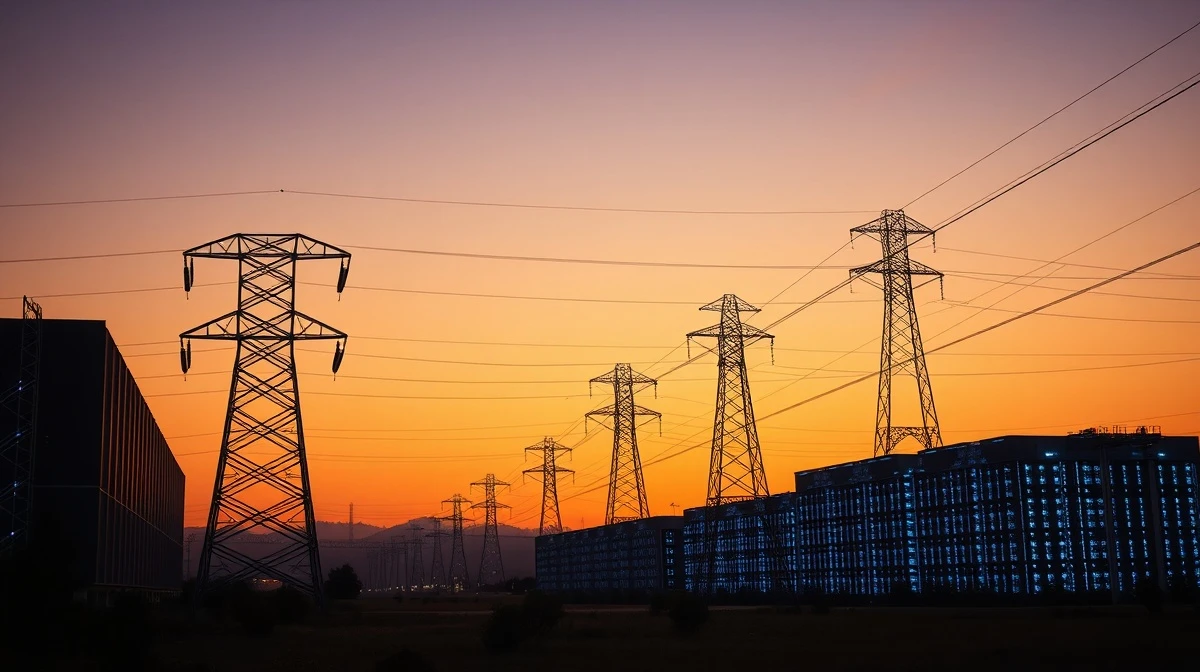
The PJM Interconnection, the grid operator responsible for the largest electricity market in the United States, has spent decades operating quietly in the background. It matched supply with demand, kept prices low, and rarely made headlines. That era is over. Today, PJM is at the center of a gathering storm involving surging electricity demand from artificial intelligence and cloud computing, a backlog of new power projects, and growing frustration from utilities, politicians, and consumers.
A system under siege
PJM released a 70-page white paper this week that acknowledged the severity of the situation. The report warned that the region has “years, not decades” to make fundamental changes to how it operates. PJM CEO David Mills wrote in the foreword that “the current situation is not tenable.” The admission is striking for an organization that has historically avoided public controversy. But the pressures have become impossible to ignore. PJM’s territory includes Northern Virginia, home to the world’s densest concentration of data centers. The rapid expansion of AI and cloud computing has driven electricity demand higher than at any point in decades, just as the grid operator was struggling to process a record backlog of interconnection requests.
Also read: Fujifilm Instax Wide 400 review: Bigger prints, simple fun, and a few trade-offs
The interconnection crisis
In 2022, PJM paused applications for new generating sources to connect to its grid, citing a years-long backlog. At the time, more than 300 gigawatts worth of projects were in the queue. Of those, only 103 gigawatts signed interconnection agreements, and just 23 gigawatts have been connected so far. Most developers withdrew rather than wait. Since PJM reopened the queue, power companies and developers have filed more than 800 new requests for 220 gigawatts of capacity. The bottleneck reflects both PJM’s administrative challenges and the broader complexity of integrating renewable energy, batteries, and natural gas plants into a system designed for an earlier era.
What PJM is proposing
The white paper outlines three possible paths forward. The first would require utilities and generators to make larger, longer-term commitments, extending the current three-year planning horizon. The second would create tiered reliability guarantees, where customers who pay less might face higher risks of power interruptions. The third would shift PJM closer to a real-time market model while retaining some long-term contract stability. Each option carries significant drawbacks. Longer commitments are difficult given turbine shortages and long lead times for new natural gas plants. Tiered reliability risks creating a two-tier system of “haves” and “have-nots” at a time when power prices are already rising. The hybrid market approach may satisfy no one, as it attempts to balance competing interests without clear resolution.
Also read: Tata Electronics, supplier to Apple and Tesla, confirms data breach exposing 630GB of files
Why this matters
The stakes extend well beyond PJM’s immediate region. The grid operator’s decisions will influence electricity prices, data center investment, and the pace of renewable energy deployment across 13 states and the District of Columbia. American Electric Power, one of the largest utilities in PJM territory, is considering leaving the organization entirely. CEO Bill Fehrman said on an earnings call that the current state of PJM’s performance and stakeholder process does not inspire confidence that issues will be resolved soon. “If something is not done now, I expect we could still be having these same conversations in 10 years,” Fehrman said. The comment underscores a broader crisis of confidence. Politicians are threatening price caps. Consumers are frustrated by rising bills. And data center operators, who depend on reliable and affordable power, are watching closely.
Conclusion
PJM’s white paper represents an unusual moment of public introspection for a normally opaque organization. But introspection alone will not solve the structural challenges facing the grid. The convergence of surging AI-driven demand, the rapid deployment of renewables, and the slow pace of infrastructure permitting has created a situation where every stakeholder has reason to be unhappy. PJM may have hoped its mea culpa would buy time. Instead, it has highlighted just how little time may be left.
FAQs
Q1: What is PJM Interconnection?
PJM is a regional transmission organization that coordinates the movement of wholesale electricity across 13 states and the District of Columbia, serving approximately 65 million people. It operates the largest competitive wholesale electricity market in the United States.
Q2: Why is AI straining the power grid?
AI data centers require massive amounts of electricity to power servers and cooling systems. The rapid growth of AI and cloud computing has driven a surge in demand, particularly in Northern Virginia, which is part of PJM’s territory. This has overwhelmed the grid’s capacity to process new interconnection requests.
Q3: What are the proposed solutions in PJM’s white paper?
PJM proposed three options: longer-term commitments from utilities and generators, tiered reliability guarantees for customers, and a move toward a real-time market model. Each option has significant trade-offs, and none has broad support from all stakeholders.