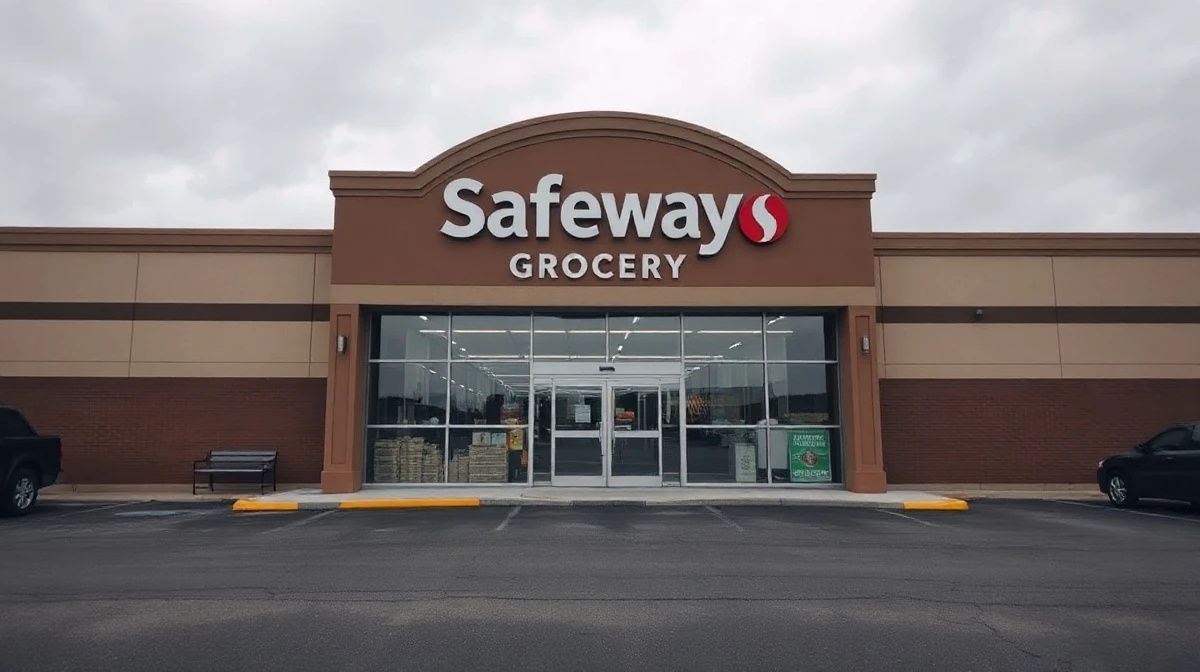
Safeway is closing additional stores as parent company Albertsons Companies reassesses its retail footprint following the collapse of its proposed $24.6 billion merger with Kroger. Albertsons told USA Today that the company had slowed its potential “portfolio optimization” efforts while the Kroger transaction was pending, then resumed evaluating its store network after the deal fell apart. That process has included opening stores in areas where the company sees long-term demand while making what Albertsons described to the outlet as the difficult decision to close some locations.
The broader company closed 35 stores during fiscal 2025, more than triple the 10 it closed the previous year and up from eight in fiscal 2023, according to Albertsons’ latest annual filing. It opened nine stores during fiscal 2025 and ended the year with 2,244 locations across 35 states and Washington, D.C.
Also read: Harvard discloses $2.2B SpaceX stake as university endowments reap IPO windfall
Those closures had a measurable impact on the grocer’s results. Store closures, net of new openings, reduced fiscal 2025 sales by $63.4 million, while costs associated with closed stores and surplus properties climbed to $45.1 million from $15.9 million a year earlier.
Which Safeway locations have closed in 2026?
Albertsons did not provide USA Today with a full list of planned Safeway closures. The outlet reported that Safeway locations that have closed in 2026 include stores at 231 W. Jackson St. in Hayward, California; 2220 N. Coast Highway in Newport, Oregon; and 1601 Maryland Ave. in Washington, D.C.
Albertsons said it is working to place as many affected employees as possible in jobs at other stores, according to USA Today. The company operates 22 grocery banners, including Safeway, Vons, Jewel-Osco, ACME, Shaw’s and Tom Thumb, and employed approximately 280,000 workers as of Feb. 28, 2026.
Why the store review follows the failed Kroger merger
The store review follows the breakdown of Albertsons’ planned combination with Kroger, which was announced in 2022 and would have created one of the country’s largest grocery companies.
The Federal Trade Commission sued to block the $24.6 billion transaction, arguing that the combination would reduce competition and could lead to higher grocery prices and less competition for grocery workers. On Dec. 10, 2024, the U.S. District Court for the District of Oregon granted the FTC’s request for a preliminary injunction blocking the merger. The FTC brought the challenge alongside nine state attorneys general.
The proposed deal subsequently collapsed, setting off litigation between Kroger and Albertsons. Albertsons sought a $600 million termination fee from Kroger, while Kroger later filed counterclaims in Delaware disputing that it owed the payment and accusing Albertsons of undermining the regulatory process. Albertsons has disputed Kroger’s account.
What the closures mean for shoppers and employees
For shoppers, the closures mean fewer physical locations in some regions, though Albertsons continues to invest in other parts of its store base. The company completed 94 remodels and opened nine new stores during fiscal 2025 as part of approximately $1.83 billion in capital expenditures, which also included investment in digital and technology platforms.
For employees, Albertsons says it is trying to transfer affected workers to other stores, but the closures still represent a significant shift in the company’s footprint. The increase in closure-related costs — from $15.9 million to $45.1 million — highlights the financial toll of the transition.
Albertsons did not immediately respond to FOX Business’ request for comment on the closures.
This article is for informational purposes only and does not constitute financial advice. The grocery retail market is volatile and subject to changing conditions.