Natural gas futures closed modestly higher on Friday, August 14, 2026, with September Nymex contracts (NGU26) settling up 0.22% at $2.73 per MMBtu. The small gain came as private forecasters projected above-normal temperatures across the South and West through the final weeks of August, a pattern that typically boosts electricity demand for air conditioning and, in turn, utility consumption of natural gas.
Commodity Weather Group said above-normal temperatures are expected across the South through the end of August, while Vaisala forecast warmer-than-usual conditions for the West from August 22–26. Those outlooks provided some short-term support, but traders were also weighing a deeply bearish supply backdrop that has kept a lid on any sustained rally.
Also read: Joshua Kushner's Thrive Letter Takes a Rare Swing at Silicon Valley's AI Playbook
Record Storage Projections and Pipeline Expansion Weigh on Sentiment
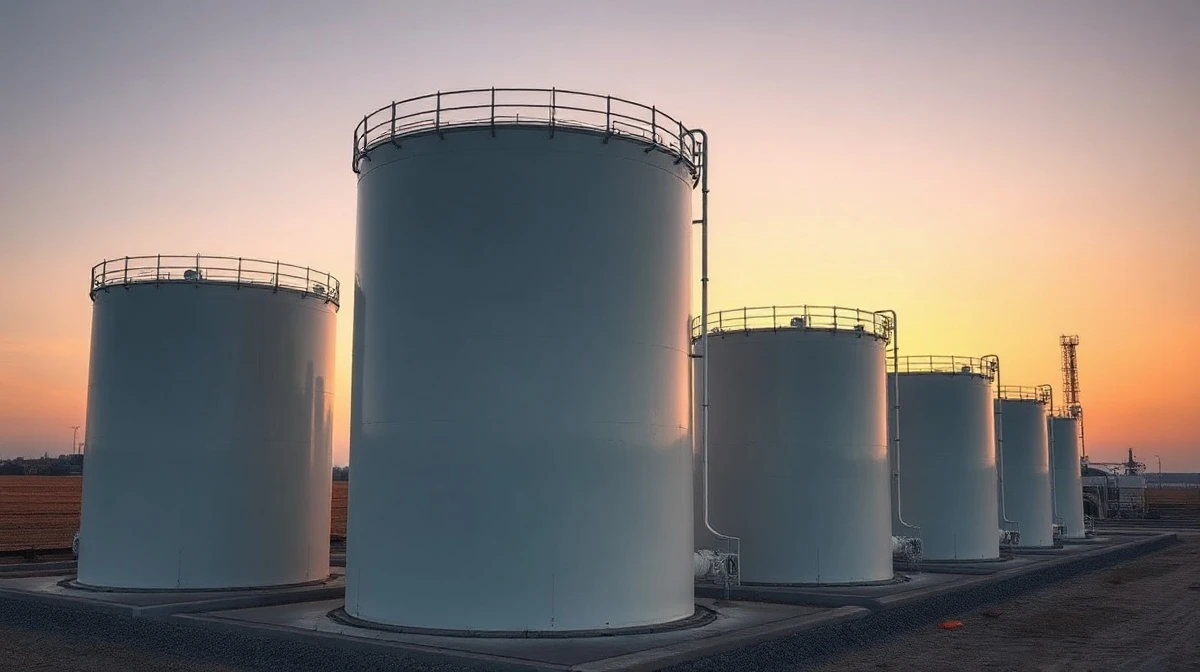
The U.S. Energy Information Administration (EIA) projected on Tuesday that domestic natural gas storage will swell to 3,985 billion cubic feet (bcf) by the end of October, which would mark the highest level in ten years and come in about 5% above the five-year average. Current inventories already stand 6.7% above their seasonal norm, underscoring the market’s ample supply cushion.
Adding to the bearish tone, Energy Transfer announced last Tuesday that the Hugh Brinson pipeline will be able to operate at its full transportation capacity of 1.5 bcf per day by September 1. The expansion allows more gas from the Permian Basin to reach the Henry Hub benchmark in Erath, Louisiana, further boosting domestic supply availability.
Also read: Hyperscalers' Natural Gas Bet Could Backfire If New Price Forecast Holds
On the demand side, BNEF data showed lower-48 dry gas production at 114.4 bcf per day on Friday, up 4.0% year-over-year, while total gas demand stood at 81.6 bcf per day, up 1.3% from a year ago. Estimated LNG net flows to U.S. export terminals were 18.1 bcf per day on Thursday, down 0.9% week-over-week.
The EIA’s weekly storage report, released Thursday, showed a 36 bcf build for the week ended August 7 — larger than the 31 bcf market consensus and the 33 bcf five-year average. Inventories as of that date were down 1.0% year-over-year but remained well above seasonal norms.
El Niño Risk and Global Storage Divergence
A medium-term bearish factor is the potential for a powerful El Niño weather system to bring warmer-than-normal temperatures to the Northern Hemisphere this fall and winter, which would reduce heating demand for natural gas. While such forecasts remain speculative, traders are already positioning for a potentially mild winter that could keep storage levels elevated well into 2027.
In Europe, gas storage was 59% full as of August 9, compared to the five-year seasonal average of 76% for this time of year. The lower fill rate in Europe contrasts with the ample supplies in the U.S. and could influence global LNG pricing dynamics in the coming months.
On the supply side, Baker Hughes reported Friday that the active U.S. nat-gas drilling rig count rose by 4 to 128 rigs in the week ended August 14, still modestly below the three-year high of 134 rigs set in February 2026.
One supportive data point came from the Edison Electric Institute, which reported Wednesday that U.S. lower-48 electricity output in the week ended August 8 rose 7.0% year-over-year to 99,864 GWh. The 52-week rolling output also increased 2.3% to 4,357,109 GWh, reflecting sustained industrial and residential demand.
Looking ahead, traders will be watching the next EIA storage report for signs of whether the current build pace continues to outpace seasonal norms. The combination of warm late-summer weather and record-high projected storage levels suggests the market will remain rangebound in the near term, with any significant price move likely dependent on shifts in weather forecasts or LNG export dynamics.
This article is for informational purposes only and does not constitute financial advice. Natural gas and other commodity markets are volatile and involve substantial risk. Readers should conduct their own research or consult a qualified financial advisor before making any investment decisions.