
Scaleup Europe Fund Deploys First Capital: €5.7B Initiative Backs Satellite Firm ICEYE
Scaleup Europe Fund, a €5B EU-backed initiative, makes its first investment in Finnish satellite firm ICEYE. Learn about the fund's strategy and impact.

· 3 min read
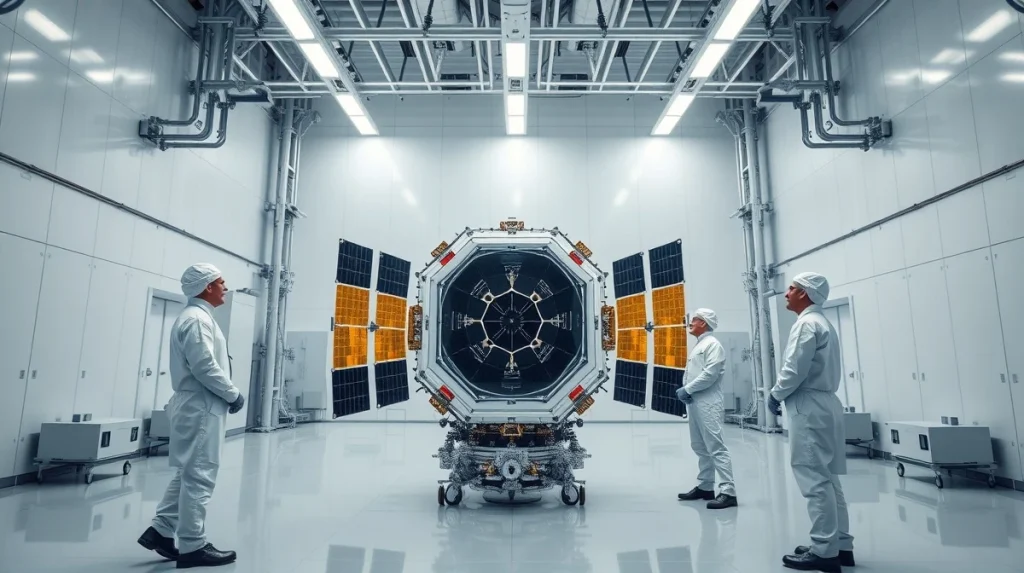
The European Commission’s new €5 billion ($5.7 billion) Scaleup Europe Fund has made its first investment, backing Finnish satellite intelligence company ICEYE in a Series F round that values the company at over $11 billion. The deal was announced just a day after the Commission declared the fund fully operational, marking a swift start for a vehicle designed to plug Europe’s late-stage funding gap.
ICEYE CEO Rafal Modrzewski framed the investment as a validation of Europe’s strategic tech ambitions. “Space-based intelligence is becoming critical infrastructure for governments, and the Scaleup Europe Fund exists so companies like ours don’t have to leave Europe to compete globally,” he wrote on LinkedIn.
Also read: How Thiel Capital's Jack Selby used Arizona ties to land a stake in $5B AI chip startup Etched
A Public-Private Hybrid Built to Keep Scaleups in Europe
Scaleup Europe is not a traditional state-backed program. While the European Commission anchored the fund with a €1 billion ($1.15 billion) commitment, the vehicle is backed by private investors and run by Swedish asset manager EQT, which won an open call to manage the fund. EQT’s selection was notable given its ties to Sweden’s Wallenberg family, which had been floated as a potential anchor investor.
The fund’s mandate is deliberately broad, covering “including but not limited to deep tech, life sciences, clean tech, advanced manufacturing, and digital technologies.” For EQT, that translates into focus areas like AI, biotech, energy, robotics, semiconductors, and space — the last of which is now demonstrated by the ICEYE deal.
Also read: Why VC-backed founders commit fraud: new research points to investor pressure
“Europe has proven its ability to create successful early-stage technology companies, the challenge is now to scale those businesses into becoming global leaders while maintaining their European roots,” EQT CEO Per Franzén said in a statement.
Who’s Behind the Fund?
Beyond the Commission’s anchor investment, Scaleup Europe’s founding investors include a roster of major European institutional players:
- German insurer Allianz
- APG, representing Dutch pension fund ABP
- Spanish funds CriteriaCaixa and Santander-owned Mouro Capital
- Italy’s Fondazione Compagnia San Paolo, Intesa Sanpaolo, and Fondazione Cariplo
- Denmark’s EIFO and Novo Holdings
The fund’s fundraising is expected to continue into 2027, with a second round potentially open to non-European investors, provided they align with the fund’s objectives. Reports suggest the Commission has discussed eventually expanding the fund to €25 billion ($28.9 billion), which would put it in the same league as major Asian and U.S. growth funds.
Why This Matters for Europe’s Startup Ecosystem
The launch of Scaleup Europe comes amid a long-documented problem: European startups often struggle to secure the large late-stage checks they need to scale domestically, leading many to seek funding — and eventually relocate — to the U.S. or Asia. The fund’s creation is a direct attempt to counter that trend.
“Space-based intelligence is becoming critical infrastructure for governments,” Modrzewski’s comment underscores, but the logic extends beyond satellites. By providing growth capital for strategic sectors, the Commission hopes to retain homegrown talent and technology, bolstering Europe’s competitiveness and tech sovereignty.
The fund’s €5 billion target already makes it an outlier in the EU, where venture capital firms typically manage millions rather than billions. However, with the European Investment Fund’s European Tech Champions Initiative also backing growth-stage VC firms, the market is shifting. Scaleup Europe may soon be part of a broader movement to fill the funding gap that has long hindered the continent’s most promising startups.
As the fund deploys its capital, the coming months will reveal whether it can successfully nurture a new generation of European tech champions — and whether other strategic investments follow the ICEYE template.

Source: TechCrunch
Benjamin Carter covers business, finance, and the stock market for StockPil, focusing on the trends and data that matter to everyday investors.
More from Benjamin →