
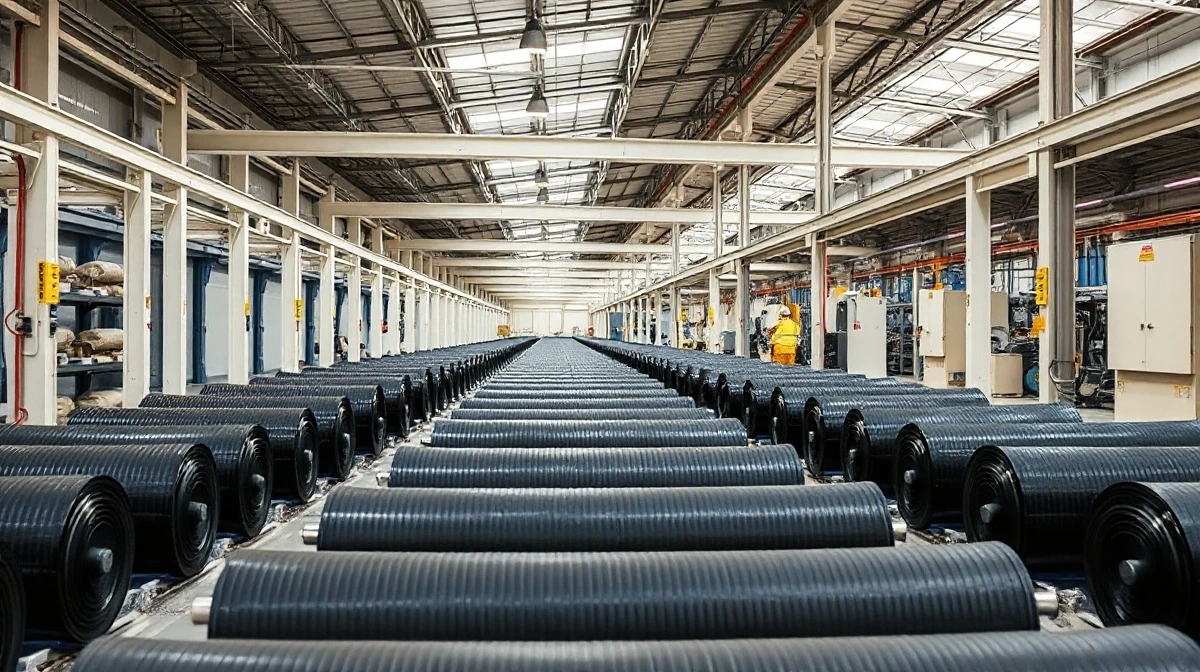
The U.S. Department of Defense has awarded Sila, a California-based battery materials startup, a $1.4 billion loan to expand production of its silicon-carbon anode material at its factory in Moses Lake, Washington. The loan, announced Friday, is part of a broader Pentagon push to secure domestic supply chains for critical battery materials as demand surges from both automakers and defense contractors.
Why the Pentagon is investing in battery materials
Most lithium-ion batteries today rely on graphite anodes, and China controls a dominant share of the graphite supply chain. That concentration poses a strategic risk for the U.S. military, which increasingly depends on advanced batteries for drones, portable electronics, and electric vehicles. The Pentagon’s loan to Sila is designed to reduce that reliance by supporting domestic production of alternative anode materials.
Also read: YouTube Tightens Partner Program Entry Requirements, Doubling Watch Hour Threshold
Sila’s silicon-carbon material stores 20% to 40% more electricity than conventional graphite anodes. That improved energy density translates into longer-lasting cells or smaller, lighter batteries — traits that are particularly attractive for defense applications and electric vehicles, where weight and range are critical.
Scaling up at Moses Lake
Sila’s Moses Lake factory began operating in September and currently produces about 2 gigawatt-hours of anode material per year. The company plans to expand the facility fivefold, which would enable production of enough material for more than 100,000 EVs annually. In July, Sila raised $300 million from investors including Atreides Management and Sutter Hill Ventures to help fund the expansion. To date, the company has raised over $1.5 billion in private capital, according to PitchBook.
Also read: Wacom Movinkpad 11 review: A capable, mid-priced entry into digital art
Sila already counts Mercedes-Benz and Panasonic among its customers. The new Pentagon loan could open additional opportunities with defense contractors, who have been securing large contracts as conflicts in Iran and Ukraine continue. The company’s U.S.-based production also avoids tariffs and geopolitical supply chain concerns that affect materials sourced from China.
Other Pentagon investments in critical minerals
The Department of Defense’s latest round of funding extends beyond Sila. The department announced deals with three other companies:
- Sunrise Energy Metals — a $400 million loan to mine scandium, a rare earth element used in lightweight alloys.
- Niron Magnetics — a $150 million loan to manufacture rare earth-free magnets for smartphones, missiles, and electric motors.
- Strategic Bauxite — an $85 million equity investment to mine bauxite, a mineral containing aluminum.
These investments reflect a broader U.S. strategy to strengthen domestic supply chains for critical minerals and reduce dependence on foreign sources, particularly China. For Sila, the loan not only accelerates its commercial ambitions but also positions it as a key player in the national security supply chain.
As the Pentagon continues to fund battery and materials innovation, Sila’s expansion will be closely watched by both the defense and automotive industries. The company’s ability to scale production while maintaining quality will determine whether silicon anodes can become a mainstream alternative to graphite in the coming years.
Disclaimer: This article is for informational purposes only and does not constitute financial advice. Market conditions are volatile and uncertain; readers should conduct their own research before making any investment decisions.

