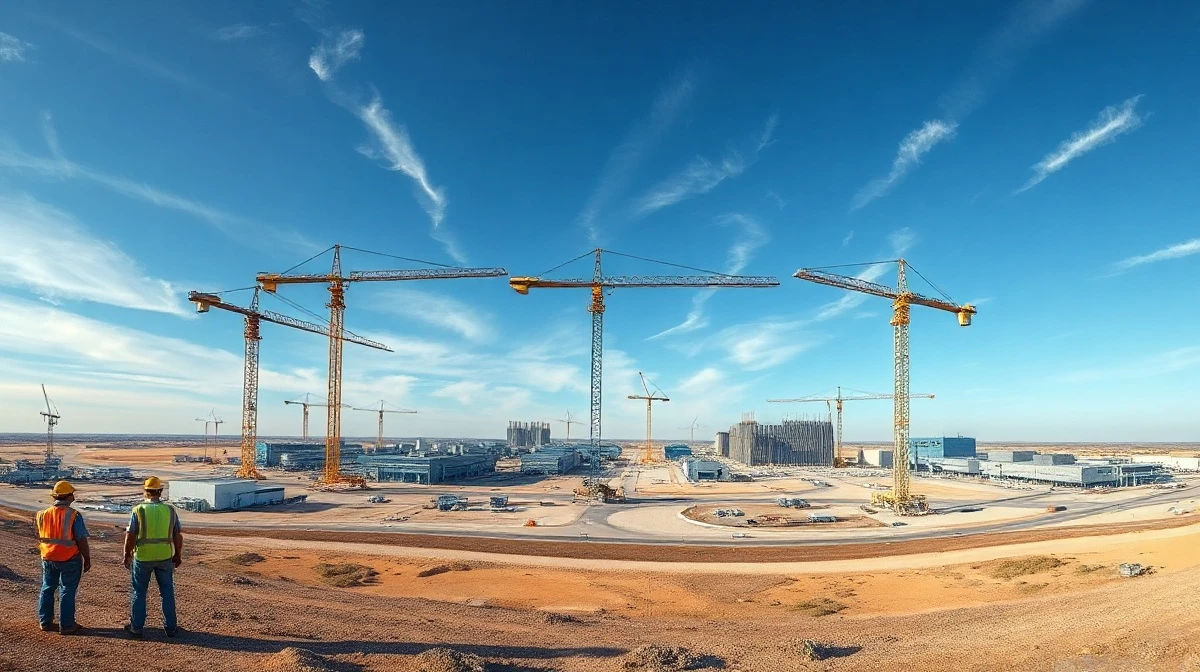
Tesla and SpaceX said Thursday that their jointly developed advanced chip factory, dubbed “Terafab,” will be built in Grimes County, Texas, with an initial investment of $16.8 billion. The companies describe the facility as “the largest and most valuable building on Earth by far,” according to a post by Elon Musk, CEO of both companies.
The announcement follows a heavily attended county meeting on Wednesday where hundreds of residents raised concerns about tax breaks and transparency. The project, which will include more than 100 million square feet of manufacturing space, is expected to employ at least 3,000 people from Grimes and nearby Brazos County.
Also read: This 'adversarial' pattern can prevent surveillance cameras from detecting you
What Terafab is designed to do
According to a post on SpaceX’s website, the facility will be “an advanced semiconductor fab that will bridge the divide between current global chip supply and the compute demand of the future.” The factory will be vertically integrated, housing manufacturing, packaging, and testing of advanced logic and memory devices in one location. This integration is intended to enable “fast, recursive improvements” and accelerate the deployment of new compute capacity.
The chips produced at Terafab will be optimized for edge computing and inference, specifically for use in Tesla’s Optimus robots and self-driving Cybercabs, as well as high-power chips designed for SpaceX’s space-based data centers. This reflects Musk’s broader vision of a future where millions of robots perform human jobs, robotaxis dominate roads, and satellites act as data centers for AI training and inference — a future that requires far more computing power than current production rates can supply.
Also read: China-linked LightSpy spyware expands to 13 countries, adds device-wiping attacks
SpaceX has indicated in filings that it may spend as much as $119 billion on the project across a “multi-phase” construction plan, although the company did not discuss Terafab on its first earnings call earlier this week. Intel has confirmed it will contribute to the project, but has not specified the nature of its involvement.
Community concerns and local impact
The project has not been without controversy. At Wednesday’s county meeting, hundreds of residents attended, voicing concerns about millions of dollars in tax breaks awarded to the project and a perceived lack of transparency. The companies have committed to using water from the local Gibbons Creek Reservoir instead of local groundwater, a move aimed at addressing environmental concerns.
Local officials have expressed cautious optimism. “We believe this agreement will strengthen our district, expand opportunities, and better prepare our students for their future,” said Dr. Sarah Borowicz, superintendent of the Anderson-Shiro Consolidated Independent School District, in a statement released by the Texas Governor’s office. “There are defining moments in the life of a school district, and this is one of those moments. Our commitment now is to ensure that every opportunity created through this agreement is managed wisely, transparently, and always with students at the center of every decision.”
What this means for the chip industry and Texas
The Terafab project represents one of the largest semiconductor investments in U.S. history, signaling a continued shift of advanced manufacturing to Texas, which already hosts major fabs from Samsung and other companies. The scale of the facility — over 100 million square feet — would dwarf existing chip plants, which typically range from 1 to 5 million square feet.
For the broader semiconductor industry, Terafab underscores the growing demand for specialized AI and edge-computing chips, a market that has seen explosive growth. The integration of manufacturing, packaging, and testing in a single facility is a departure from the industry’s traditional model of separate, specialized plants, and could set a new precedent for future fab construction.
However, the project’s ultimate success will depend on execution, funding, and community relations. The companies have not released a detailed timeline for construction or production, and the multi-phase plan suggests that full build-out could take years. With Intel’s involvement still unclear, and SpaceX’s earnings call notably silent on the project, questions remain about the financial structure and long-term viability.
For now, the announcement marks a significant step in Musk’s ambitious plan to build the compute infrastructure needed for his vision of the future — and a major bet on Texas as the hub for that infrastructure.
This article is for informational purposes only and does not constitute financial advice. The semiconductor and AI markets are volatile, and readers should conduct their own research before making any investment decisions.