
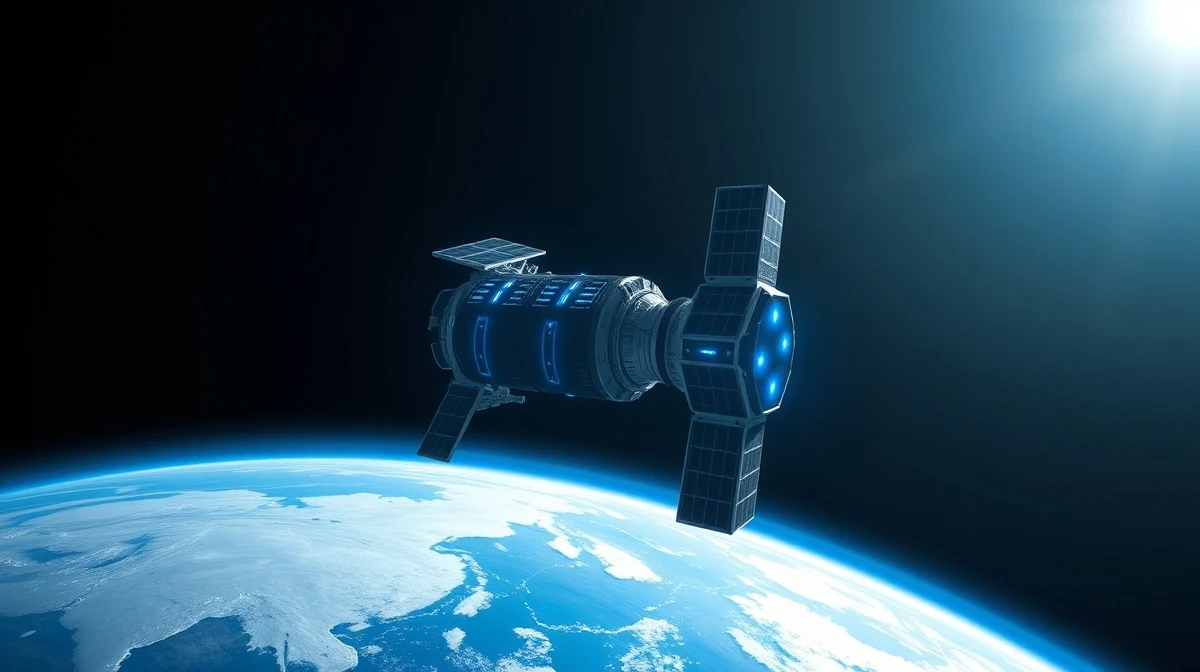
SoftBank founder and CEO Masayoshi Son has publicly pushed back against Elon Musk’s vision for orbital data centers, arguing that the concept is too costly and too slow to address the immediate compute needs of the AI industry. Speaking at a recent shareholder meeting, Son said that ‘in the battle for AI, the next few years will be far more important than what might happen a decade or so from now.’
Son’s comments were discussed on a recent episode of TechCrunch’s Equity podcast, where senior reporters Kirsten Korosec, Sean O’Kane, and Anthony Ha examined the broader implications for AI infrastructure, chip supply, and corporate self-interest.
Also read: Kyoto Fusioneering starts building fusion fuel breeding prototype at Oak Ridge
SoftBank’s history of ‘wild bets’ makes Son’s skepticism notable
Kirsten Korosec pointed out the irony of Son playing the skeptic, given SoftBank’s track record of funding ambitious and sometimes controversial ventures. ‘SoftBank has a long history of making wild bets,’ she said. ‘I think it says something when Son comes up and asks the question that a lot of people have asked.’
SoftBank’s Vision Fund has poured billions into startups like WeWork and Arm Holdings, as well as AI infrastructure projects on Earth. Son’s pushback against space-based data centers may reflect a pragmatic focus on near-term returns rather than a philosophical opposition to bold ideas.
Also read: Rivian CEO RJ Scaringe to Detail R2 Launch, Autonomy Push, and Humanoid Robotics at Disrupt 2026
SpaceX’s launch business stands to gain from orbital data centers
Sean O’Kane noted that Musk’s proposal would create a self-reinforcing cycle for SpaceX. ‘When you talk about making a constellation of satellites — satellites that need to be replaced every few years — to make up an orbital data center, you’re just guaranteeing that much more business for your launch business,’ he said.
SpaceX already dominates the global launch market, in part because its Starlink satellite internet business drives up launch volume. An orbital data center project would further increase demand for SpaceX’s rockets, potentially solidifying its market position for years to come.
No impartial observers in the AI infrastructure debate
Anthony Ha emphasized that both Musk and Son have financial stakes that color their predictions. ‘In Musk’s case, he’s talking about something that would be very good for SpaceX’s business. In SoftBank’s case, they are very, very heavily invested in data center projects here on Earth,’ he said.
OpenAI CEO Sam Altman has also expressed skepticism about orbital data centers, adding another layer of complexity given his long and complicated history with Musk. The debate underscores the challenge of evaluating competing visions when every major player has something to gain or lose.
For now, the immediate pressure on AI companies is clear: they need more computing power, and they need it fast. Whether the answer lies in space or on Earth remains an open question, but Son’s intervention has made it clear that not everyone is ready to bet on the stars.
Frequently Asked Questions
What are orbital data centers?
Orbital data centers are proposed satellite-based facilities that would host computing hardware in space, potentially offering lower latency for global AI workloads and bypassing terrestrial land and energy constraints.
Why is Masayoshi Son skeptical of the idea?
Son believes the cost and timeline for orbital data centers are prohibitive, and that the AI industry needs computing solutions now, not in a decade.
How does this debate affect AI companies?
The outcome could influence where and how AI infrastructure is built, impacting costs, scalability, and the pace of AI development for companies like OpenAI, Google, and Microsoft.

