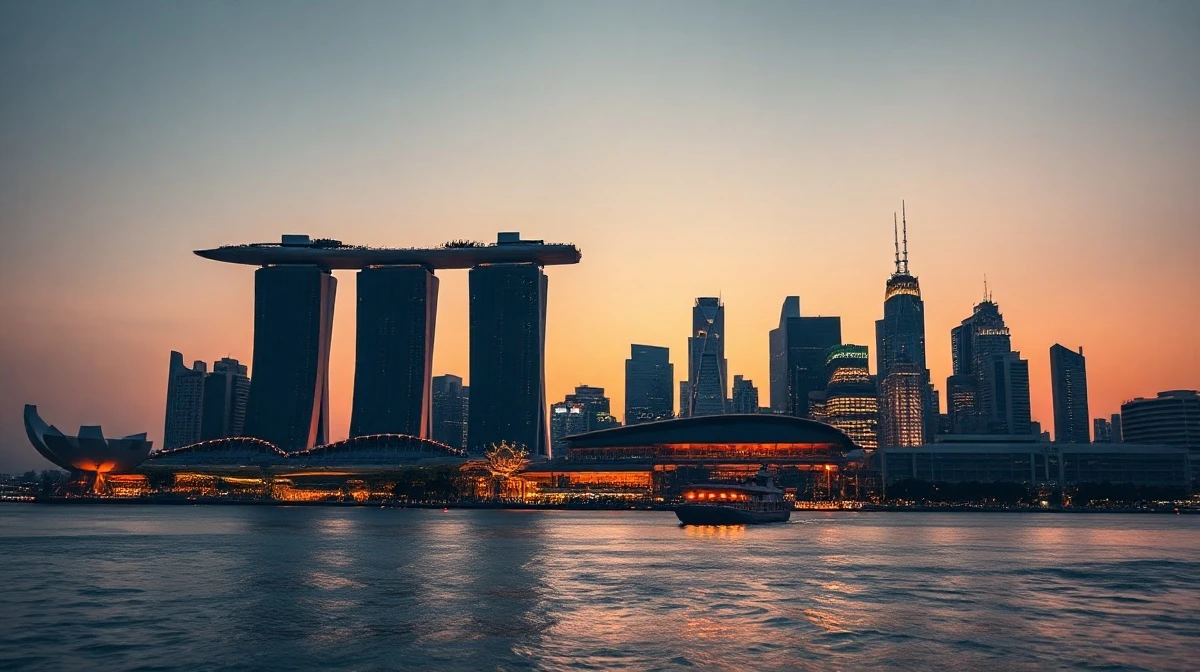
Singapore’s state-owned investment firm Temasek is moving to consolidate its asset management operations, with a plan to merge several units into Seviora Holdings, positioning the entity as a major regional competitor to global giants like BlackRock. The initiative, reported by Reuters and confirmed by sources familiar with the matter, targets the creation of one of Asia’s largest homegrown asset managers, capitalizing on the region’s rapidly expanding wealth management market.
Temasek, which manages a portfolio worth over S$380 billion (approximately US$280 billion), currently owns a 41% stake in Seviora. The proposed restructuring would fold in other Temasek-linked asset management businesses, including Azalea Investment Management and Seatown Holdings, to create a single entity with combined assets under management estimated to exceed S$100 billion. The move is seen as a strategic response to the growing dominance of Western asset managers in Asia, where family offices, pension funds, and sovereign wealth funds are seeking diversified investment solutions.
Also read: Trump Says He Will Ask Netanyahu Not to Strike Back at Iran
Why Singapore needs a homegrown asset management champion
Asia’s wealth management industry is projected to grow at an annual rate of 8-10% over the next decade, driven by the rise of high-net-worth individuals in China, India, and Southeast Asia. However, the region’s asset management sector remains fragmented, with many of the largest players headquartered in the United States or Europe. BlackRock, Vanguard, and State Street collectively manage over $20 trillion globally, but their Asian operations often compete with local firms that lack scale.
Singapore, already a leading wealth management hub with over S$4 trillion in assets under management across its financial sector, has identified asset management as a key pillar of its economic strategy. The Monetary Authority of Singapore (MAS) has introduced tax incentives and regulatory frameworks to attract fund managers. By consolidating Temasek’s various asset management arms, the city-state aims to create a flagship institution that can compete for mandates from sovereign wealth funds, pension funds, and institutional investors across the region.
Also read: Goldman Sachs general counsel to stay on as adviser after Epstein-related resignation
“Singapore has the capital markets infrastructure and regulatory environment to host a top-tier asset manager,” said a senior banking analyst at a global consultancy, speaking on condition of anonymity because the talks are private. “The question has always been scale. Temasek’s move addresses that directly.”
Seviora’s current position and growth trajectory
Seviora, established in 2019, currently manages around S$50 billion in assets across private equity, credit, and real assets. Its portfolio includes investments in infrastructure, private debt, and alternative assets. The merger would add Azalea’s focus on structured products and private equity secondaries, as well as Seatown’s expertise in public markets and direct investments. The combined entity would offer a full spectrum of asset classes, from liquid public equities to illiquid private assets, a range typically associated with global asset managers.
The restructuring is expected to be completed over the next 12 to 18 months, subject to regulatory approvals and final board sign-offs. Temasek has not publicly disclosed the exact timeline, but internal sources indicate that the integration process is already underway, with teams working on aligning investment processes, risk management systems, and client reporting frameworks.
Implications for the Asian asset management market
The creation of a Singaporean asset management giant could reshape competitive dynamics in the region. Local and regional asset managers, such as Hong Kong-based Hang Seng Investment Management and Malaysia’s Permodalan Nasional Berhad, may face increased competition for institutional mandates. At the same time, global players may need to reassess their strategies for winning business from Southeast Asian sovereign wealth funds and family offices.
For investors, the consolidation promises improved access to alternative assets, which have historically been the domain of large institutional investors. Seviora’s expanded scale could lower fees and offer more sophisticated products, such as co-investment opportunities in infrastructure and private equity, to a broader range of clients.
However, challenges remain. Integrating multiple investment teams with distinct cultures and strategies is notoriously difficult. Temasek will need to retain key talent and ensure that the combined entity does not become overly bureaucratic. The success of the initiative will depend on execution, not just ambition.