
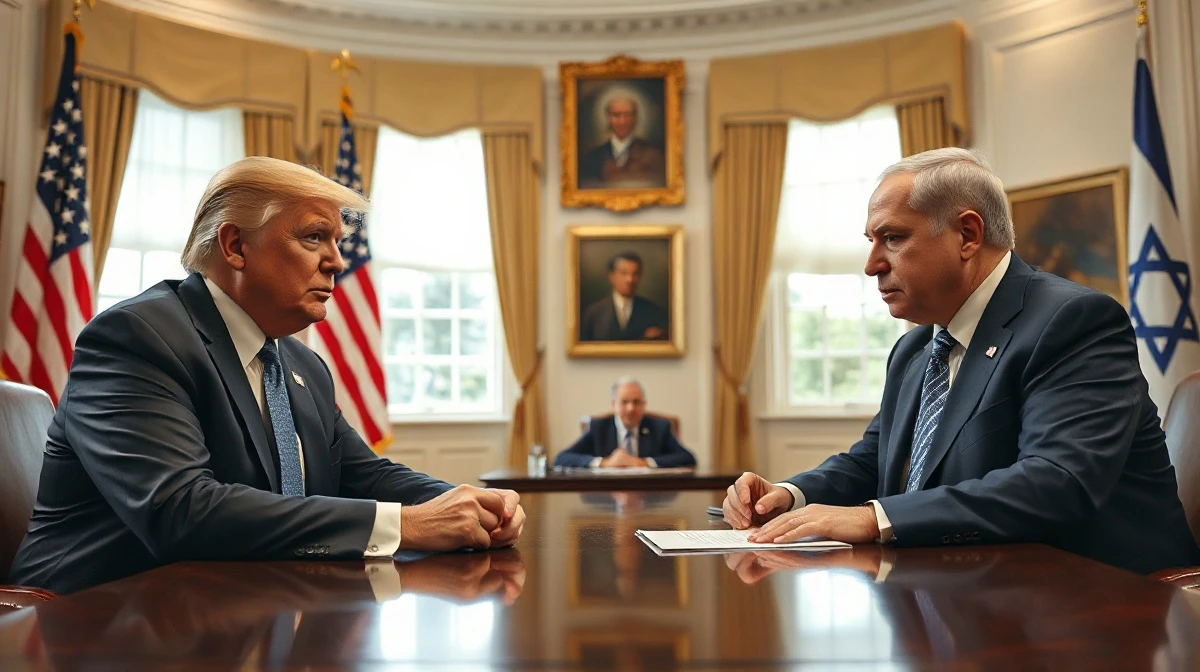
President Donald Trump said on Tuesday that he will ask Israeli Prime Minister Benjamin Netanyahu not to launch a retaliatory strike against Iran, following a missile attack from Tehran over the weekend. Speaking to reporters at the White House, Trump said he would urge restraint to prevent a broader regional war.
“I’m going to ask Bibi not to do it,” Trump said, using Netanyahu’s nickname. “We’ll see what happens. But I think we can handle this without another war in the Middle East.”
Also read: Goldman Sachs general counsel to stay on as adviser after Epstein-related resignation
The comments come after Iran launched a salvo of ballistic missiles toward Israel on Saturday, which the Israeli military said were mostly intercepted by its air defense systems. No casualties were reported, but the attack marked a significant escalation in the ongoing shadow conflict between the two nations.
White House seeks de-escalation
Trump’s statement signals a shift in tone from his earlier administration, which pursued a maximum-pressure policy toward Iran, including the 2020 assassination of Iranian General Qassem Soleimani. During his current campaign, Trump has emphasized a desire to end U.S. involvement in foreign wars.
Also read: Founders share VC horror stories, and some are naming names
Senior administration officials, speaking on condition of anonymity, confirmed that the White House has been in contact with both Israeli and Iranian intermediaries to lower tensions. The U.S. has also increased naval presence in the Persian Gulf as a deterrent.
Netanyahu’s office declined to comment on Trump’s remarks. However, Israeli officials have privately indicated that any decision on a response will be made independently, based on Israel’s security assessment.
Regional implications
The potential for a direct Israel-Iran military confrontation has alarmed Gulf states and European allies, who fear a conflict could disrupt oil shipments and destabilize the region. Iran has warned that any attack on its territory would be met with a “severe and swift” response.
Analysts say Trump’s intervention could test his influence over Netanyahu, who has taken a hard line on Iran. “Trump is trying to claim credit for preventing a war, but Netanyahu has his own calculus,” said Dr. Lina Khatib, director of the Middle East Institute at SOAS University of London. “The question is whether the prime minister believes restraint serves Israel’s interests.”
The situation remains fluid. No date has been set for a Trump-Netanyahu meeting, but diplomatic channels remain open.

