
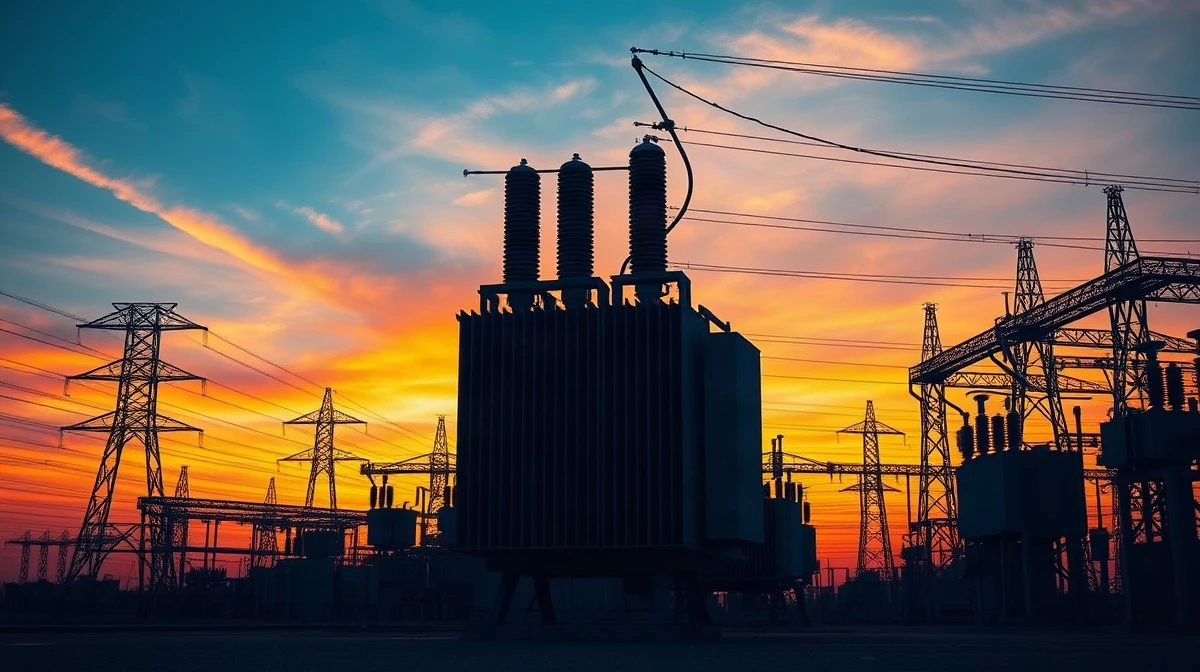
President Donald Trump signed an executive order on Wednesday declaring a national emergency over foreign-made power grid equipment, granting the Energy Department broad authority to restrict imports and installations of certain bulk-power components and to force utilities to replace equipment already operating on the U.S. grid.
The order, announced as the administration escalates its focus on critical infrastructure security, targets equipment produced by “covered foreign entities” that officials determine pose an unacceptable risk to the electric system. It covers a wide range of grid infrastructure, including transformers, generators, battery energy storage systems, grid-connected inverters, turbines, and industrial control systems, as well as associated software, firmware, and remote-access capabilities.
Also read: Sweden’s startup surge: How Lovable’s $13.3B valuation reflects a Nordic shift
The White House argues that foreign-produced equipment could contain vulnerabilities, including digital backdoors that allow remote access to critical infrastructure. It also cites the risk of supply disruptions caused by trade disputes or other shocks, noting that reliance on foreign suppliers leaves the U.S. exposed. The stakes are rising as artificial intelligence, data centers, advanced manufacturing, and defense production drive demand for reliable electricity.
What the order allows
The Energy Department can prohibit the acquisition, importation, transfer, or installation of foreign-produced bulk-power equipment if a transaction involves a covered foreign entity and poses a security risk. More significantly, the energy secretary can require that foreign-manufactured or operated equipment already in service be identified, isolated, monitored, secured, disconnected, replaced, or removed.
Also read: Taiwan’s AI-Driven Export Boom Fuels Exceptional Q3 GDP Growth, Commerzbank Says
That provision could carry substantial financial and operational consequences for utilities and infrastructure operators. The order does not estimate potential costs or identify which specific equipment or vendors could ultimately be affected. It does, however, direct officials to weigh reliability and safety, the availability of secure replacement equipment, and continuity of essential service before requiring changes. The Energy Department can also phase in compliance.
The order stops short of a blanket ban on all foreign-made grid equipment. Restrictions depend on case-by-case determinations involving covered foreign entities and national security risks, and the department can establish a list of pre-qualified equipment and vendors.
Procurement shift toward domestic manufacturers
Beyond the direct restrictions, the order directs the federal government to reconsider how it buys energy infrastructure. Within 180 days, the energy secretary must recommend changes to federal procurement rules aimed at addressing national security risks and prioritizing U.S.-manufactured equipment in federal purchases.
That provision could shift some federal demand away from foreign suppliers and toward domestic manufacturers. It aligns with the administration’s broader push to strengthen domestic energy supply chains, a theme Trump has emphasized alongside his criticism of major oil companies for what he has called “making too much money.”
The order comes as the U.S. power grid faces mounting pressure from surging electricity demand. Data centers, artificial intelligence workloads, and new manufacturing facilities are pushing utilities to expand capacity, making the reliability of grid equipment a growing concern. A U.S. Department of Energy report earlier this year highlighted transformer shortages as a bottleneck for grid upgrades, a problem the administration hopes to address by reducing reliance on foreign suppliers.
The Energy Department has 120 days to publish implementing rules, which will give the power industry a clearer picture of which suppliers and equipment could face restrictions. Utilities and equipment manufacturers are expected to closely monitor the rulemaking process, as the scope of the order’s impact will depend on how the department defines “covered foreign entities” and assesses security risks.
For now, the order leaves significant questions unanswered, including which countries or companies might be targeted and how the replacement process will be funded. The administration has not indicated whether it will provide financial assistance to utilities forced to swap out equipment, a concern for an industry already grappling with rising costs and supply chain pressures.
Industry groups have generally supported the goal of securing the grid but have urged the administration to provide clear guidance and adequate timelines to avoid disrupting operations. The 120-day rulemaking period will be a critical window for stakeholders to weigh in.
Disclaimer: This article is for informational purposes only and does not constitute financial or investment advice. The energy market and regulatory environment are subject to volatility and uncertainty. Readers should consult qualified professionals before making decisions based on this content.

