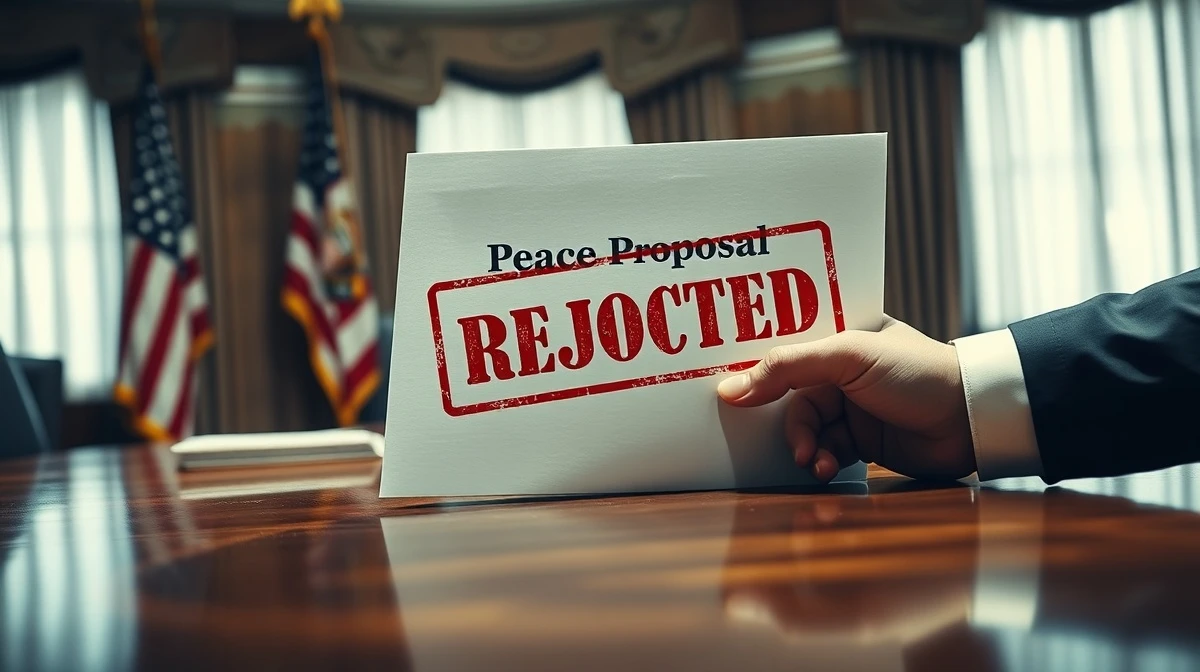
President Donald Trump has dismissed a newly proposed peace framework with Iran, calling the terms ‘totally unacceptable’ in a statement released from the White House on Wednesday. The rejection marks a significant setback for diplomatic efforts aimed at de-escalating tensions between Washington and Tehran, which have remained high since the collapse of the 2015 nuclear deal.
Background of the Proposal
The peace proposal, reportedly brokered through backchannel communications involving European and Middle Eastern intermediaries, sought to establish a phased agreement addressing Iran’s nuclear enrichment activities, ballistic missile development, and regional influence. According to sources familiar with the document, the framework included a gradual lifting of economic sanctions in exchange for verifiable limits on uranium enrichment and enhanced international inspections. However, the Trump administration has consistently maintained that any agreement must also address Iran’s support for proxy groups in the region, a condition Tehran has historically rejected.
Also read: Swiss Franc Dips Against Dollar, Rises Versus Euro in Mixed Forex Session
Why the Rejection Matters
Trump’s outright rejection signals a hardening of the US stance on Iran, potentially closing the door on near-term diplomatic solutions. Analysts suggest this could accelerate Iran’s nuclear program, as the country has already enriched uranium to levels approaching weapons-grade purity. The decision also puts additional pressure on European allies, who have sought to maintain the nuclear deal framework and preserve economic ties with Iran. For global markets, the uncertainty surrounding US-Iran relations continues to fuel volatility in oil prices, as any disruption in the Strait of Hormuz could impact global supply chains.
Implications for Regional Stability
The rejection is likely to embolden hardliners in both Washington and Tehran, reducing the prospects for a negotiated settlement in the near term. Iran has repeatedly stated its willingness to return to the negotiating table only if sanctions are lifted first, a precondition the US has refused. Meanwhile, Israel has welcomed the US position, viewing any concessions to Iran as a threat to its national security. The broader Middle East remains on edge, with proxy conflicts in Yemen, Syria, and Iraq continuing to escalate.
Also read: Pound Sterling faces a heavy week as Westminster empties out
Conclusion
Trump’s rejection of the Iran peace proposal underscores the deep divisions that persist between the two nations. With diplomatic channels narrowing, the risk of miscalculation or accidental confrontation remains high. The coming weeks will be critical in determining whether alternative avenues for dialogue emerge or whether the region slides further into instability.
FAQs
Q1: What was in the rejected Iran peace proposal?
The proposal reportedly included phased sanctions relief in exchange for limits on Iran’s uranium enrichment, enhanced international inspections, and discussions on ballistic missiles. It did not address Iran’s regional military activities, which the US considered a major shortcoming.
Q2: Why did President Trump call the proposal ‘totally unacceptable’?
Trump’s administration has insisted that any deal with Iran must comprehensively address its nuclear program, missile development, and support for proxy forces. The proposal was seen as insufficient on these fronts, particularly regarding regional security concerns.
Q3: What happens next in US-Iran relations?
With the proposal rejected, diplomatic efforts are expected to stall. The US may impose additional sanctions, while Iran could accelerate its nuclear enrichment. European mediators are likely to continue seeking a middle ground, but prospects for a breakthrough remain low.