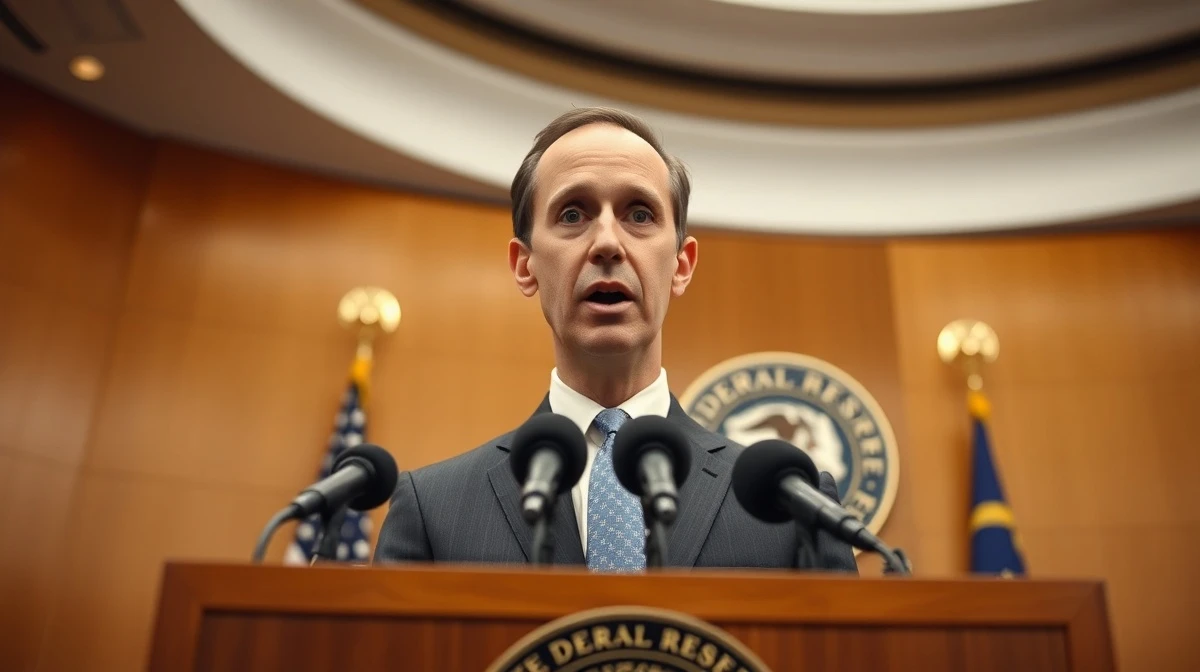
Chicago Federal Reserve President Austan Goolsbee stated Monday that the U.S. labor market remains resilient, pushing back against growing concerns that the economy may be heading toward a downturn. In remarks prepared for a moderated discussion, Goolsbee said there is currently “not a lot of evidence” that the job market is falling apart, even as the central bank navigates a delicate path between controlling inflation and supporting employment.
Labor market data supports cautious optimism
Goolsbee’s comments come amid a period of heightened uncertainty in financial markets, where traders have been pricing in potential rate cuts as early as the second half of 2025. However, the Fed official emphasized that recent employment figures do not yet signal a sharp deterioration. The U.S. economy added 272,000 jobs in May, according to the Bureau of Labor Statistics, well above consensus estimates. The unemployment rate held steady at 4.0%, a level historically associated with a healthy labor market.
Also read: Swiss Franc Dips Against Dollar, Rises Versus Euro in Mixed Forex Session
“The labor market is still quite strong by many measures,” Goolsbee said. “We are seeing wage growth moderating, which is helpful for the inflation outlook, but we are not seeing the kind of layoff spikes that typically precede a recession.”
The Fed official’s remarks align with the central bank’s current stance of maintaining restrictive policy until inflation shows sustained progress toward the 2% target. The personal consumption expenditures (PCE) price index, the Fed’s preferred inflation gauge, rose 2.7% year-over-year in April, still above the target but trending downward from its 2022 peak.
Also read: Pound Sterling faces a heavy week as Westminster empties out
Market expectations versus Fed guidance
Financial markets have recently shifted toward pricing in a higher probability of rate cuts, partly driven by weaker-than-expected retail sales data and a slight uptick in initial jobless claims. Goolsbee acknowledged that the economy is slowing but cautioned against interpreting every data point as evidence of an imminent recession.
“We have to be careful not to overreact to one or two data releases,” he said. “The path to 2% inflation will be bumpy, and we need to see more than a few months of good data before we can be confident.”
The Fed’s next policy meeting is scheduled for July 29-30, 2025, where the Federal Open Market Committee (FOMC) is widely expected to hold the federal funds rate steady at 5.25%-5.50%. According to the CME FedWatch Tool, the probability of a rate cut at that meeting stands at roughly 35%, up from 20% a month ago.
Implications for investors and consumers
For investors, Goolsbee’s assessment suggests that the Fed is not yet ready to pivot to an easing cycle, which could mean continued volatility in bond markets and rate-sensitive sectors such as housing and technology. For consumers, the message is more reassuring: the job market remains a source of stability, with low unemployment and steady wage growth supporting household spending.
However, the Fed’s cautious stance also means that borrowing costs for mortgages, auto loans, and credit cards will remain elevated for longer, potentially dampening consumer confidence. The National Federation of Independent Business (NFIB) reported last week that small business optimism fell to its lowest level since 2012, with owners citing inflation and labor quality as top concerns.
Goolsbee acknowledged these headwinds but reiterated that the Fed’s primary focus remains price stability. “If we cut rates too soon and inflation reaccelerates, that would be worse for the labor market in the long run,” he said.
Conclusion
Austan Goolsbee’s latest remarks provide a measured counterpoint to recession fears that have periodically gripped markets. While the economy is clearly slowing from its post-pandemic pace, the labor market has not yet shown the cracks that would justify an emergency policy response. The Fed remains data-dependent, and the coming months of inflation and employment data will determine whether the central bank can achieve a soft landing or whether a more aggressive easing cycle becomes necessary.
FAQs
Q1: What did Fed’s Goolsbee say about the labor market?
A: Goolsbee stated that there is “not a lot of evidence” the job market is falling apart, noting that employment data remains strong and layoffs are not widespread.
Q2: When is the next Federal Reserve meeting?
A: The next FOMC meeting is scheduled for July 29-30, 2025. The Fed is expected to hold rates steady at 5.25%-5.50%.
Q3: How does the labor market affect interest rate decisions?
A: The Fed watches labor market data closely because strong employment can fuel inflation through wage growth. A weakening labor market could prompt rate cuts to support the economy.