
London’s West End, known for its historic squares and bustling shopping streets, is quietly undergoing a transformation aimed at preparing for a future of more extreme weather. Landlords and property owners are investing in redesigns that address two growing threats: intense summer heat and flash flooding. The shift comes as climate projections for the UK suggest that by 2050, summers could be up to 5°C hotter, with rainfall events becoming more intense.
The Crown Estate, which owns significant portions of Regent Street and St James’s, has already begun retrofitting buildings with green roofs and improved drainage. Similar efforts are underway in Soho and Covent Garden, where landlords are installing permeable paving and rainwater collection systems to reduce flood risk. These are not cosmetic changes; they represent a fundamental rethink of how urban spaces function in a changing climate.
Also read: HSBC Sells $25 Billion Australian Mortgage Portfolio to Blackstone
Adapting Historic Spaces to Modern Climate Risks
The challenge is particularly acute in the West End, where many buildings are protected or have historical significance. Retrofitting a Georgian terrace with modern climate controls requires careful planning. Yet property owners are finding ways to integrate sustainability without compromising heritage. For example, some buildings are adding internal shading systems and high-efficiency glazing that reduce solar gain while preserving the original facades.
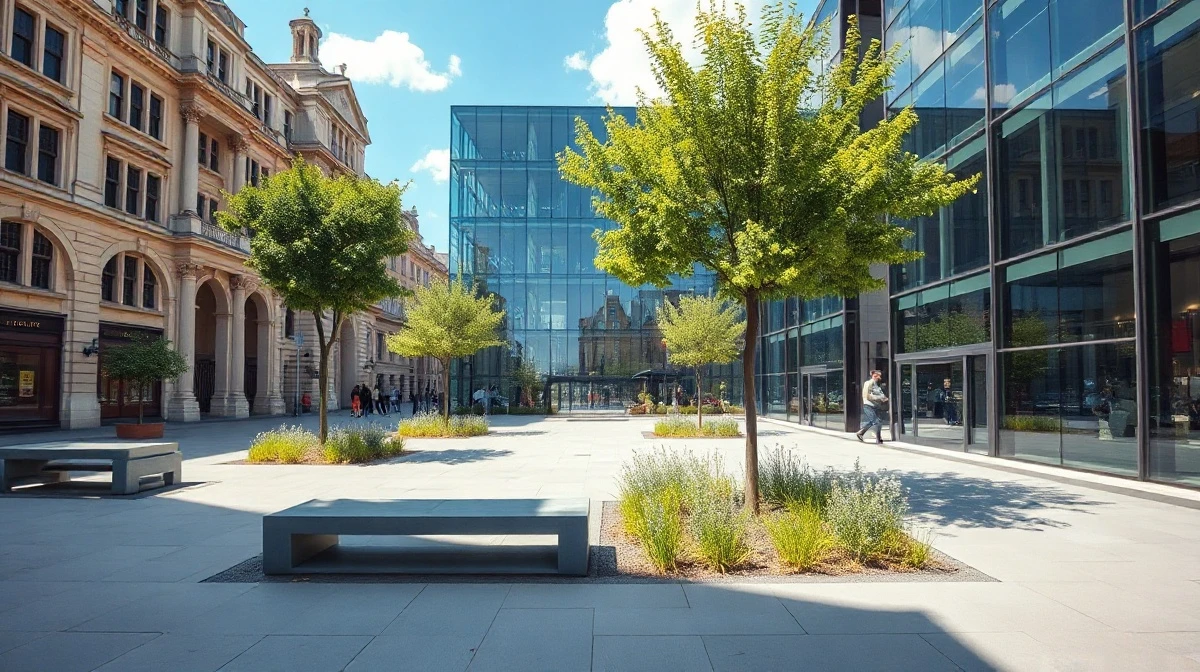
Public squares, a defining feature of the area, are also being redesigned. Trees that provide shade are being planted, and seating areas are being repositioned to offer relief from the sun. At the same time, drainage systems are being upgraded to handle sudden downpours, which have become more common in recent years. The 2021 floods in London, which caused significant disruption, served as a wake-up call for many landlords.
Also read: NatWest CEO rejects calls for higher bank taxes despite record profits
According to the Greater London Authority, the city needs to invest £1.5 billion in flood defenses over the next decade. The West End, as a major economic hub, is a priority area. The area contributes an estimated £22 billion to the UK economy annually, making its resilience essential.
What This Means for Businesses and Visitors
For businesses, the benefits are clear. A building that remains cool during a heatwave is more likely to attract customers and retain tenants. Similarly, a square that doesn’t flood after a storm is more likely to host events and draw footfall. These adaptations are not just about survival; they are about maintaining the West End’s competitive edge as a global destination.
Visitors will notice the changes gradually. New street furniture, more trees, and subtle changes to paving are part of a broader strategy to make the area more comfortable year-round. The goal is to ensure that London remains a vibrant, livable city even as the climate shifts.
The move also reflects a broader trend in urban planning, where cities like Paris and New York are implementing similar heat and flood resilience measures. London’s approach, however, is uniquely constrained by its historic built environment, making the West End a case study in balancing preservation with innovation.
As the climate continues to change, the pressure on landlords to adapt will only grow. The work being done now is an investment in the future, ensuring that the West End remains not just a relic of the past, but a model for the future.

