Cocoa futures pulled back sharply on Wednesday as producers moved to lock in profits following a rally to 3.5-month highs earlier in the week. July ICE NY cocoa (CCN26) fell 4.08%, while July ICE London cocoa #7 (CAN26) declined 4.31%, pressured by a stronger U.S. dollar and profit-taking from origin sellers.
Producers Capitalize on Rally
The retreat came after cocoa prices surged on Monday, driven by mounting concerns that an emerging El Niño weather pattern could bring drier conditions to West Africa, the world’s primary cocoa-growing region. The U.S. National Oceanic and Atmospheric Administration (NOAA) now estimates a 61% probability of El Niño conditions developing between May and July, with a one-in-four chance of a ‘Super El Niño.’
Also read: Chinese equities: BNY says strong investor flows support buy-the-dip stance
Producers, particularly in Ivory Coast and Ghana, used the price spike to lock in higher prices for future deliveries, adding downward pressure on futures. A stronger dollar also encouraged long liquidation among speculative traders.
El Niño Threatens West African Crop
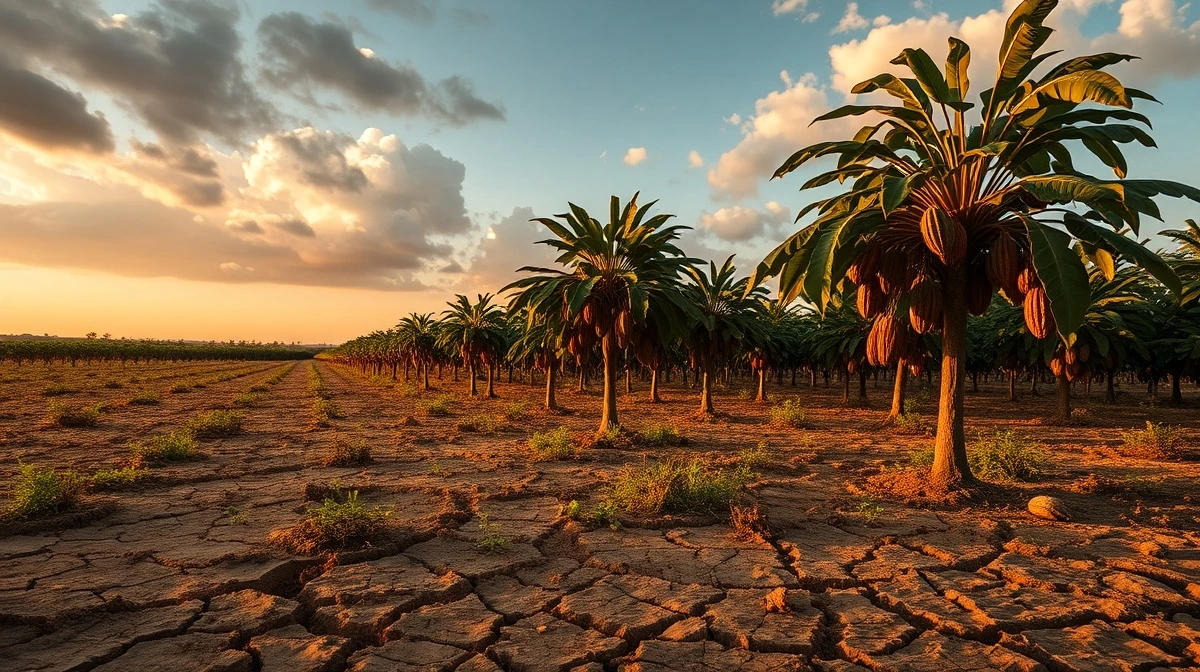
Early surveys of the 2026/27 West African cocoa crop indicate below-average cherelle formation on cocoa trees, signaling a weak outlook for the main harvest beginning in October. Drought conditions currently blanket more than half of Ivory Coast and about two-thirds of Ghana, according to the African Flood and Drought Monitor.
StoneX recently cut its 2026/27 global cocoa surplus estimate to 149,000 metric tons from 267,000 metric tons, citing El Niño risks. The firm also lowered its 2025/26 surplus forecast to 247,000 metric tons.
Demand Signals Mixed
Consumer demand for chocolate remains relatively resilient despite elevated prices. Recent earnings from Hershey and Mondelez International exceeded expectations, suggesting steady consumption. However, Circana reported a 1.3% decline in North American chocolate candy sales for the 13 weeks ending March 22 compared to the prior year.
Global cocoa grinding data presented a mixed picture. North American Q1 grindings fell 3.8% year-over-year, while European grindings dropped 7.8%, the lowest for a first quarter in 17 years. In contrast, Asian grindings unexpectedly rose 5.2% year-over-year, defying expectations of a decline.
Supply Disruptions and Inventories
The prolonged closure of the Strait of Hormuz is disrupting fertilizer supplies and raising shipping, insurance, and fuel costs, adding to cocoa importers’ expenses. Meanwhile, ICE cocoa inventories rose to a 20.5-month high of 2,668,548 bags last Thursday, signaling ample near-term supply.
Ivory Coast farmers shipped 1.57 million metric tons of cocoa to ports between October 1, 2025, and May 3, 2026, up 0.6% from the same period last year. However, Nigerian cocoa exports fell 35% year-over-year in March, and Nigeria’s Cocoa Association projects a 11% production decline for the 2025/26 season.
Conclusion
Cocoa prices are working through a complex sector of weather risks, producer hedging, mixed demand signals, and supply disruptions. While El Niño fears and reduced surplus forecasts provide underlying support, profit-taking and a stronger dollar have triggered near-term pullbacks. Traders will watch West African rainfall patterns and upcoming grind data for further direction.
FAQs
Q1: Why did cocoa prices fall after reaching 3.5-month highs?
Producers locked in higher prices after the rally, and a stronger dollar prompted long liquidation by speculative traders.
Q2: How does El Niño affect cocoa production?
El Niño typically brings warmer, drier conditions to West Africa, which can reduce cocoa yields by stressing trees and limiting pod development.
Q3: Is global chocolate demand weakening?
Data is mixed. North American and European grindings fell in Q1, but Asian grindings rose. Major chocolate makers reported better-than-expected earnings, suggesting demand remains resilient despite high prices.