San Francisco, CA — The race to put AI data centers in orbit is facing a fundamental bottleneck: there simply aren’t enough rockets to get them there. Cowboy Space Corporation, a startup founded by Robinhood co-founder Baiju Bhatt, announced today the close of a $275 million Series B round at a $2 billion valuation, led by Index Ventures, to solve that problem by building its own launch vehicles.
The launch capacity crunch
Bhatt told TechCrunch that after extensive discussions with multiple launch providers, he concluded that existing and planned commercial rockets cannot deliver the volume or cost structure needed to make orbital data centers economically viable. The core issue is that most new rockets — including SpaceX’s Starship and Blue Origin’s New Glenn — are years away from commercial availability for third-party payloads, as their developers prioritize their own satellite deployments.
Also read: Notion Mail to shut down in September as users hand email over to AI agents
SpaceX’s Starship, expected to conduct its twelfth test flight as soon as this weekend, remains in development. Blue Origin’s New Glenn failed to deliver a satellite during its third launch in April. Other emerging players, including Stoke Space, Firefly Aerospace, and Relativity Space, have yet to reach operational status. This leaves space data center projects like Google’s Project Suncatcher targeting the mid-2030s, or pivoting to edge processing for space sensors, as Starcloud is doing.
“There’s a lot of new rockets coming online, but as we look three, four years out, it’s still very, very scarce,” Bhatt said. “I think you’re going to see a lot of the first-party rocket providers specialize into their own payloads.”
Also read: Fujifilm Instax Wide 400 review: Bigger prints, simple fun, and a few trade-offs
Building rockets to launch data centers
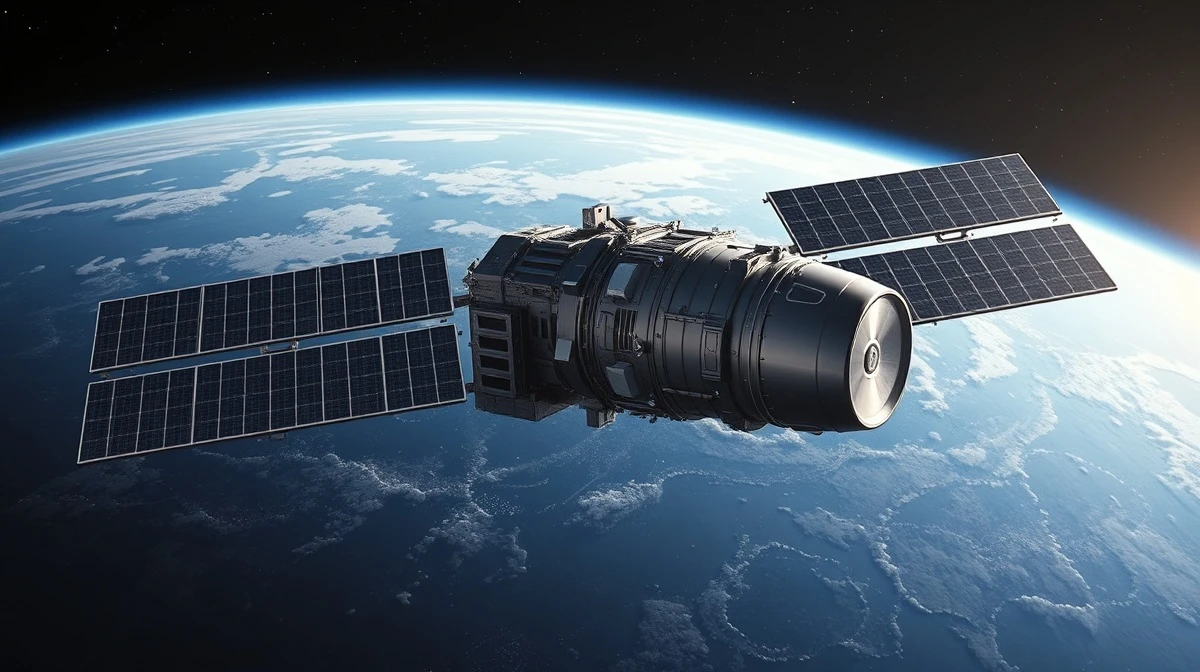
Cowboy Space’s approach is unusual but historically grounded: the company plans to build its data centers directly into the second stage of its rocket. This design, reminiscent of the first U.S. satellite Explorer 1, which was built as the final stage of a rocket, eliminates the need for a separate satellite bus and simplifies the launch architecture.
Each satellite is expected to mass 20,000 to 25,000 kilograms and generate 1 megawatt of power for nearly 800 onboard GPUs. The rocket will be slightly more powerful than SpaceX’s Falcon 9, though smaller than Starship. Bhatt says the booster will eventually be reusable.
The company has hired industry veterans including former Blue Origin propulsion engineer Warren Lamont and former SpaceX launch director Tyler Grinne. It is also developing its own rocket engine, the most complex and expensive component of any launch vehicle.
Why this matters for AI infrastructure
The demand for AI compute is straining terrestrial data center capacity, driving up costs and energy consumption. Space-based data centers offer theoretical advantages: abundant solar power, no land constraints, and the ability to locate near orbital fiber backbones. However, the economics depend entirely on launch costs, which remain prohibitively high for most payloads.
By integrating launch and data center operations, Cowboy Space aims to achieve unit economics that can compete with terrestrial alternatives. “The prize here, and the size of this market, is big enough that there’s room for many players to succeed,” Bhatt said. “I see the demand for AI getting more and more acute, and I see the options on Earth getting more and more limited.”
Competition and risks
The pivot brings Cowboy Space into direct competition with SpaceX and Blue Origin, the most advanced and well-funded players in the launch market. Both have decades of experience and billions in capital. Bhatt acknowledges the challenge but argues that a focused mission — building rockets specifically for data center payloads — provides design and cost advantages that general-purpose launch providers lack.
The company is still working through key development needs, including facilities for testing, manufacturing, and launching its rockets. The first launch is expected before the end of 2028.
Conclusion
Cowboy Space’s $275 million raise represents a significant bet that the future of AI compute lies in orbit — and that the path there requires controlling the entire stack, from rocket engines to GPU clusters. Whether the company can execute on its ambitious timeline and compete with established players remains to be seen, but the funding signals strong investor confidence in the thesis that terrestrial infrastructure alone cannot meet the coming demand for AI compute.
FAQs
Q1: Why can’t existing rockets launch space data centers?
Existing rockets are either too expensive, not powerful enough, or fully booked for other payloads. New rockets like Starship and New Glenn are still in development and likely years away from commercial availability for third-party customers.
Q2: How does Cowboy Space’s rocket design differ from traditional launch vehicles?
The company plans to build its data centers directly into the rocket’s second stage, rather than using a separate satellite. This approach, similar to the Explorer 1 satellite, simplifies design and reduces mass and cost.
Q3: When will Cowboy Space’s first launch occur?
The company expects its first launch before the end of 2028. It is currently developing its own rocket engine and working on facilities for testing and manufacturing.