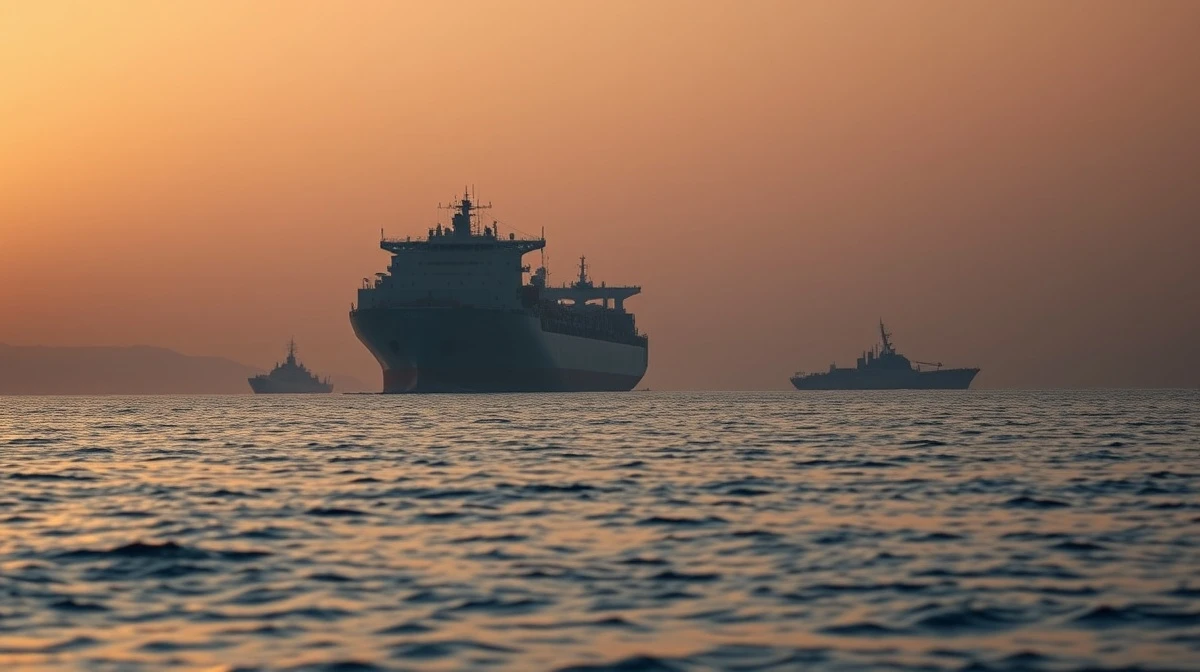
Crude oil futures edged higher on Thursday, with June WTI crude settling up 0.15% at $73.42 per barrel, as the ongoing closure of the Strait of Hormuz continued to strain global supply chains. The price move came amid stalled US-Iran peace negotiations and growing evidence that the conflict is drawing down global crude inventories at an accelerating pace.
Strait of Hormuz Closure Disrupts Global Oil Flows
The Strait of Hormuz, a narrow waterway through which roughly one-fifth of the world’s oil and liquefied natural gas passes, remains effectively closed due to the ongoing US-Iran conflict. According to Goldman Sachs, crude output in the Persian Gulf has been curtailed by approximately 14.5 million barrels per day, and global stockpiles have already drawn down by nearly 500 million barrels since the disruption began. Analysts warn that inventories could fall by another 500 million barrels by June if the closure persists.
Also read: Chinese equities: BNY says strong investor flows support buy-the-dip stance
The International Energy Agency (IEA) reported Wednesday that global observed oil inventories declined at a rate of about 4 million barrels per day in March and April. The agency warned that markets will remain “severely undersupplied” until at least October, even if hostilities end next month. Persian Gulf producers have been forced to cut output by roughly 6% as local storage facilities near capacity.
US-Iran Peace Talks Remain Deadlocked
President Trump characterized Iran’s latest response to his peace proposal as a “piece of garbage” and stated that the current ceasefire is on “life support.” He added that “Iran will make a deal or be decimated.” The White House has signaled it may restart naval escort operations for commercial ships through the strait as soon as this week, though such operations carry significant escalation risks.
The IEA also noted that more than 80 energy facilities have been damaged during the conflict, and full recovery could take up to two years. This assessment underscores the long-term structural damage to regional production capacity, beyond the immediate disruption to shipping lanes.
OPEC+ Production Plans Complicated by War
OPEC+ delegates indicated Thursday that the cartel aims to continue a series of monthly quota increases, with plans to restore all halted production by the end of September. The group has already reinstated about two-thirds of the 1.65 million barrels per day cut made in 2023. However, any production hikes now appear unlikely, as Middle East producers are being forced to cut output due to the regional conflict.
OPEC’s April crude production fell by 420,000 barrels per day to 20.55 million barrels per day, the lowest level in 35 years. Meanwhile, the cartel’s May 3 decision to boost output by 188,000 barrels per day in June appears increasingly disconnected from on-the-ground realities.
Russia-Ukraine War Adds to Supply Pressures
The ongoing Russia-Ukraine war continues to tighten global oil supplies. Ukrainian drone and missile attacks have targeted at least 30 Russian refineries over the past ten months, limiting Russia’s crude export capabilities. In April alone, there were 21 strikes on Russian refineries, export terminals, and pipeline infrastructure, knocking average refinery runs to 4.69 million barrels per day, the lowest in 16 years, according to Bloomberg data.
US and EU sanctions on Russian oil companies, infrastructure, and tankers have further curbed exports. The most recent Geneva peace talks ended abruptly after Ukrainian President Zelensky accused Russia of prolonging the war. Russia maintains that territorial issues remain unresolved, suggesting no near-term resolution.
US Inventory and Production Data
The Energy Information Administration (EIA) reported Wednesday that US crude oil inventories as of May 8 were 0.3% below the seasonal five-year average. Gasoline inventories were 4.3% below average, and distillate inventories were 9.4% below average. US crude production rose 1.0% week-over-week to 13.710 million barrels per day, still below the record 13.862 million barrels per day set in November.
The number of active US oil rigs rose by 2 to 410 in the week ended May 8, according to Baker Hughes. That remains just above the 4.25-year low of 406 rigs posted in December, and well below the 5.5-year high of 627 rigs reported in December 2022.
Conclusion
The convergence of the Strait of Hormuz closure, stalled US-Iran diplomacy, ongoing Russia-Ukraine hostilities, and structural production constraints from OPEC+ is creating one of the tightest global oil supply environments in decades. While diplomatic breakthroughs remain possible, the market is pricing in sustained disruption through at least the third quarter. Traders and consumers alike should prepare for continued volatility and elevated prices.
FAQs
Q1: Why is the Strait of Hormuz important for oil markets?
About one-fifth of the world’s oil and liquefied natural gas passes through the Strait of Hormuz. Its closure effectively cuts off a major supply route, forcing producers to halt output and drawing down global inventories rapidly.
Q2: How long could the supply disruption last?
The IEA warns that markets will remain severely undersupplied until at least October, even if the conflict ends next month. Full recovery of damaged infrastructure could take up to two years.
Q3: Is OPEC+ increasing production to offset the disruption?
OPEC+ has announced plans to increase output, but actual production has fallen to 35-year lows because Middle East producers cannot ship their oil. Any production hikes are unlikely to materialize while the strait remains closed.