
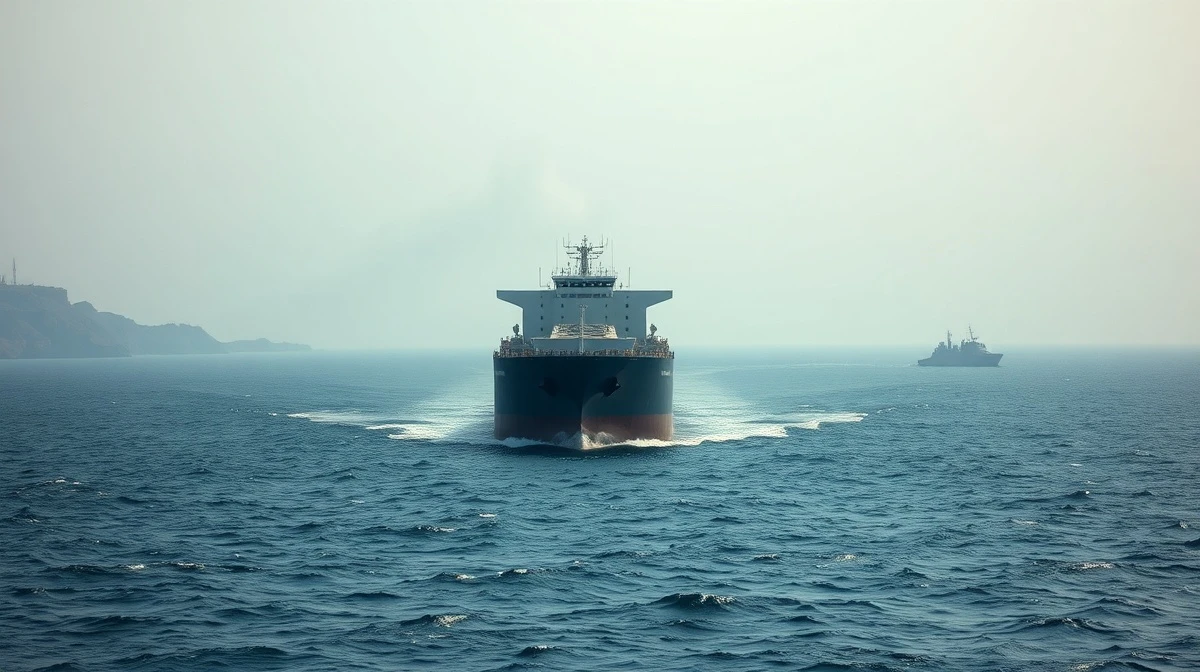
Crude oil prices edged higher on Wednesday, supported by the ongoing closure of the Strait of Hormuz and a bullish weekly inventory report from the U.S. Energy Information Administration (EIA). June West Texas Intermediate (WTI) crude futures rose 0.49% to a one-week high, while gasoline futures declined slightly, reflecting mixed market signals.
Geopolitical Tensions Keep Supply Concerns Front and Center
The Strait of Hormuz, a critical chokepoint for about a fifth of the world’s oil and liquefied natural gas, remains effectively closed due to the ongoing U.S.-Iran conflict. Diplomatic efforts have stalled, with President Trump dismissing Iran’s latest peace proposal and warning of further military action. The standoff has forced Persian Gulf producers to cut output by an estimated 14.5 million barrels per day (bpd), according to Goldman Sachs, drawing down nearly 500 million barrels from global stockpiles. The International Energy Agency (IEA) warned that the market will remain “severely undersupplied” until at least October, even if a ceasefire is reached next month.
Also read: Chinese equities: BNY says strong investor flows support buy-the-dip stance
EIA Data Shows Larger-Than-Expected Draws
The EIA’s weekly report for the week ending May 8 revealed a larger-than-expected draw in crude inventories, which fell by 4.31 million barrels against forecasts of a 2.45 million barrel decline. Gasoline supplies also dropped by 4.08 million barrels, more than the anticipated 3.05 million barrel draw. However, distillate stockpiles unexpectedly rose by 190,000 barrels, defying expectations of a draw. Crude supplies at Cushing, Oklahoma, the delivery point for WTI futures, fell by 1.7 million barrels.
Overall, U.S. crude inventories now stand 0.3% below the five-year seasonal average, while gasoline and distillate inventories are 4.3% and 9.4% below their respective averages, underscoring the tightness in the market.
OPEC+ Production Plans Face Reality Check
OPEC+ had announced plans to increase output by 188,000 bpd in June, following a 206,000 bpd hike in May. However, these targets appear increasingly unrealistic as Middle Eastern producers are forced to cut production due to the war. OPEC’s April output fell by 420,000 bpd to a 35-year low of 20.55 million bpd. Meanwhile, U.S. crude production rose slightly to 13.71 million bpd, still below the record high of 13.862 million bpd set in November.
Broader Market Implications
The ongoing conflict is not limited to the Middle East. The Russia-Ukraine war continues to disrupt global oil supplies, with Ukrainian drone strikes targeting Russian refineries. At least 30 Russian refineries have been hit over the past ten months, limiting Russia’s export capacity. U.S. and EU sanctions further constrain Russian oil flows, adding upward pressure on prices.
The stronger U.S. dollar provided some headwinds for crude prices on Wednesday, but the overarching supply concerns remain the dominant driver. Analysts warn that if the Strait of Hormuz remains closed into June, global stockpiles could shrink by another 500 million barrels, pushing prices significantly higher.
Conclusion
Crude oil markets are being driven by a combination of geopolitical risk, supply disruptions, and tightening inventories. The closure of the Strait of Hormuz, coupled with the ongoing Russia-Ukraine war, has created a supply crunch that is unlikely to ease soon. For consumers and businesses, this means elevated energy costs are likely to persist, with potential knock-on effects on inflation and economic activity.
FAQs
Q1: Why is the Strait of Hormuz important for oil markets?
A1: The Strait of Hormuz is a narrow waterway between Oman and Iran through which about 20% of the world’s oil and liquefied natural gas passes. Its closure disrupts global supply chains and drives up energy prices.
Q2: How long could the supply disruption last?
A2: The IEA has warned that even if the conflict ends next month, the market will remain severely undersupplied until at least October. Recovery of damaged energy infrastructure could take up to two years.
Q3: What does this mean for gasoline prices?
A3: With gasoline inventories already below the five-year average and crude supplies tightening, retail gasoline prices are likely to remain elevated in the near term, adding to inflationary pressures.

