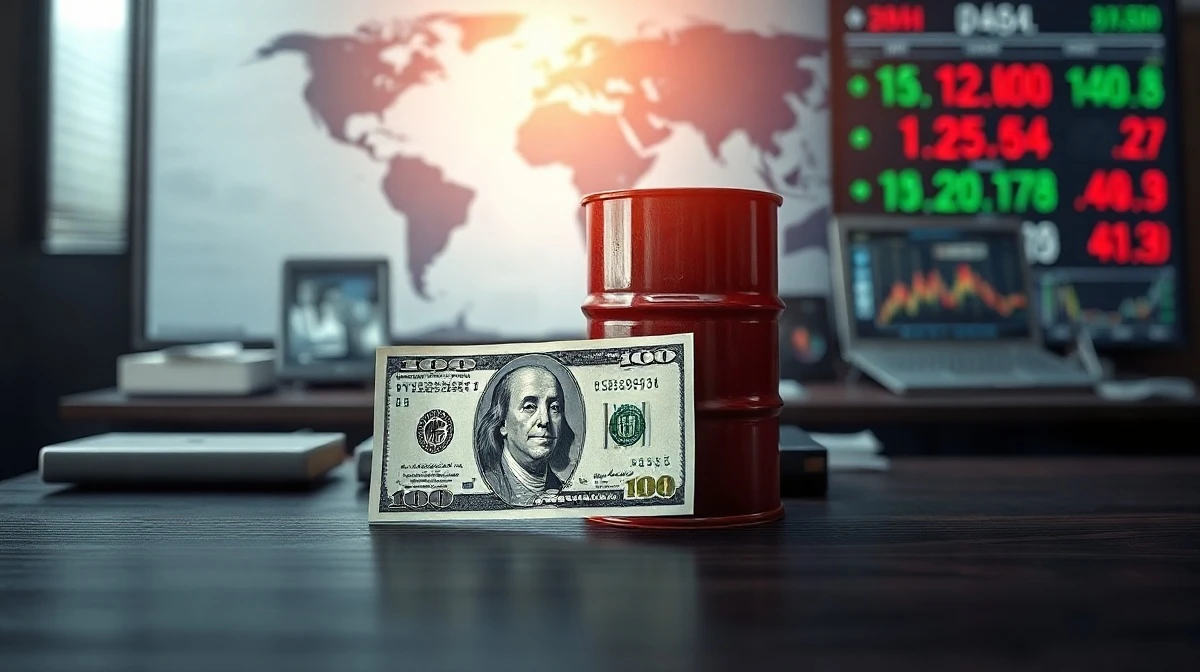
The U.S. dollar index (DXY00) edged up 0.05% on Monday, supported by a 2% jump in crude oil prices and heightened safe-haven demand after the United States and Iran failed to reach a peace agreement. The move higher in oil prices has raised inflation expectations, potentially pushing the Federal Reserve to maintain or tighten monetary policy, a factor that typically supports the dollar.
Middle East Tensions and Dollar Demand
Geopolitical risks remain elevated after President Trump and Iran rejected each other’s latest peace proposals. Iran offered to transfer some of its highly enriched uranium stockpile to a third country but refused to dismantle nuclear facilities. It also demanded an end to the U.S. naval blockade and sanctions relief while retaining partial control over the Strait of Hormuz. President Trump called the proposal “totally unacceptable.” This standoff has kept safe-haven flows toward the dollar intact, though gains were capped by a rally in the S&P 500 to a new record high, which reduced liquidity demand for the greenback.
Also read: Chinese equities: BNY says strong investor flows support buy-the-dip stance
Economic Data and Fed Rate Expectations
U.S. existing home sales for April rose only 0.2% month-over-month to 4.02 million units, missing expectations of 4.05 million. The softer housing data provided some headwinds for the dollar. Meanwhile, swaps markets are pricing only a 5% probability of a 25-basis-point rate cut at the next Federal Open Market Committee meeting on June 16-17, reflecting the market’s view that the Fed will remain cautious amid sticky inflation and geopolitical uncertainty.
Euro and Yen Under Pressure
The euro (EUR/USD) fell 0.09% on Monday, pressured by the surge in crude oil prices, which is negative for the Eurozone economy given its heavy reliance on energy imports. Losses were limited after ECB Governing Council member Martin Kocher warned that an interest rate hike would be “unavoidable in the near future” if energy prices do not improve significantly. Markets are now pricing an 84% chance of a 25-basis-point rate hike at the ECB’s next policy meeting on June 11.
The Japanese yen (USD/JPY) weakened 0.35% against the dollar. Japan imports more than 90% of its energy needs, making the yen particularly sensitive to rising crude prices. Higher U.S. Treasury yields also weighed on the yen. Markets see a 73% probability of a 25-basis-point rate hike by the Bank of Japan at its June 16 meeting.
Precious Metals: Gold Slips, Silver Surges
Gold prices closed nearly flat, down 0.04%, as early gains evaporated when the dollar recovered and global bond yields rose. Higher crude oil prices also boosted inflation expectations, which could lead central banks to tighten policy—a bearish factor for gold. However, safe-haven demand remained supportive given the lack of progress in US-Iran talks.
Silver prices soared 6.29% to a two-month high, driven by stronger-than-expected Chinese trade data. China’s April exports rose 14.1% year-over-year (vs. 8.4% expected) and imports surged 25.3% (vs. 20.0% expected), signaling reliable industrial demand. Silver also benefited from a rally in copper prices to a 3.5-month high. Despite the rally, ETF holdings for both gold and silver remain near multi-month lows, suggesting that fund liquidation may cap further upside.
Central Bank Demand Remains a Key Support for Gold
Strong central bank purchases continue to underpin gold prices. The People’s Bank of China added 260,000 ounces to its gold reserves in April, the largest monthly increase in a year and the 18th consecutive month of accumulation. Total PBOC holdings now stand at 74.64 million troy ounces.
Conclusion
The dollar’s modest gain reflects a complex interplay of geopolitical risk, rising energy costs, and diverging central bank policy expectations. With the US-Iran standoff unresolved and crude oil prices surging, inflation concerns are likely to keep the Federal Reserve on hold, while the ECB and BOJ face mounting pressure to act. For investors, the key watchpoints remain the June central bank meetings and any further developments in Middle East diplomacy.
FAQs
Q1: Why did the dollar rise even though existing home sales missed expectations?
The dollar was supported primarily by safe-haven demand from US-Iran tensions and a 2% surge in crude oil prices, which raised inflation expectations and reduced the likelihood of a Fed rate cut. The weaker housing data had a limited impact compared to these larger macro forces.
Q2: How does crude oil strength affect the euro and yen?
Both the Eurozone and Japan are major energy importers. Higher oil prices increase their import bills, worsen trade balances, and can slow economic growth. This typically weakens their currencies against the dollar, as seen on Monday.
Q3: What does the rally in silver suggest about the global economy?
Silver’s surge, driven by strong Chinese trade data and rising copper prices, signals improving industrial demand. This is a positive indicator for global growth, particularly in manufacturing and construction sectors that rely on industrial metals.