
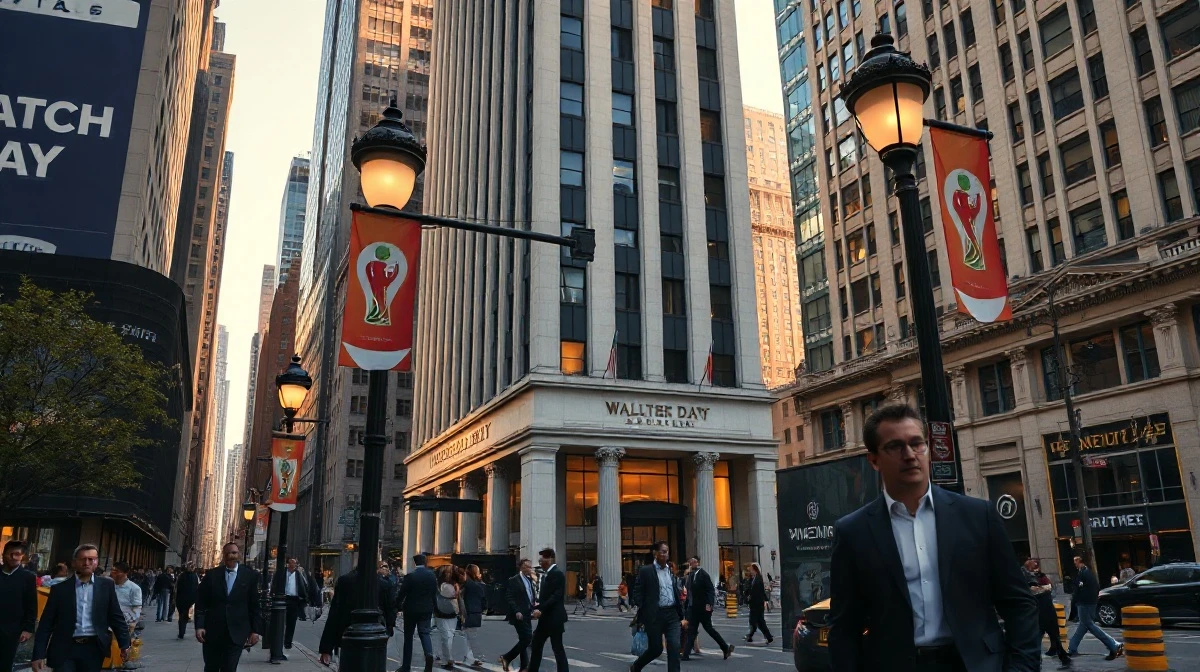
Goldman Sachs and JPMorgan Chase have told employees they can request to work from home on World Cup match days, a move aimed at reducing congestion in host cities and accommodating the tournament’s disruption to normal business hours.
The two Wall Street lenders, which together employ tens of thousands of staff in major financial hubs including New York and London, confirmed the policy shift in internal memos seen by the Financial Times. The flexible attendance rules apply to match days in cities where the banks have large offices, allowing staff to avoid crowded transport and unpredictable street closures.
Also read: Apollo Global Management picks Austin for second headquarters over Miami, Palm Beach
Why the change matters for Wall Street
The World Cup, which kicks off in June 2026 across 16 host cities in North America, presents a unique operational challenge for banks. Many employees live in or commute through host cities, and the influx of hundreds of thousands of fans is expected to strain public transit and road networks.
“We recognize that match days will create real logistical hurdles for our people,” a Goldman Sachs spokesperson said. “This policy gives teams the flexibility to plan ahead and stay productive.”
Also read: US Official: Iran Accord Secures Strait of Hormuz Reopening and Nuclear Material
JPMorgan’s guidance is similar, allowing managers to approve remote work requests on a case-by-case basis. Both banks stressed that the policy is temporary and applies only to specific match days in host cities.
Context: The return-to-office tension
The decision is notable because both Goldman Sachs and JPMorgan have been among the most aggressive Wall Street firms in pushing for a full return to the office. Goldman CEO David Solomon has repeatedly called in-office work essential for training and culture, while JPMorgan CEO Jamie Dimon has described remote work as a “temporary fix.”
Yet the World Cup presents a practical exception that even the most office-first banks cannot ignore. Host cities such as New York, Los Angeles, Chicago, and Toronto will see major disruptions during the tournament’s 39-day schedule. The banks’ move acknowledges that rigid attendance policies are unworkable during a global sporting event that draws massive crowds.
Other large employers in host cities, including technology firms and law practices, are expected to announce similar accommodations in the coming weeks.
What the policy covers
Employees at both banks can request remote work for the full match day, not just during game hours. This is designed to avoid the worst of the commuting crush before and after matches. The policy applies to staff in all divisions, including trading floors and investment banking, though some roles requiring physical presence will be exempt.
Neither bank has disclosed how many employees are expected to take advantage of the policy, but internal estimates suggest uptake could be significant in cities hosting multiple matches.

