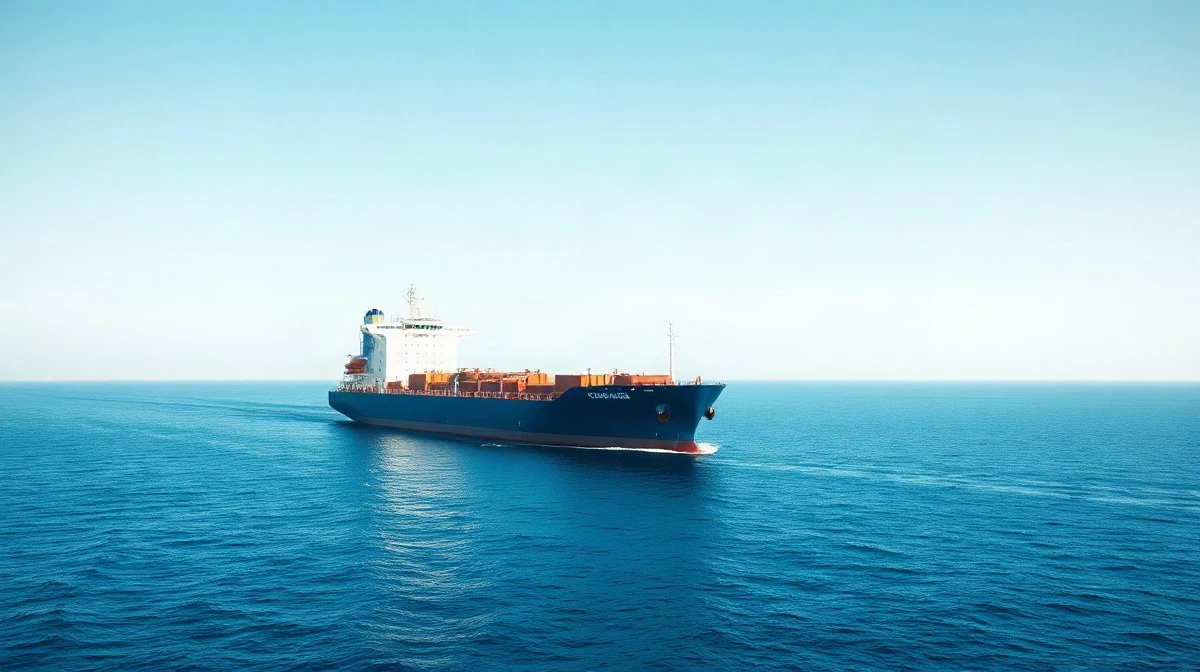
San Francisco Bay Area startup Newlight has completed a 8,500-nautical-mile commercial voyage from Singapore to Ghana with a hydrogen injection system that cut fuel consumption by 24% and carbon dioxide emissions by 28% on a Lomar Shipping bulk carrier. The company says the retrofit, which can be installed in under two weeks without a dry dock, could save some vessels as much as $500,000 annually in fuel costs.
Co-founders Evyatar Cohen and Haran Cohen Hillel, both veterans of the Israeli Navy, developed the system to optimize diesel engines on cargo ships by injecting compressed hydrogen at precise moments during each piston stroke. The system constantly monitors exhaust temperature, combustion pressure, and air intake, adjusting hydrogen flow in milliseconds to reduce diesel usage without sacrificing power.
Also read: Microsoft tests fix for hours-long Outlook and Exchange Online outage
A hydrogen boost, not a race car stunt
Cohen, who serves as the company’s co-founder, compared the system to nitrous oxide injection in the Fast & Furious films — but with a different goal. “Instead of getting power, we actually say to the engine: ‘Hey, reduce the fuel [flow] to the engine, we don’t need as much because we have some nitrous. It’s [just] called hydrogen,’” he told TechCrunch.
The month-long voyage marked a significant milestone for the startup. “It was amazing,” Hillel, the CEO, said. “Being onboard and seeing the system operate in real conditions was a completely different experience from anything we had done in the lab.” He described the first activation as an “emotional moment for both of us,” adding that the system “integrated with the vessel, operated reliably, and delivered the results we had been working toward.”
Also read: Brave browser rolls out email aliases to keep your inbox out of trackers' hands
The results align with the company’s broader claims of reducing fuel use and emissions by more than 20% per vessel. The shipping industry, responsible for nearly 3% of global CO2 emissions, faces tightening regulations from the International Maritime Organization, which has set a goal of net-zero emissions by 2050.
Commercial traction and investor backing
The successful voyage helped Newlight secure a $9 million seed round. Investors include lomarlabs, the venture arm of Lomar Shipping; BIRD Energy, a joint U.S.-Israel government program; deep tech funds Undeterred Capital and CiRi Ventures; and Fusion VC, an accelerator for Israeli startups in the U.S.
Newlight says it has signed agreements to install the system on 12 vessels across multiple shipping companies, with broader fleet rollouts planned for next year. The company argues its hydrogen approach is leaner than competing fuel injection methods using ammonia or methanol, which typically require more extensive engine modifications.
The startup’s founders see potential beyond maritime transport. “We’re an energy company, right? So we look at the whole energy situation that is happening around the world, with transportation, and data centers, and we have some investors that even have trains,” Hillel said. “But we’re gonna try to be focused on shipping right now, and to get on a scale there, and then we can probably expand.”
For now, Newlight’s focus remains on scaling its technology across the global shipping fleet, where even modest efficiency gains can translate into significant cost and emissions reductions. The company’s next challenge will be proving that the system’s performance on a single voyage can be replicated across diverse vessel types and operating conditions.
This article is for informational purposes only and does not constitute financial advice. The shipping and clean technology markets are subject to volatility and uncertainty. Readers should conduct their own research before making any investment decisions.