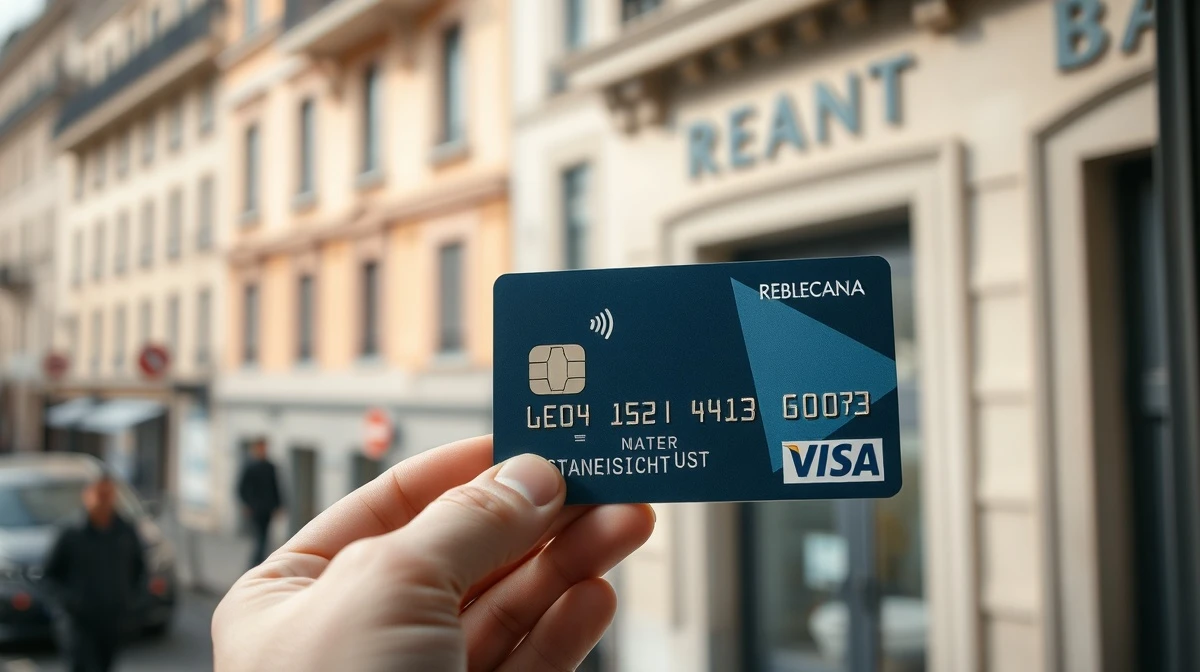
April 19, 2026 — France’s central bank is leading a push to reduce the European payments market’s reliance on Visa and Mastercard. Its strategy centers on a technical feature called ‘co-badging,’ which would allow a single French bank card to operate on both international networks and domestic French systems.
The Co-Badging Gambit
Co-badging lets one payment card host multiple payment applications. A card could, for instance, run on the global Visa network while also being programmed to use a local French scheme like Cartes Bancaires (CB). The Banque de France is actively promoting this model. The goal is to give consumers and merchants a fluid fallback option if international networks are unavailable or if they prefer a local, potentially cheaper alternative.
Also read: WTI crude oil climbs to near two-week high on US-Iran tensions and EIA stockpile draw
Data from the European Central Bank shows that Visa and Mastercard together process the vast majority of card payments in the EU. This concentration has long been a concern for regulators worried about systemic risk and high fees. The French initiative aims to create a more resilient and competitive payments architecture.
A Broader European Fightback
This is not just a French project. It’s part of a wider, politically charged effort to build European ‘strategic autonomy’ in financial infrastructure. The European Commission has been advocating for a homegrown card scheme for years, with limited success.
Also read: UOB projects slower 2Q26 growth for China amid headwinds
The co-badging model offers a pragmatic middle path. Instead of trying to displace the American giants outright, it seeks to ensure a viable European alternative is always present on the card. Industry watchers note that this could significantly boost the transaction volume handled by European networks over time.
“It’s a clever workaround,” said one payments analyst who requested anonymity. “You’re not asking consumers to give up their Visa card. You’re just adding a European option to it. The hope is that merchants and banks will start routing more transactions through the local scheme to save on interchange fees.”
Technical Hurdles and Merchant Adoption
The success of co-badging hinges on two factors. First, the technical integration must be flawless for consumers. Cards need to automatically select the optimal network at the point of sale without confusing the user.
Second, and more critically, merchants must enable and prioritize the local network. This requires upgrades to payment terminals and backend systems. The Banque de France may need to incentivize this shift, possibly through regulatory guidance or fee structures that make the local route more attractive. According to a recent ECB report, fragmentation in terminal acceptance remains a major barrier to pan-European payment solutions.
What This Means for the Market
The immediate implication is increased pressure on Visa and Mastercard’s pricing power in Europe. The presence of a ready alternative on every card could force the duopoly to offer more competitive terms to banks and merchants.
For investors, this signals a regulatory environment in Europe that is increasingly willing to intervene in payment markets to support competition. It also strengthens the position of domestic banking groups that control local schemes. The long-term play is to build a European network strong enough to handle the continent’s digital economy independently.
But challenges remain. Achieving consensus among 27 EU member states, each with its own banking interests, is notoriously difficult. The UK’s exit from the EU also removed a major financial center that was often skeptical of such protectionist measures. The French push, while significant, is just one move in a complex, multi-year chess game.
What’s Next: The Banque de France is expected to publish detailed technical guidelines for co-badging implementation in the coming months. Its ability to rally other major EU economies like Germany and Italy behind the model will be the true test of whether this can become a genuine European counterweight.