Tehran, Iran – May 4, 2026 – Iran’s military leadership has issued a stark warning against any US interference in the Strait of Hormuz, calling it a direct violation of the existing ceasefire. General Hossein Azizi, a senior commander in Iran’s Islamic Revolutionary Guard Corps (IRGC), made the statement during a press briefing on Monday.
“Any US action in the Strait of Hormuz will be considered a breach of the ceasefire,” Azizi said. “We will respond accordingly.” The general did not specify what form a response might take, but the message was clear: Tehran views the waterway as a red line.
Also read: Pound Sterling faces a heavy week as Westminster empties out
Strategic Waterway at Risk
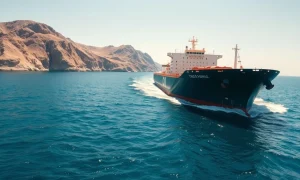
The Strait of Hormuz is a narrow passage connecting the Persian Gulf to the Gulf of Oman. About 20% of the world’s oil passes through it daily. Any disruption could send global energy prices soaring.
Iran has long claimed the right to control access to the strait. The US Navy maintains a presence there to ensure free navigation. The ceasefire, brokered by Oman and Iraq in late 2025, had reduced tensions in the region. But Azizi’s comments suggest that calm may be fragile.
Also read: US Dollar Index Holds Firm Near 101.00 as Traders Assess Fed Outlook
Industry watchers note that the timing is significant. Oil prices have already risen 4% this week on supply concerns. A confrontation in Hormuz could push them higher.
Ceasefire Terms Under Scrutiny
The ceasefire agreement, signed in December 2025, called for a halt to hostilities between Iran and US-aligned forces in the region. It did not explicitly address naval operations in international waters. That ambiguity is now a point of contention.
“The ceasefire text is vague on maritime issues,” said a Gulf-based security analyst who spoke on condition of anonymity. “Iran is exploiting that gap to assert its dominance.”
The US State Department has not yet responded to Azizi’s remarks. But Pentagon officials have previously stated that US naval operations in the strait are routine and not subject to the ceasefire’s terms.
Market Reaction
Oil futures jumped 2.3% on the news, with Brent crude trading at $89.50 a barrel. Analysts say the market is pricing in a risk premium. “Traders are nervous,” said a commodities strategist at a London-based brokerage. “Any hint of a blockade in Hormuz triggers a buy reflex.”
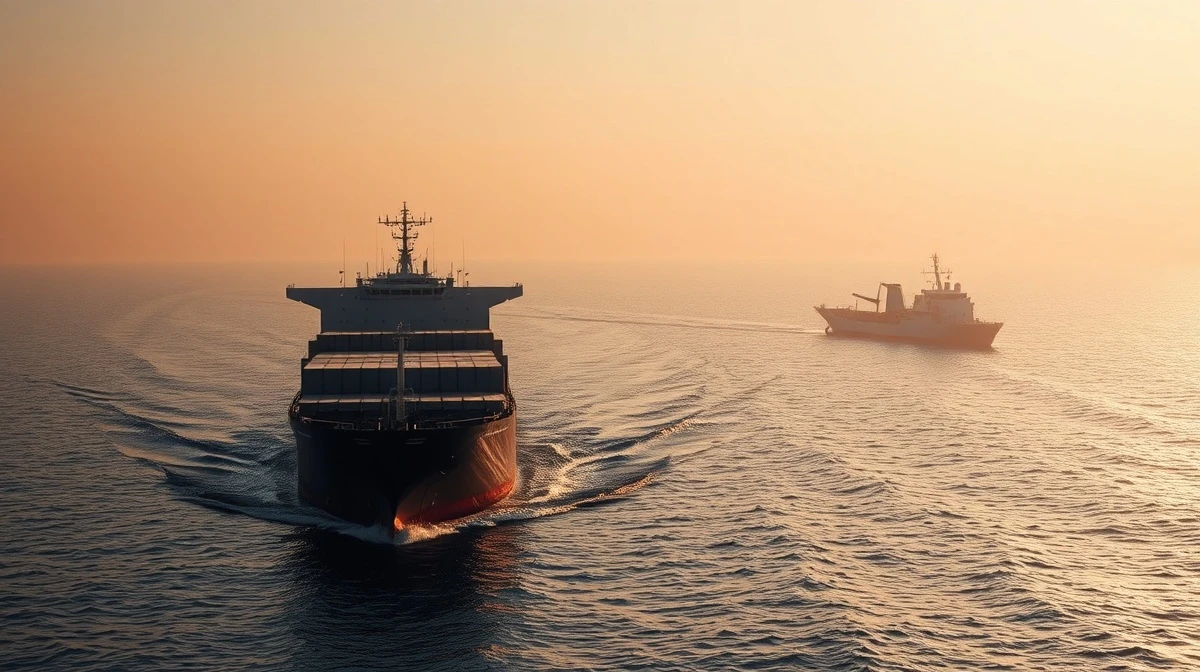
Shipping companies are also watching closely. Some have already begun rerouting vessels away from the strait, adding days to transit times and raising costs.
Data from the International Energy Agency shows that alternative routes, such as the Bab el-Mandeb strait, cannot fully replace Hormuz capacity. The implication is that any prolonged disruption would hit global supply chains hard.
What’s Next
Diplomatic channels remain open. Oman has offered to mediate between Tehran and Washington. But Azizi’s hardline stance may limit room for compromise.
For now, the world waits. The Strait of Hormuz is a narrow stretch of water. It does not take much to turn it into a flashpoint.