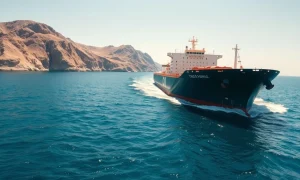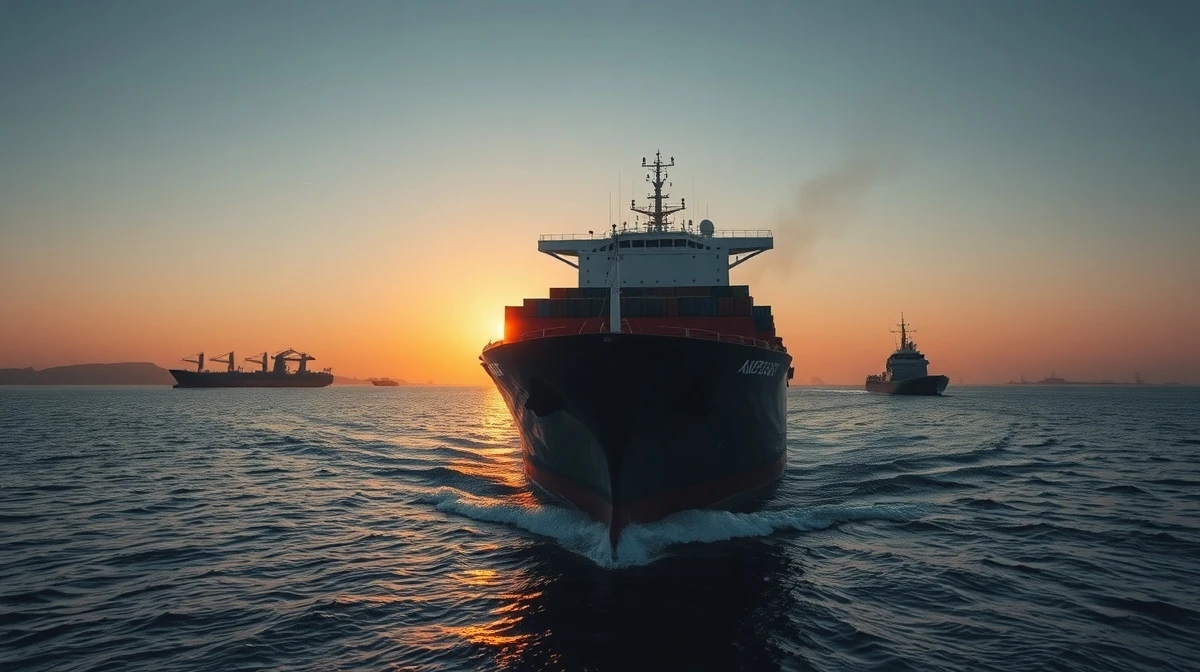
Washington, D.C. — May 4, 2026 — President Donald Trump said the United States will begin guiding commercial ships through the Strait of Hormuz, a move that could reshape shipping security in one of the world’s most critical oil chokepoints.
Bloomberg reported the announcement, citing Trump’s comments. The president did not provide operational details or a timeline for the new policy.
Also read: Pound Sterling faces a heavy week as Westminster empties out
The Strait of Hormuz connects the Persian Gulf to the Gulf of Oman. About 20% of the world’s oil passes through it daily. Iran has threatened to block the waterway in response to US sanctions.
Why This Matters
Shipping companies have faced rising insurance costs and security risks in the region. Iran’s Revolutionary Guard Corps has seized tankers in recent months, disrupting global oil flows.
Also read: US Dollar Index Holds Firm Near 101.00 as Traders Assess Fed Outlook
Industry watchers note that US guidance could lower insurance premiums for vessels transiting the strait. But it also risks direct confrontation with Iranian forces.
Data from the US Energy Information Administration shows that 17 million barrels of oil move through the strait each day. Any disruption could push global prices higher.
Market Reaction
Oil prices rose 2% on the news, with Brent crude trading near $85 a barrel. Traders are weighing the potential for reduced shipping delays against the risk of escalation.
Shipping stocks, including those of tanker operators, saw mixed trading. Some investors see the US move as stabilizing, while others worry about long-term uncertainty.
The implication is clear: Trump’s policy could provide short-term relief for shippers but may not resolve the underlying tensions with Iran.
What Comes Next
The Pentagon has not issued a statement on the president’s remarks. It remains unclear whether the Navy will provide escorts or simply coordinate passage through diplomatic channels.
Iran’s foreign ministry has not responded to the announcement. Past statements from Tehran have warned that any US military presence in the strait would be met with retaliation.
For now, shipping companies are waiting for details. The situation is fluid, and the next 48 hours could determine whether this policy move eases tensions or inflames them.