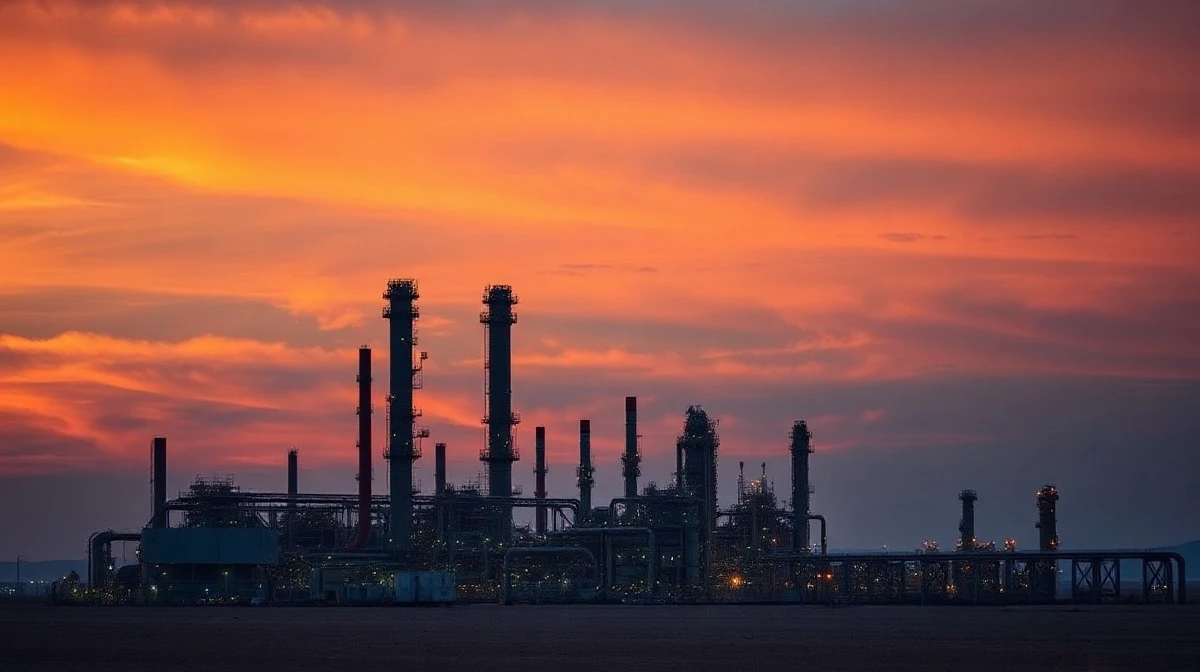
Washington — CBS News reported on Wednesday, citing unnamed US officials, that the United States and Israel are planning potential military strikes on Iran’s energy infrastructure in response to Tehran’s recent missile attack on Israel. The report, which has not been confirmed by the White House or the Pentagon, immediately injected fresh volatility into global markets, with crude oil benchmarks swinging between gains and losses as traders assessed the risk of supply disruptions.
The report follows a series of escalating exchanges between the two nations. On October 1, Iran launched a barrage of ballistic missiles at Israeli territory, an attack that caused no reported fatalities but heightened fears of a wider regional war. Israeli leaders, including Prime Minister Benjamin Netanyahu, have publicly vowed a significant response, with energy facilities emerging as a primary point of focus in international speculation.
Also read: Silicon Valley's Young Founder Boom Comes With a New Kind of Pressure
The Strategic Significance of Iran’s Energy Sector
Iran sits atop some of the world’s largest proven oil and natural gas reserves. The country’s petroleum sector is the lifeblood of its economy, accounting for a substantial portion of government revenue. A strike on facilities such as the Kharg Island export terminal, which handles the vast majority of Iran’s crude oil exports, or major processing complexes could effectively cripple the nation’s ability to sell oil on the global market.
Beyond the direct economic impact, targeting energy infrastructure would send a clear signal of intent from Washington and Jerusalem. It represents a move to degrade Iran’s financial capacity to fund proxy groups across the region, including Hezbollah and the Houthi movement, without necessarily engaging in a broader ground war. The choice of target is also a calculated message: it hits a point of maximum economic utilize while potentially avoiding direct strikes on nuclear facilities, which could trigger an even more severe escalation.
Also read: How London's West End Is Redesigning for a Future of Extreme Heat and Flooding
The potential for such an attack has been a recurring theme in US policy debates. In 2019, following attacks on Saudi Aramco facilities, the US considered similar options against Iran. The current situation, however, is complicated by the direct nature of the missile exchange between Iran and Israel, marking a departure from the shadow war that has defined their conflict for years.
Global Market and Geopolitical Implications
The immediate market reaction highlights the fragility of global energy supply chains. While the US is now a net exporter of energy, the price of Brent and WTI crude remains sensitive to events in the Middle East due to the region’s role in global production and the strategic chokepoint of the Strait of Hormuz. Approximately one-fifth of the world’s total oil consumption passes through this narrow waterway, making it a critical vulnerability for the global economy.
Traders are now weighing two competing scenarios. The first is a limited, symbolic strike that causes minimal physical damage but serves as a warning. The second is a more sustained campaign designed to significantly degrade Iran’s export capacity, which could push oil prices sharply higher and reignite global inflationary pressures. Central banks, including the US Federal Reserve, have been addressing a path toward easing monetary policy; a sustained spike in energy costs would complicate those efforts.
The diplomatic field is equally volatile. The United States has been urging Israel to exercise restraint and consider a response that does not trigger a full-scale war. However, the political calculus in Jerusalem, particularly for Prime Minister Netanyahu, leans toward a solid demonstration of force to restore deterrence. The Biden administration, while publicly supporting Israel’s right to defend itself, has also signaled its desire to avoid a wider conflict that could draw in US forces directly.
For investors and observers, the key indicators to watch are the official statements from the Pentagon and the Israeli military, as well as the trajectory of oil futures. Any confirmed movement of US naval assets or aerial tankers in the region would be a strong signal that a strike is imminent. The situation remains fluid, and the discrepancy between public posturing and private diplomacy is vast.
The coming days will be critical in determining whether this remains a threat or becomes a reality. The lack of official confirmation does not diminish the seriousness of the report, as such plans are rarely disclosed publicly before execution. For now, the world watches the Strait of Hormuz and the statements from Washington and Tehran with heightened apprehension.