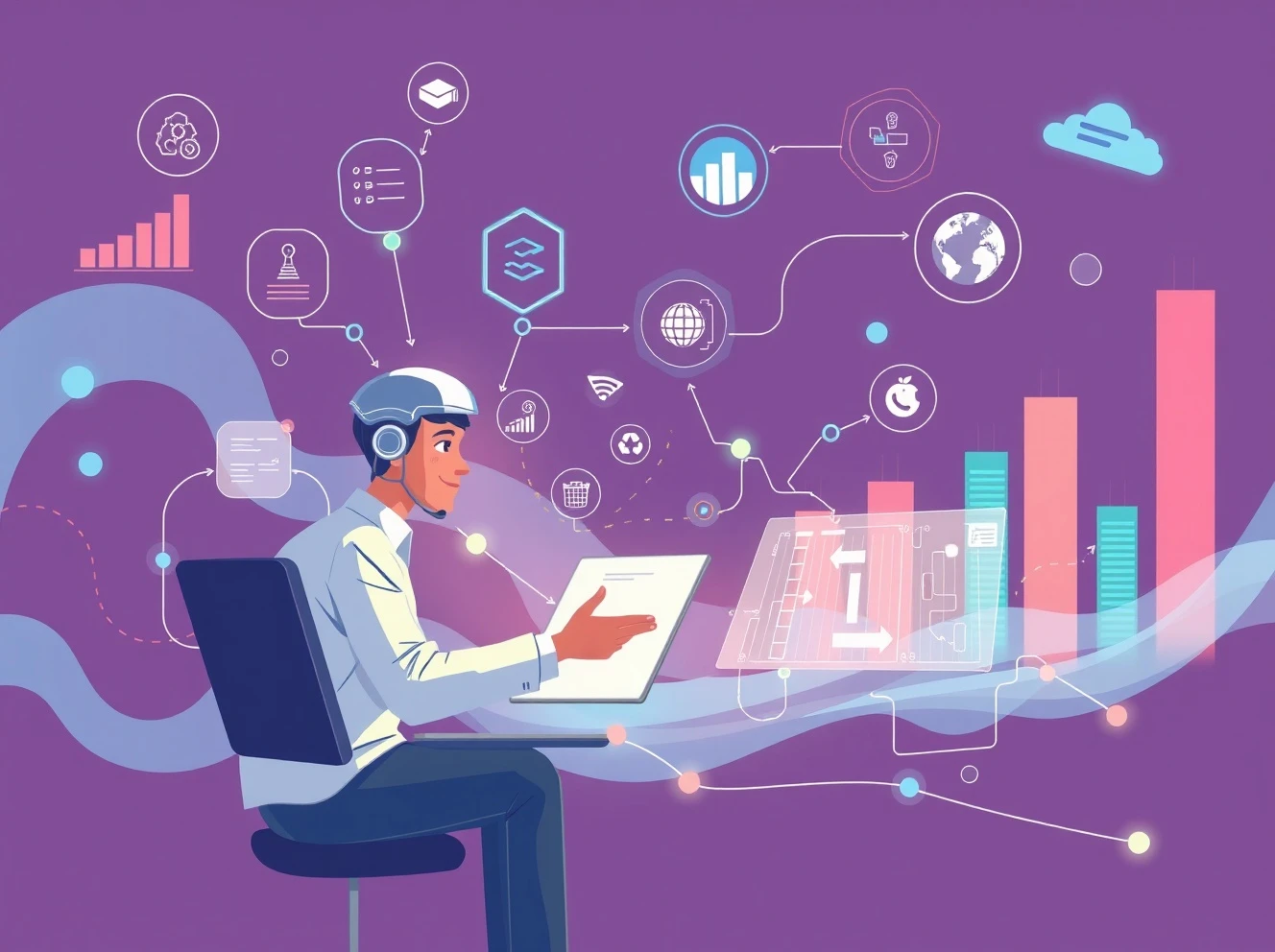
Business competition resembles a high-stakes race more than an Olympic sport. Small businesses constantly face giants with superior resources. However, artificial intelligence now offers the ultimate equalizer. This technology provides performance enhancements that level the playing field dramatically.
Why AI for Small Business Changes Everything
Traditional business competition favors large corporations with massive budgets. They employ teams of analysts and developers. Small businesses struggle to keep pace. Fortunately, AI for small business operations transforms this dynamic completely. It delivers enterprise-level capabilities at affordable prices.
Also read: Defense tech is flooded with money, but who’s built to last?
Practical Applications of AI for Small Business
Business owners can implement AI across multiple functions immediately:
- Customer Service: AI chatbots handle inquiries 24/7
- Marketing: Generate content and analyze campaign performance
- Operations: Forecast demand and optimize inventory
- Finance: Automate bookkeeping and detect anomalies
The Competitive Advantage of AI Adoption
Early adopters gain significant market advantages. They operate more efficiently than competitors. AI for small business enables scaling without proportional cost increases. This creates sustainable growth opportunities. Businesses can focus on strategic priorities instead of administrative tasks.
Also read: Cruise Giants Face $440M Liability After Supreme Court Rules on Seized Cuban Property
Overcoming Implementation Barriers
Many business owners hesitate due to perceived complexity. Modern AI tools feature intuitive interfaces. They require minimal technical expertise. Implementation costs have decreased substantially. Most platforms offer free trials and tiered pricing.
Measuring AI for Small Business Success
Track key performance indicators to evaluate AI effectiveness:
- Response time improvements
- Cost reduction percentages
- Customer satisfaction scores
- Revenue growth metrics
Future-Proofing Your Business with AI
AI technology continues evolving rapidly. Businesses that adopt now build vital experience. They develop competitive moats that protect market position. Early AI for small business implementation creates long-term advantages. It positions companies for sustained success.
Frequently Asked Questions
What is the best AI tool for small businesses?
Several excellent options exist depending on needs. Chat GPT handles content creation effectively. Many CRM platforms now include AI features. Accounting software incorporates automation tools. Choose based on your specific business requirements.
How much does AI implementation cost?
Costs vary significantly by solution complexity. Basic AI tools start under $50 monthly. Comprehensive platforms may cost several hundred dollars. Most providers offer scalable pricing models. Many deliver ROI within the first quarter.
Will AI replace human employees?
AI primarily augments human capabilities rather than replacing them. It handles repetitive tasks efficiently. This allows staff to focus on creative and strategic work. Most businesses report increased job satisfaction after AI implementation.
How long does AI implementation take?
Basic AI tools can deploy within days. More complex systems may require weeks. The implementation timeline depends on integration complexity. Most businesses see initial benefits within the first month.
What skills are needed to use AI effectively?
Modern AI platforms require minimal technical skills. Basic computer literacy usually suffices. Providers offer comprehensive training resources. Many include customer support and implementation guidance.
Can AI work with existing business systems?
Most AI solutions integrate seamlessly with common business software. They connect with accounting platforms, CRM systems, and communication tools. Compatibility checks should precede implementation decisions.