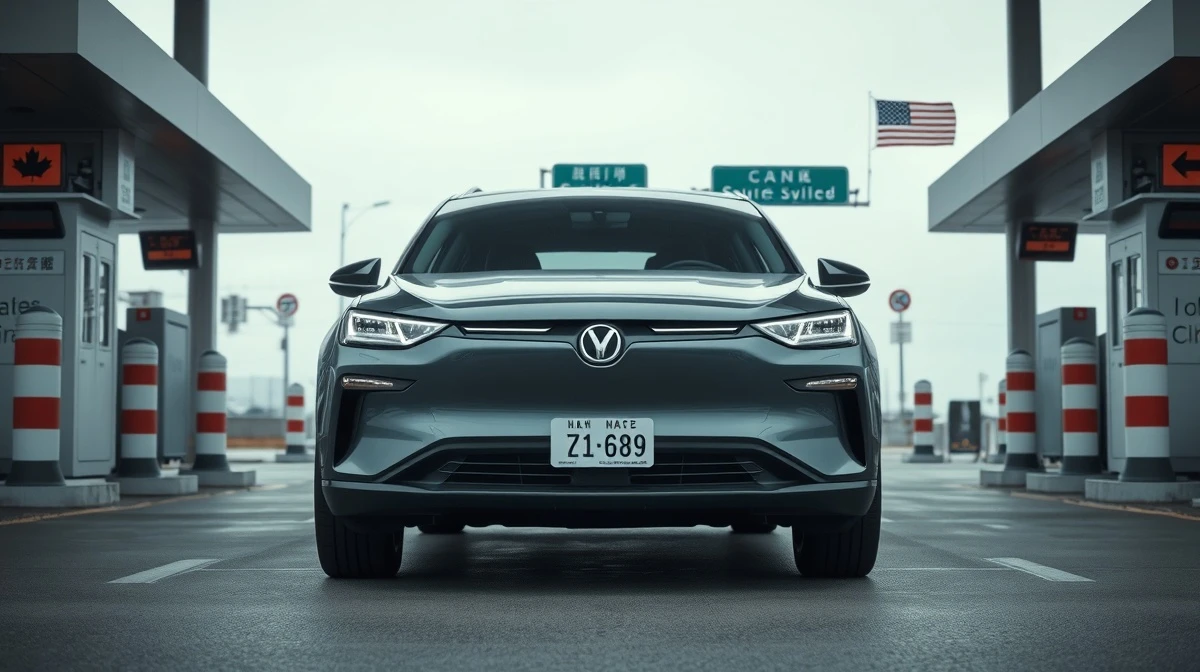
In a statement that has reignited debate over national security and trade policy, geopolitical analyst Gordon Chang has warned that Chinese electric vehicles entering the United States through Canada could function as what he described as ‘rolling spy machines.’ The comment, made during a recent interview, highlights growing concerns in Washington about the potential for Chinese-manufactured EVs to collect and transmit sensitive data.
Context of the Warning
Gordon Chang, a senior fellow at the Hudson Institute and author of ‘The Coming Collapse of China,’ has long been a vocal critic of Beijing’s technological ambitions. His latest remarks come amid a broader U.S. government review of Chinese vehicle imports, particularly those that might circumvent existing tariffs by entering through Canada. The U.S.-Mexico-Canada Agreement (USMCA) allows for duty-free movement of goods that meet regional content requirements, a loophole some analysts say could be exploited.
Also read: Pet Food Sold Nationwide Recalled Over Salmonella Risk: What Pet Owners Need to Know
Chang’s specific concern centers on the connectivity features of modern EVs, which often include always-on internet connections, GPS tracking, cameras, and microphones. He argues that these systems could be repurposed for surveillance, especially if Chinese manufacturers are compelled by Beijing to share data. ‘We’re not just importing cars; we’re importing potential intelligence-gathering platforms,’ Chang said.
Regulatory and Industry Reactions
The Biden administration has already taken steps to address these risks. In September 2024, the U.S. Commerce Department proposed rules that would ban Chinese-made vehicles with certain connected technologies from American roads, citing national security concerns. The proposed regulations would apply to vehicles manufactured by Chinese companies or those using Chinese-developed software and hardware.
Also read: Chocolate Recall Expands Across Entire Product Line Over Salmonella Fears
Canadian officials have so far been cautious, emphasizing that they are monitoring the situation. The Canadian government has not announced any parallel restrictions, but trade experts note that Ottawa often aligns with Washington on technology security matters. Automakers, including Tesla and Ford, have publicly supported stricter rules, arguing that they level the playing field and protect consumer data.
What This Means for Consumers and the Market
For American consumers, the immediate impact is limited. Chinese EVs, such as those from BYD and Nio, are not widely available in the U.S. market due to existing 27.5% tariffs. However, if vehicles enter through Canada under USMCA provisions, prices could drop, making them more competitive. This would create a dilemma for buyers: lower prices versus potential privacy and security risks.
Industry analysts point out that the ‘rolling spy machine’ narrative, while alarming, may oversimplify the issue. Many modern vehicles, regardless of origin, collect vast amounts of data. The key difference, experts say, is the legal framework governing that data. U.S. and European automakers are subject to domestic privacy laws, while Chinese companies operate under Beijing’s data security laws, which require cooperation with state authorities.
Conclusion
Gordon Chang’s warning underscores a critical intersection of trade, technology, and national security. As the U.S. government moves to tighten regulations on connected vehicles, the debate over Chinese EVs entering through Canada will likely intensify. For now, the issue remains a matter of policy and perception, but the underlying data security concerns are unlikely to fade. Consumers and policymakers alike must weigh the benefits of open trade against the risks of embedded surveillance technology.
FAQs
Q1: What exactly is a ‘rolling spy machine’ in this context?
It refers to a vehicle equipped with always-on connectivity, GPS, cameras, and microphones that could be used for surveillance or data collection by a foreign government, particularly China.
Q2: Are Chinese EVs currently sold in the United States?
No, Chinese EVs are not widely available in the U.S. due to high tariffs. Some models are sold in Canada and Europe, but the U.S. market remains largely closed.
Q3: How could Chinese EVs enter the U.S. via Canada?
Under the USMCA, goods that meet specific regional content requirements can cross borders duty-free. If a Chinese EV is assembled in Canada with enough North American parts, it could qualify for tariff-free entry into the U.S.