
Cocoa Climbs Second Day as West Africa Weather Threatens Crops
ICE cocoa futures rose for a second session as heavy Ivory Coast rain slowed port deliveries and dryness withered pods in Ghana and Nigeria.

· 3 min read
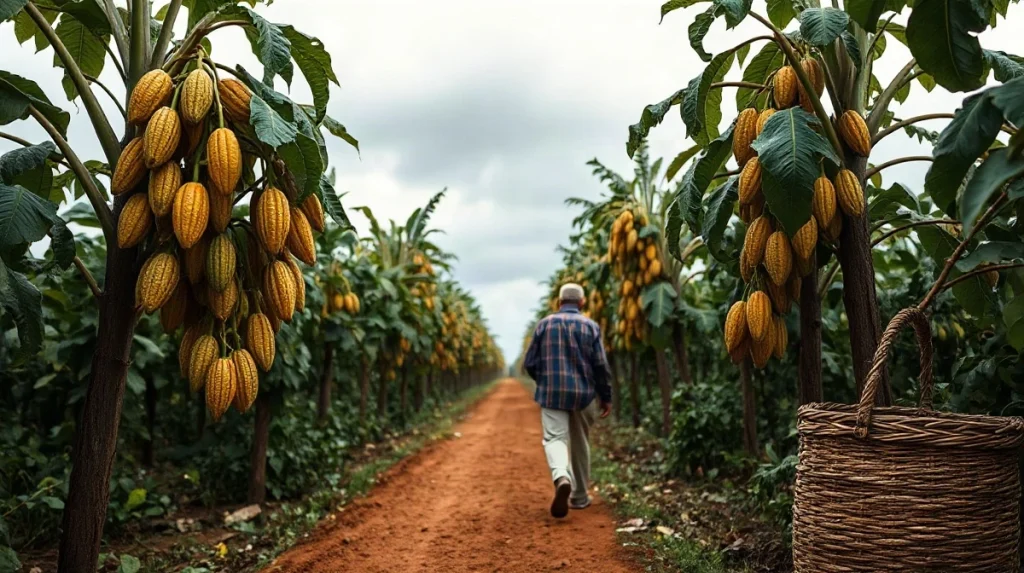
ICE cocoa futures advanced for a second consecutive session on September 11, 2025, as adverse weather across West Africa tightened the flow of beans from farms to export terminals, Nasdaq reported. December ICE New York cocoa (CCZ25) closed the day up 87 points, or 1.16%, while December ICE London cocoa No. 7 (CAZ25) added 15 points, or 0.29%.
Heavy rain in Ivory Coast kept farmers out of their fields and slowed the movement of cocoa from plantations to ports, while dry conditions in Ghana and Nigeria withered pods, according to the report. The split weather pattern lifted the front of the futures curve even as the wider market remained weighed down by expectations of a larger West African harvest.
Also read: Dollar Slump to 5-Month Low Lifts Cocoa Futures, But Oversupply Looms
Key facts
- ICE-monitored cocoa inventories at US ports fell to a four-month low of 2,115,411 bags on Wednesday.
- Ivory Coast farmers shipped 1.81 MMT of cocoa to ports from October 1 to September 7, up 5.8% year over year, but far below the 35% increase seen in December.
- The Commodity Weather Group said the past 60 days were the driest for West Africa cocoa since 1979.
- Q2 cocoa grindings fell 7.2% year over year in Europe to 331,762 MT, 16.3% in Asia to 176,644 MT and 2.8% in North America to 101,865 MT.
- Nigeria’s Cocoa Association projected 2025/26 production at 305,000 MT, down 11% from a projected 344,000 MT for 2024/25.
Supply risks push against a demand slowdown
Prices had fallen to 1.5-month lows on Tuesday on expectations of growing supplies amid weakening demand. Cocoa has been under pressure for roughly four weeks as traders worried that elevated prices and tariffs would erode chocolate consumption.
That concern has already shown up in corporate guidance. Lindt & Sprüngli AG cut its margin guidance for the year in July after a larger-than-expected decline in first-half chocolate sales, and Barry Callebaut AG reduced its sales volume guidance for a second time in three months in July, citing persistently high cocoa prices. Barry Callebaut reported a 9.5% drop in sales volume for the March-May period, its largest quarterly decline in a decade, and projected a full-year decline.
Also read: Lean Hog Futures Edge Higher in Late July as Export Sales Hit Six-Week Low
Offsetting that bearish demand picture, Mondelez said last Thursday that the latest West African pod count is 7% above the five-year average and materially higher than last year’s crop.
Quality concerns are also supporting the market. Rabobank attributed the poor quality of Ivory Coast’s mid-crop, currently being harvested through September, partly to late-arriving rain that limited crop growth. The average estimate for this year’s Ivory Coast mid-crop is 400,000 MT, down 9% from 440,000 MT last year.
On the bearish side, the Ghana Cocoa Board projected on July 1 that the 2025/26 Ghana crop would rise 8.3% year over year to 650,000 MT from 600,000 MT. The International Cocoa Organization revised its 2023/24 global deficit to 494,000 MT from a February estimate of 441,000 MT, the largest in over 60 years, and forecast a 2024/25 surplus of 142,000 MT with production up 7.8% to 4.84 MMT.
Why it matters
Cocoa is a inputs cost for chocolate makers, and the swing between tight nearby supply and a projected surplus keeps margins and pricing decisions unsettled for manufacturers and traders. The Ivory Coast export slowdown touches the world’s largest producer directly, while smaller Nigerian output and a weaker mid-crop tighten the nearby market. For futures traders, the balance between weather-driven supply risk and falling grindings demand has kept cocoa in a wide range after last month’s two-month highs.
What to watch
The main crop harvest begins in October, and the size and quality of that arrival will be the next decisive test for prices. Weekly Ivory Coast port delivery figures and any update to the pod-count data will show whether the recent slowdown in shipments persists.
This article is not financial advice, and commodity markets are volatile and uncertain.

Source: Nasdaq
Benjamin Carter covers business, finance, and the stock market for StockPil, focusing on the trends and data that matter to everyday investors.
More from Benjamin →