
Dollar Slump to 5-Month Low Lifts Cocoa Futures, But Oversupply Looms
Cocoa futures rose Tuesday as the dollar hit a 5-month low, though supply surplus forecasts and weak demand continue to pressure prices.

· 3 min read
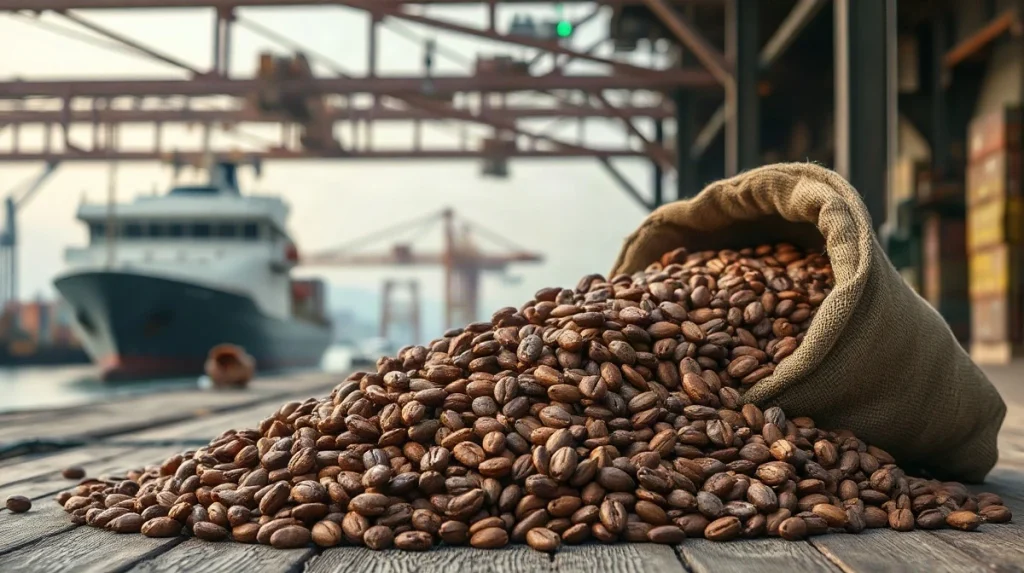
Cocoa futures closed higher on Tuesday, with May ICE NY cocoa (CCK25) settling up 194 points (+2.48%) and May ICE London cocoa #7 (CAK25) gaining 74 points (+1.21%), as the U.S. dollar index slid to a five-month low and triggered a round of short covering across the market.
The bounce follows a difficult stretch for cocoa bulls. NY cocoa touched a four-month low last Friday, and London cocoa posted its own four-month low on Monday, as traders digested an improving supply picture that has shifted the market’s fundamental narrative.
Also read: Cotton Futures End Monday Higher as USDA Trims Crop Condition Ratings
Supply Outlook Turns Bearish After Years of Deficits
The most significant development came on February 28, when the International Cocoa Organization (ICCO) issued its first global surplus forecast in four years. The ICCO now projects a 142,000 metric ton surplus for the 2024/25 season, with global production expected to rise 7.8% year-over-year to 4.84 million metric tons.
That forecast stands in sharp contrast to the 2023/24 season, which the ICCO described as the largest deficit in over 60 years at -441,000 metric tons. Production fell 13.1% to 4.380 million metric tons during that period, and the global stocks-to-grindings ratio dropped to 27.0%, a 46-year low.
Also read: Cocoa Climbs Second Day as West Africa Weather Threatens Crops
Inventory data is reinforcing the bearish case. ICE-monitored cocoa inventories held in U.S. ports have rebounded from a 21-year low of 1,263,493 bags on January 24 to a 4-1/2 month high of 1,758,433 bags as of Tuesday. Additionally, Nigeria — the world’s fifth-largest cocoa producer — reported on February 27 that its January cocoa exports jumped 27% year-over-year to 46,970 metric tons.
Demand Destruction Emerges as a Pricing Force
While supply recovery is pressuring prices, demand concerns are compounding the problem. Executives from two of the world’s largest chocolate makers have publicly warned that sustained high prices are eroding consumption.
Mondelez CFO Zarmella said on February 4 that the company was “seeing signs, particularly in parts of the world like North America, where cocoa consumption is coming down.” Two weeks later, the company warned that chocolate prices could rise as much as 50% as a result of elevated cocoa costs, a move that would likely further curb demand. Hershey executives similarly said on February 6 that high prices are forcing the company to reformulate recipes by substituting cocoa with other ingredients.
Quarterly grinding data — a key proxy for chocolate demand — confirms the slowdown. The European Cocoa Association reported Q4 European grindings fell 5.3% year-over-year to 331,853 metric tons, the lowest in more than four years. Asian grindings dropped 0.5% to 210,111 metric tons, also a four-year low, while North American bean grindings declined 1.2% to 102,761 metric tons.
Ivory Coast and Ghana Offer Mixed Signals
Supply-side news from West Africa is not uniformly bearish. Ivory Coast government data released Monday showed farmers shipped 1.41 million metric tons of cocoa to ports from October 1 through March 16, up 12% from the prior year. However, that pace has slowed considerably from the 35% growth recorded in December, suggesting the early-season surge is tapering.
In Ghana, the world’s second-largest producer, Cocobod cut its 2024/25 harvest forecast in December for the second time this season, lowering it to 617,500 metric tons — down 5% from the August estimate of 650,000 metric tons. The reduction provides a partial floor under prices even as the broader outlook points toward surplus.
For traders, the immediate catalyst remains currency dynamics: a weaker dollar tends to support all dollar-denominated commodities by improving purchasing power for non-U.S. buyers. Whether that support holds will depend on whether the dollar’s slide continues and whether upcoming West African port arrival data confirms or contradicts the ICCO’s surplus projection.
This article is for informational purposes only and does not constitute financial advice. Commodities markets are volatile and speculative; past performance does not guarantee future results.

Source: Nasdaq
Benjamin Carter covers business, finance, and the stock market for StockPil, focusing on the trends and data that matter to everyday investors.
More from Benjamin →