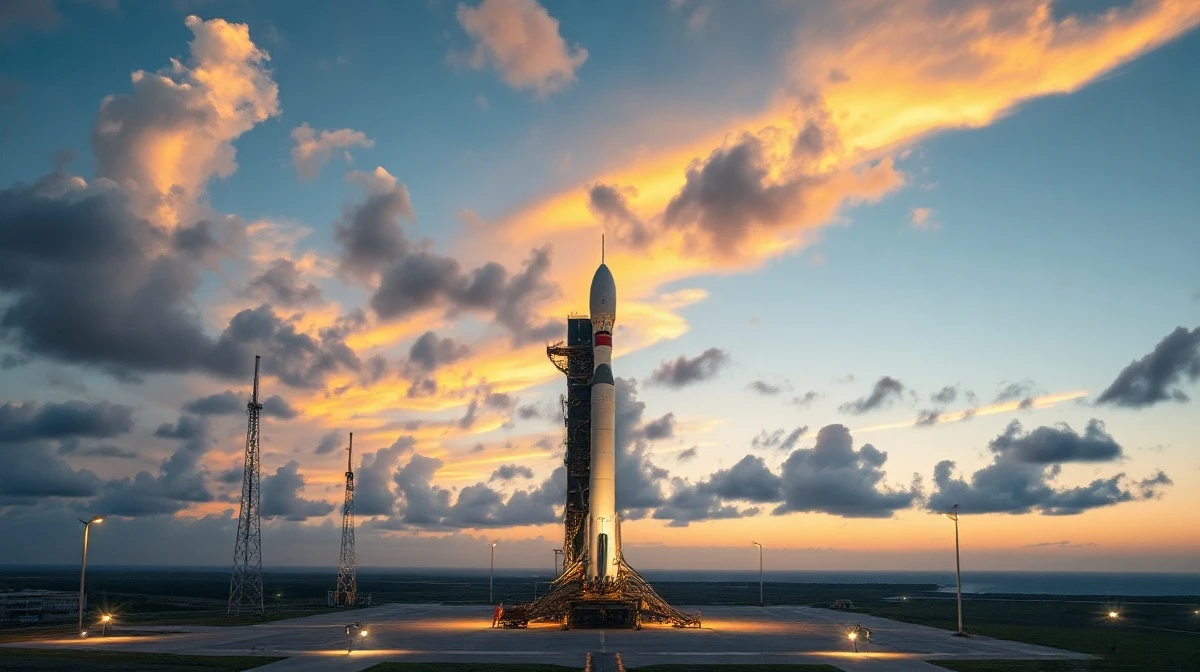
SpaceX closed its first week as a public company with a market capitalization of $2.1 trillion as of Friday, surpassing Tesla’s $1.52 trillion valuation and making it the sixth most valuable U.S.-listed company behind Nvidia, Apple, Alphabet, Microsoft, and Amazon. The milestone marks a dramatic shift in the financial arena of Elon Musk’s corporate empire and raises new questions about the future relationship between his two most prominent companies.
For anyone tracking the future of transportation, the numbers carry weight beyond mere bragging rights. SpaceX’s valuation leapfrogging Tesla signals that investors now see the rocket company — not the electric vehicle maker — as Musk’s most valuable asset. But the two could soon become one.
Also read: US Chip Industry Faces Shortage of Up to 157,000 Workers by 2030, Report Warns
Merger speculation intensifies after IPO documents and public comments
Senior TechCrunch reporter Sean O’Kane spotted new language in SpaceX’s S-1 filing that warns investors of future dilution: “We may issue a significant amount of equity in connection with future transactions.” The phrasing, unusual in its breadth, suggests a deal far larger than a typical acquisition — and analysts increasingly point to Tesla as the likely counterparty.
SpaceX president and COO Gwynne Shotwell added fuel to the speculation during a CNBC interview on opening day. Asked about a potential merger with Tesla, Shotwell said it “might make Elon’s life a little easier.” The comment, while not a confirmation, came from the company’s second-highest-ranking executive and was notable for its lack of denial.
Also read: ClickFix Scams Spread Through Hijacked HBO Max Reddit Ads, Researchers Say
Lower-tier SPV investors in SpaceX could face dilution if a merger proceeds, while Musk would consolidate control over his two most valuable private and public holdings. TechCrunch has compiled coverage of who wins and who may not in such a scenario.
GM’s LFP battery plans reveal supply chain strategy shift
Separately, General Motors is sourcing lithium-iron-phosphate (LFP) cells from a foreign supplier — identified in a Wall Street Journal report as Chinese battery manufacturer CATL — for the 2027 Chevrolet Bolt. A source familiar with GM’s operations told TechCrunch senior reporter Tim De Chant that the automaker currently has no plans to manufacture LFP cells itself for EVs.
GM is starting LFP production at an Ultium plant in the coming weeks, but those cells are destined for energy-storage systems built with LG Energy Solution, not for electric vehicles. The decision suggests GM views LFP as a stopgap for the Bolt line rather than a long-term EV battery strategy.
Lucid loses top executive as leadership churn continues
Lucid Motors is facing executive disruption. Emad Dlala, a top executive promoted to a leading role just months ago, has left the company, TechCrunch has learned. Dlala’s departure is the first major executive exit since Silvio Napoli became CEO in April, and sources indicate more may follow.
The departures come at a critical time for Lucid, which is racing to scale production of its Gravity SUV and expand beyond its Air sedan lineup.
Waymo acquires Apple’s former proving ground in Arizona
Waymo has acquired a 5,500-acre proving ground in Arizona from Route 14 Investment Partners LLC, a Delaware shell company associated with Apple, for $220 million, according to filings uncovered by TechCrunch. The property, previously used for Apple’s autonomous car project before its cancellation in 2024, will support Waymo’s scaling operations.
The acquisition is the latest evidence that Waymo is moving aggressively to expand its autonomous vehicle fleet and testing infrastructure, even as competitors like Uber and the U.K. startup Wayve prepare for a robotaxi showdown in London.
Deals roundup: fleet tech, autonomous ships, and quick-commerce IPO plans
Several notable funding rounds closed in the mobility sector this week:
- CameraMatics, an Irish AI-powered video telematics company, raised €49 million from Blume Equity, the Ireland Strategic Investment Fund, and Goodbody Capital Partners.
- Clear Robotics, an Indian autonomous ship developer, raised $1.75 million in pre-Series A funding led by Shipsfocus Ventures.
- Evotrex, a hybrid RV travel trailer startup, raised $30 million in Series A funding from Chinese and Hong Kong-based investors including GSR United Capital.
- Volteum, a fleet management software startup for electric and mixed fleets, raised €2.5 million led by Movens Capital.
- Zepto, the Indian quick-commerce delivery startup, unveiled IPO plans that could value the company at about $1 billion.
- Zūm, a school transportation startup, is interviewing banks about a possible IPO, The Information reported.
Battery competition heats up beyond EVs
General Motors is pushing into commercial energy storage for AI data centers and the grid, partnering with startup Peak Energy to develop a new sodium-ion battery chemistry. GM and Ford are both chasing energy storage revenue, joining startups like Redwood Energy in a race to capture a slice of Tesla’s battery business.
Rivian began deliveries of its R2 SUV this week. Waymo launched a loyalty program called Waymo Premier at $29.99 per month, offering frequent robotaxi riders perks, and released details on a new computer model designed to compare its autonomous driving software against human drivers more accurately.
Wing, the Alphabet-owned drone delivery company, is expanding into seven more U.S. cities through its Walmart partnership, signaling that autonomous drone delivery is moving beyond novelty status in select markets.
TechCrunch editors Sean O’Kane and Russell Brandom discussed first impressions of the SpaceX IPO on a special episode of the Equity podcast, available now.