
UK inflation climbs to 3.5% as fuel prices drive September rise
U.K. consumer price inflation accelerated to 3.5% in the 12 months to September, the Office for National Statistics said on Wednesday, overshooting the 3.4% annual rate economists polled by Reuters had forecast. The reading,

· 4 min read
In this article5 sections
U.K. consumer price inflation accelerated to 3.5% in the 12 months to September, the Office for National Statistics said on Wednesday, overshooting the 3.4% annual rate economists polled by Reuters had forecast. The reading, reported by Cnbc, is the highest annual figure in a year and extends a run of rising prices from 2.9% in July and 3.1% in August.
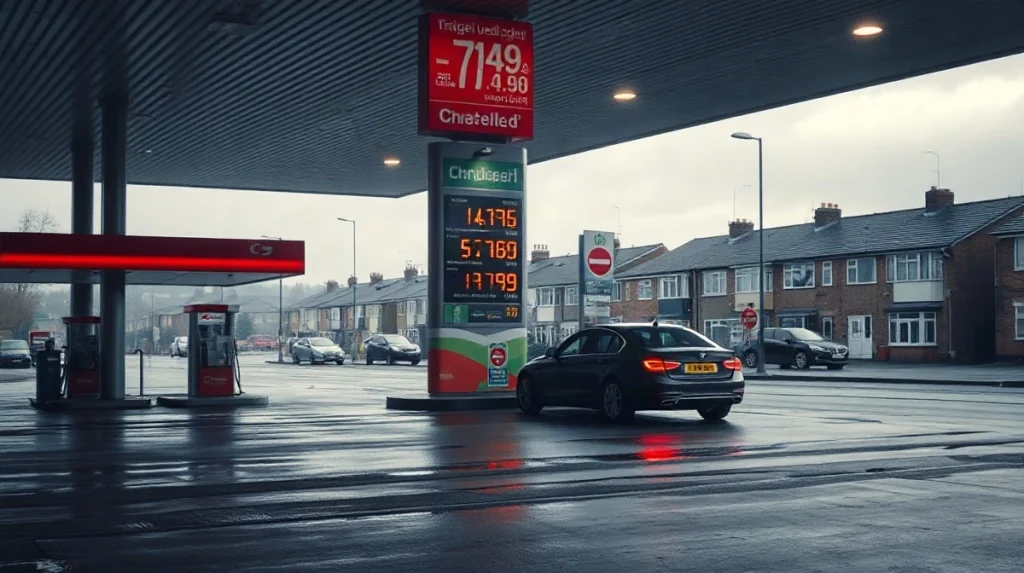
Motor fuel did most of the work. The ONS said fuel inflation reached its fastest pace since August 2022, when prices spiked after Russia’s full-scale invasion of Ukraine, and that motor fuel costs alone climbed 29.8% over the year to September. Britain imports more energy than it exports, which leaves it exposed to supply shocks such as the U.S.-Iran war and the disruption to oil shipments through the Strait of Hormuz.
Also read: US Inflation Hits 3.7% in Final Report Before Midterms
Key facts
- September CPI came in at 3.5% year on year, against a Reuters consensus of 3.4%, per Cnbc.
- Motor fuel prices rose 29.8% in the year to September, the ONS said, the sharpest annual increase since August 2022.
- Headline inflation has now risen three months in a row, from 2.9% in July to 3.1% in August to 3.5% in September.
- LSEG data cited by Cnbc shows markets pricing a 98% chance of a 25 basis point Bank of England increase to 4% next month.
- On the same day, Reserve Bank of Australia deputy governor Andrew Hauser said the inflation outlook had become “materially worse,” Theguardian reported.
Sterling and gilts barely move
The currency and bond markets took the surprise in stride. Sterling was roughly unchanged against both the euro and the U.S. dollar after the release, and yields on U.K. government bonds showed little movement, according to Cnbc.
Scott Gardner, investment strategist at J.P. Morgan Personal Investing, wrote that the recent run-up in headline inflation had “undone the progress we saw in the spring.” He said Bank of England policymakers would look past the headline number and focus on services inflation, which he described as accelerating in recent months, raising the prospect of second-round effects that go beyond energy. Gardner said the prolonged conflict is weighing on the U.K. economy and strengthening the argument for higher rates.
Also read: UK diesel hits 198.32p as Bailey warns on rates
Rate expectations firm up
Traders have moved decisively. Using LSEG pricing, Cnbc reported that the market assigns a 98% probability to a quarter-point rise to 4% at the Bank’s meeting next month. A majority of traders also expect a further increase of the same size at the central bank’s final meeting of the year in December, according to the same data.
The U.K. figures arrived alongside similarly hawkish signals elsewhere. Theguardian reported that RBA deputy governor Andrew Hauser warned of “hard choices” in Sydney on Wednesday, said inflation had been high “for a very long time,” and flagged signs that some Australians doubt whether the central bank will return inflation to its 2.5% target. Market pricing for a rate rise on 3 November rose from 30% to 45% after his remarks, the paper said. Australia’s inflation stood at 4% in the year to August, driven by a worsening Middle East conflict.
Separately, Cryptobriefing reported that the Bank of Canada’s latest surveys show both firms and consumers expecting higher inflation, with businesses planning to pass rising input costs on to customers. That outlet’s coverage focused on the possibility of a rate adjustment at the Bank of Canada’s October announcement, a different central bank and policy cycle from the U.K. story.
Why it matters
For U.K. households, the September print lands directly on fuel receipts and borrowing costs at the same time: petrol is up nearly a third in a year, and a move to 4% would lift repayments on tracker mortgages and variable-rate credit. The jump also reverses the disinflation seen through the spring, leaving the Bank of England in a position where energy-driven price pressure may be spilling into services and wage setting, a pattern Gardner warns could make inflation stickier than a single fuel shock would imply. Central banks in several economies are now reacting to the same Middle East supply disruption, which limits how much any one of them can treat the problem as purely domestic.
What to watch
Attention turns to the Bank of England’s rate decision next month, where LSEG pricing already points to a quarter-point increase to 4%. The Bank’s final meeting of the year in December will show whether traders’ expectations of a second increase hold, and U.K. services inflation data will be the figure policymakers have signalled they are watching most closely.
This article reports market expectations and forecast data; it is not financial advice, and rates, currencies and bond markets are volatile and can move quickly.

Sources: CNBC, Cryptobriefing, Theguardian
Benjamin Carter covers business, finance, and the stock market for StockPil, focusing on the trends and data that matter to everyday investors.
More from Benjamin →