
Nat-Gas Futures Fall 6.13% as TC Energy Lifts Pipeline Force Majeure
October Nymex natural gas futures (NGV26) closed down $0.196, or 6.13%, on Monday, according to Nasdaq, after TC Energy lifted a force majeure on its Mountaineer Xpress pipeline in West Virginia. The move, announced

· 3 min read
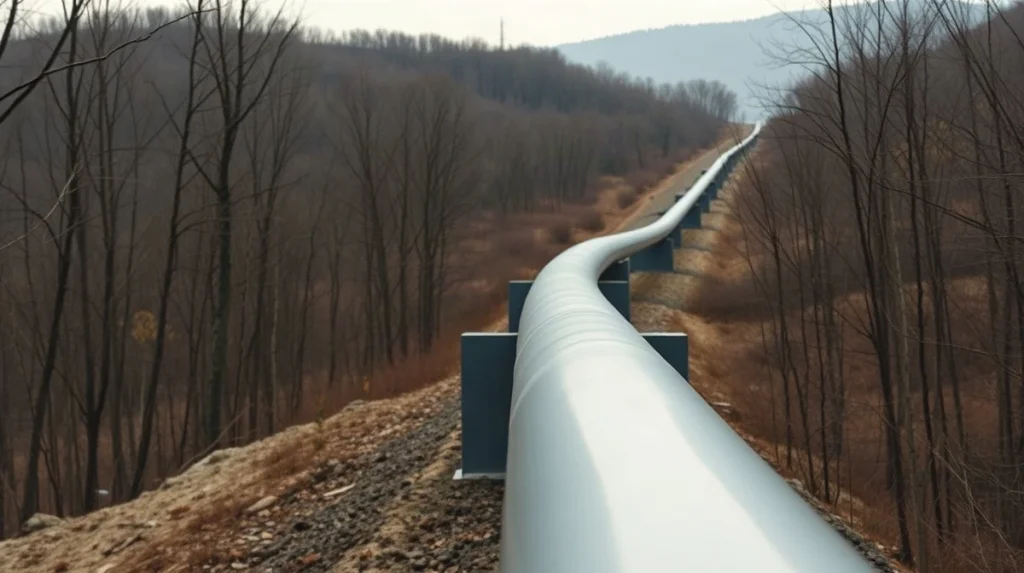
October Nymex natural gas futures (NGV26) closed down $0.196, or 6.13%, on Monday, according to Nasdaq, after TC Energy lifted a force majeure on its Mountaineer Xpress pipeline in West Virginia. The move, announced to customers on Sunday, eased fears of a prolonged outage that had driven prices to a 2.5-month high the previous Thursday.
TC Energy had declared the force majeure on its Columbia Gas Transmission system after what it described as an ‘unexpected mechanical issue.’ Repairs to the pipeline allowed the restriction to be lifted. On Thursday, that outage had sent nearest-futures prices surging to their highest level in two and a half months.
Also read: Natural Gas Futures Rise 0.55% as EIA Storage Build Falls Below Forecast
Key facts
- October Nymex natural gas closed down $0.196, or 6.13%, on Monday, September 28, 2026.
- TC Energy notified customers on Sunday that the force majeure on the Mountaineer Xpress, part of its Columbia Gas Transmission system, had been lifted after repairs.
- U.S. lower-48 dry gas production on Monday was 110.3 bcf/day, up 0.9% year-over-year, per BNEF.
- U.S. lower-48 state gas demand on Monday was 67.6 bcf/day, down 2.3% year-over-year, per BNEF.
- Estimated LNG net flows to U.S. export terminals on Monday were 19.0 bcf/day, up 3.7% week-over-week, per BNEF.
Weather and demand pressures
Forecaster Xweather said on Monday that well-above-average temperatures are expected across much of the western United States from October 3-7, which could reduce heating demand. A separate bearish factor is the market’s expectation that a ‘Super El Niño’ will bring warmer-than-normal temperatures to the Northern Hemisphere this fall and winter.
On the demand side, the Edison Electric Institute reported on September 16 that U.S. lower-48 electricity output in the week ended September 12 rose 16.1% year-over-year to 94,427 GWh. Over the 52 weeks ending September 12, output rose 3.3% year-over-year to 4,405,549 GWh.
Also read: Lean Hog Futures Edge Higher in Late July as Export Sales Hit Six-Week Low
Storage, supply and rig count
The U.S. Energy Information Administration projected on August 11 that nat-gas storage levels will swell to 3,985 bcf by the end of October, the highest in 10 years and 5% above the five-year average. Last Monday, the EIA raised its 2027 U.S. dry natural gas production estimate to 116.0 bcf/day from 115.3 bcf/day.
Last Thursday’s weekly EIA report showed a 53 bcf increase in inventories for the week ended September 18, above expectations of 51 bcf but below the five-year weekly average of 76 bcf. As of September 18, inventories were down 4.5% year-over-year and 2.9% above their five-year seasonal average. In Europe, gas storage was 71% full as of September 26, compared with the five-year seasonal average of 87% for this time of year.
Baker Hughes reported last Friday that the number of active U.S. nat-gas drilling rigs rose by one to a new three-year high of 135 rigs in the week ended September 25.
Why it matters
The swift reversal in prices shows how sensitive natural gas futures remain to short-term pipeline disruptions, even as broader supply and demand fundamentals point to a well-supplied market. The lifted force majeure removes a supply risk that had briefly pushed prices to a multi-month high, while the EIA’s projection of the highest end-of-October storage in a decade reinforces a bearish medium-term outlook. For consumers and utilities, the combination of ample storage and warmer forecasts may keep heating costs in check heading into winter.
What to watch
Traders will monitor the next weekly EIA storage report and updates to Xweather’s temperature outlook for early October. Any further operational issues on the Columbia Gas Transmission system or shifts in LNG export flows could also move prices.
This is not financial advice. Natural gas futures are volatile and price movements can be unpredictable.

Source: Nasdaq
Benjamin Carter covers business, finance, and the stock market for StockPil, focusing on the trends and data that matter to everyday investors.
More from Benjamin →