
Swig’s dirty soda boom accelerates beyond Utah as investor sees ‘Starbucksification’ of soft drinks
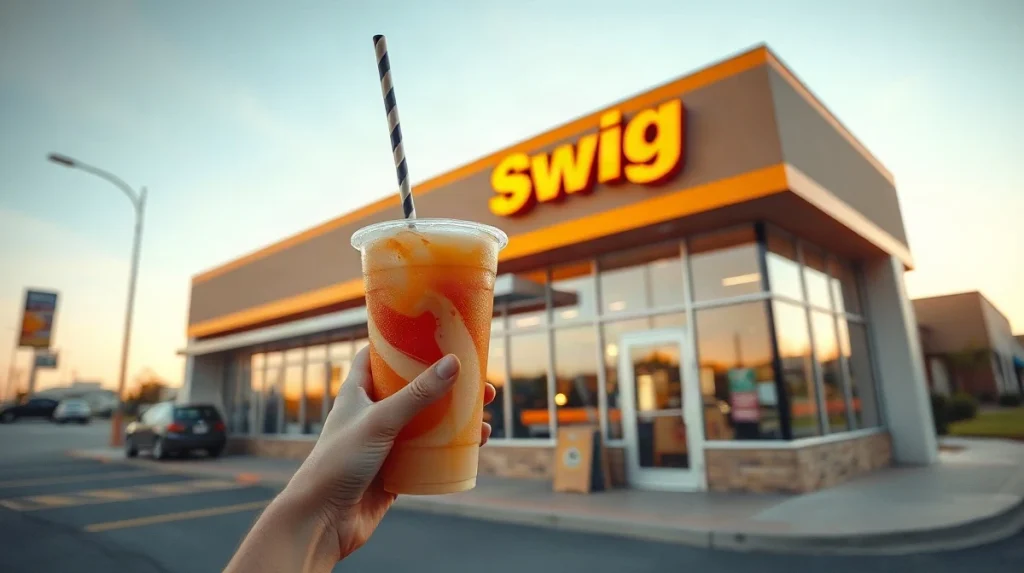
Swig, the Utah-born beverage chain credited with popularizing the “dirty soda” craze, is seeing its most aggressive growth outside its home state, according to the private equity firm backing its expansion. Andrew K. Smith,

· 4 min read
In this article3 sections
Swig, the Utah-born beverage chain credited with popularizing the “dirty soda” craze, is seeing its most aggressive growth outside its home state, according to the private equity firm backing its expansion. Andrew K. Smith, managing director and co-founder of Savory Fund, told FOX Business that locations outside Utah are outperforming in-state stores by roughly 40% to 50%, a signal that the concept has moved well beyond its Mountain West roots.
The chain now operates in 23 states and expects to reach about 200 locations by the end of 2026, with further expansion planned for next year. The growth comes as Swig’s signature product — fountain drinks mixed with flavored syrups, cream, and other add-ins — has crossed into the mainstream, helped by social media and pop culture exposure.
From Utah niche to national beverage trend
Swig’s rise tracks closely with the cultural visibility of its home state. Hulu’s reality series “The Secret Lives of Mormon Wives” brought Utah’s distinctive soda-shop culture to a national audience, introducing millions of viewers to the concept of dirty soda. Smith acknowledged the show’s impact while noting the brand was already building momentum on its own.
“We actually were doing very, very well before ‘The Secret Lives of Mormon Wives,’” Smith said. “But that show definitely made the appeal and the interest and the mystique of dirty soda much more broad.”
The company’s expansion into new markets has been met with strong demand. The 40% to 50% performance gap between out-of-state and Utah locations suggests the novelty factor, combined with the product’s customizability, is resonating with consumers who have not previously had access to the brand.
Why an investor sees a Starbucks-style shift
For Savory Fund, the investment in Swig was never just about soda. Smith draws a direct parallel to how coffee consumption evolved in America — moving from a routine at-home activity to a premium, highly customizable purchase made at chains like Starbucks.
“Really what Swig is, and what it was, was the ‘Starbucksification’ of soda, teas and lemonades,” Smith said.
That framing helps explain why a restaurant-focused private equity firm would place a significant bet on a beverage chain. Savory Fund manages more than $750 million in assets and holds stakes in restaurant brands including R&R BBQ, Mo’ Bettahs Hawaiian Style Food, Via 313 Pizzeria, and PINCHO. More recently, the firm invested in Zao Asian Grill, a 23-location Mountain West fast-casual chain that Smith believes has similar expansion potential.
Smith said the firm’s approach is founder-led rather than concept-chasing. “We don’t chase concepts, and we’re not chasing the right brand,” he said. “We’re backing exceptional founders, and we help them build enduring brands for our consumers.”
What the boom means for the broader beverage market
Swig’s growth is part of a larger shift in the beverage industry. Major quick-service players have taken notice — McDonald’s expanded into specialty drinks with its own dirty soda and refresher push, a move that validates the category’s staying power beyond regional chains.
For consumers, the trend represents a continued willingness to pay a premium for customization and experience. Smith noted that while customers have not stopped spending, they are scrutinizing value more carefully than in previous years.
“If you paid $20 for a meal, and you sit down, and you’re like, this looks more like $11, they feel like they got kind of scammed,” he said. “You’ve got to make sure that your value on the plate is the same as the dollars that they’re giving.”
Smith added that restaurants serve as one of the most reliable real-time indicators of consumer confidence. “Millions of decisions happen every day in this industry.”
As Swig pushes toward 200 locations and beyond, the question is whether the dirty soda boom has the same long-term endurance as the coffee culture shift it is being compared to. The current performance data from outside Utah suggests the answer, at least for now, is yes.
This article is for informational purposes only and does not constitute financial advice. The restaurant and beverage industries are volatile and subject to changing consumer preferences and market conditions.

Source: Fox Business
Benjamin Carter covers business, finance, and the stock market for StockPil, focusing on the trends and data that matter to everyday investors.
More from Benjamin →