
Trump loses Congress as midterms reshape global economy outlook
Democrats won both chambers of Congress in the US midterms. Here's what a weakened Trump presidency means for stocks, inflation, rates and growth.
· 4 min read
In this article5 sections
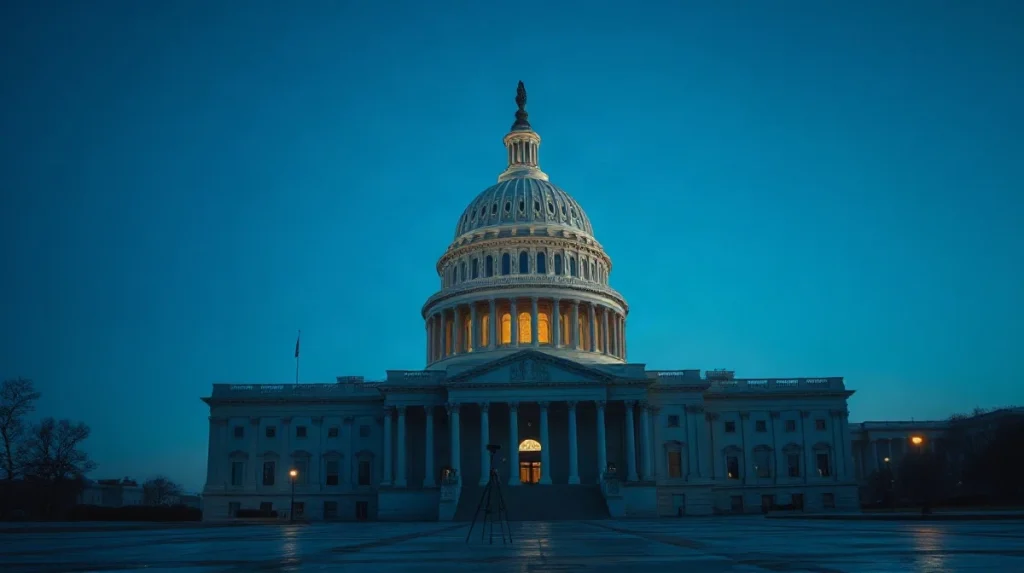
Democrats took control of both the House of Representatives and the Senate in the US midterm elections, stripping President Donald Trump of his legislative majority with two years of his term still to run, The Guardian reported. The result has put financial markets, inflation, government borrowing costs and growth under scrutiny as investors weigh what a weakened president will do next.
Trump conceded the outcome and acknowledged the impact of the Iran war, which markets read as a positive. He has also warned he will act as “Mr Veto”, signalling a combative final stretch in the White House.
Also read: Trump Forms Committee to Weigh Firing Fed Governor Lisa Cook
Key facts
- Brent crude fell as much as 9% on Wednesday to trade below $100 a barrel, settling near $94, against a prewar level of about $70.
- US headline inflation has risen to 3.7%, with the International Monetary Fund expecting global headline inflation of 4.7% this year.
- The Federal Reserve raised borrowing costs for the first time since 2023, and investors expect at least one more increase.
- Berenberg analysts said US growth could slow to about 1.5% in 2028, while the IMF projected US growth of 2.3% this year and next.
- Al Jazeera reported that Trump told Fox News he would veto all “insane” legislation from Democrats.
Markets and the Iran war
Shares in Germany rose after the vote, and Asian markets dropped early before recovering as investors digested the results. Holger Schmieding, chief economist at Berenberg, said voters had rejected the president’s “somewhat authoritarian penchant for crony capitalism” and that US checks and balances had proven to work.
Much of the market outlook now depends on the Middle East conflict and on how fast artificial intelligence investment advances. Traders expect Democrats to take a tougher line on AI regulation and datacentre rollout, which could affect a key driver of equity gains. Concern also exists that Trump, with domestic power curtailed, may take a harder line on foreign policy and escalate the war in Iran.
Also read: Fed Holds Rates at 3.75%-4% Days Before Midterms
Rates, inflation and public finances
The US-Israeli invasion of Iran and the closure of the Strait of Hormuz produced what The Guardian described as the biggest energy price shock of the modern age, pushing US diesel to a record in August. The Bank of England was expected to raise rates on Thursday, and the European Central Bank was also expected to lift borrowing costs.
With Congress against him, Trump cannot expect new Fed governors to be confirmed. He can still veto legislation, though a two-thirds majority in both chambers could override it — a threshold Al Jazeera noted the Democrats cannot reach alone.
Al Jazeera reported that Trump told The New York Times he was “absolutely willing to accept those results” and to work with Democrats, before posting an image of a red MAGA hat bearing the word “VETO”. The outlet also pointed to precedent: Barack Obama finalised the Iran nuclear deal and normalised relations with Cuba after the 2014 midterms, while Bill Clinton pursued Middle East peace talks and protected 58.5 million acres of forestland in his final months.
Why it matters
Divided government cuts both ways for investors. Gridlock limits Trump’s ability to launch fresh tax and spending measures, restraining fiscal stimulus but also capping further rises in borrowing and debt. Analysts said the scale of midterm defeats for MAGA candidates could weaken the president’s authority and open room for Republican-Democrat cooperation.
Al Jazeera noted that Trump has already used executive orders to route around Congress, including a January 2025 national emergency declaration that diverted billions of dollars toward a border barrier. That history suggests the veto, rather than legislation, will define the next two years.
What to watch
The first test comes on 11 December, when politicians must authorise government spending to avoid a shutdown. Beyond that, the pace of any diplomatic breakthrough on Iran, the Fed’s next decision and AI regulation proposals from the new Democratic majority will set the tone for markets. This is not financial advice, and markets remain volatile and uncertain.

Sources: The Guardian, Al Jazeera
The StockPil Editorial desk covers stock markets, business, finance, forex and crypto. Our AI-assisted newsroom builds each article from published, linked sources, checks it for accuracy before it goes live, and our editors review published articles and correct anything that needs it.
More from StockPil →